Cedar Rapids, Iowa, is part of Project Civic Access, a federal initiative to make public facilities accessible. Making the changes necessary for compliance has been challenging for the city.


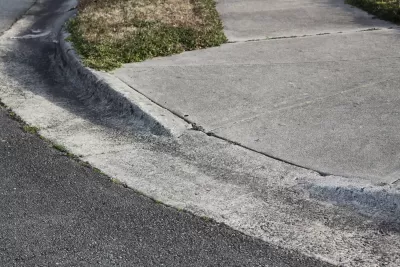
Cedar Rapids, Iowa, is finding compliance with a 2015 Americans with Disabilities Act settlement agreement to be costlier and more time-consuming than expected, reports B.A. Morelli:
The single biggest line item in a four-year settlement agreement with the U.S. Department of Justice to make city of Cedar Rapids public facilities accessible for all has been installing or replacing 3,800 curb ramps to meet federal standards. Minor deviations from the specifications can torpedo a project.
When the curb ramp replacements started, only 65 percent met the required standards. The city started training contractors and inspectors, and city officials say now 90 percent of the ramps are compliant.
Still, just over half of the curb ramps have been replaced, with 1,850 remaining. The agreement required the work be completed by next year, but the city plans to request another two years to finish it. In addition, the cost is expected to increase from an initial estimate of $15 million to $30 million.
Read the full story: Complying with disabilities act will take Cedar Rapids longer
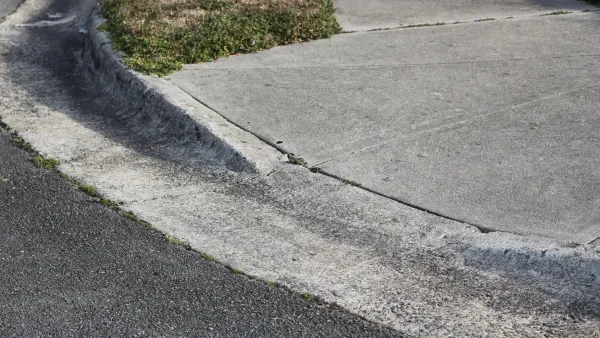
Feds Close Cedar Rapids ADA Case
For four years, the city has worked to make public projects compliant with the Americans with Disabilities Act. Rather than granting an extension, the Department of Justice says it is closing the case.

The Tough Legal Path to ADA Compliance
Next City examines the fruits of a Department of Justice effort to force cities to bring their sidewalks and other public spaces into compliance with the Americans with Disabilities Act.
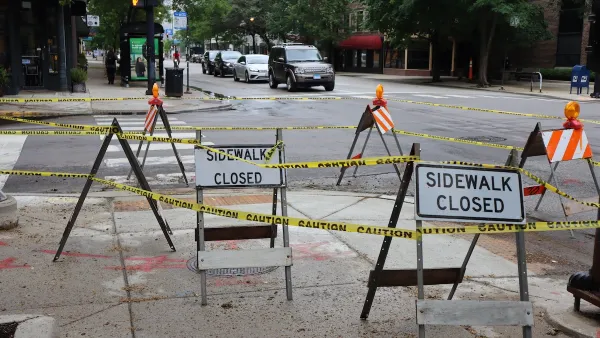
Chicago Residents Sue City Over Inaccessible Sidewalks
The suit alleges the city has failed to create a “coordinated, proactive system” for complying with ADA and ensuring accessibility on the city’s sidewalks and crosswalks.

Planetizen Federal Action Tracker
A weekly monitor of how Trump’s orders and actions are impacting planners and planning in America.

Washington state to charge fee to drivers with fuel-efficient cars
Revenue from the fee will go towards supporting the state’s highways.

Illinois considers spending $1 billion in taxpayer money on data center
A quantum computing campus and data center are currently under construction in Chicago.

Nearly billion-dollar budget deficit looms over MTA
Metropolitan Transit Authority officials say the cost of healthcare, wages, electricity and fuel is outpacing revenue from tolls, taxes and fares.

Senate passes bill overhauling permitting
The bill still needs to pass the House.

Did data centers change how voters cast their ballots?
Texas, Ohio, and Georgia all flipped party control. But in rural counties, the effect of local data centers was mixed.

FREE Course: Walkable City 1: Why Walkability?
After describing his path towards focusing on walkability as the essence of good planning, Jeff Speck marches through his five principal reasons for making more walkable places.
Reinventing Malls: Planning Alchemy—Turning Gray Fields Into Gold
The course focuses on the opportunities and imperatives that shape reinvention of mall sites.

City of Charlotte
City of Rosemead
Rutgers University, Edward J. Bloustein School of Planning and Public Policy
University of Michigan School for Environment and Sustainability (SEAS)
Hunter College, City University of New York (CUNY)
The Architects Foundation
University District Partnership