A newly installed parklet in Chicago is part of a larger program to engage the city’s public spaces.


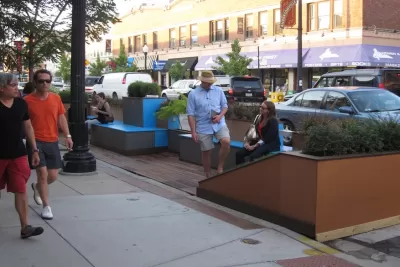
Rachel Kaufman reports that a new Chicago Department of Transportation placemaking initiative, Make Way for People, includes the installation of parklets called People Spots in parking lanes next to sidewalks.
The city has put in the first People Spot—with seating, plants, and a fence—in Chatham, a neighborhood on Chicago’s South Side. The project was funded through a $30,000 grant from AARP, and mobility of the structure was key to its design. “Community groups can disassemble a parklet for storage during Chicago’s harsh winters or simply move it to a new space. And in fact, that’s what the Chatham Business Association plans to do with its parklet—remove it for the winter and reinstall it at a different location on 75th Street in the spring,” says Kaufman.
Kaufman notes that Chicago has had limited success with parklets in other neighborhoods. The cost of installation and maintenance and the loss of parking spaces led to community resistance and, ultimately, the removal of some of the parklets. The new parklets are cheaper to build and more flexible, with the goal of replicating them more easily in other communities.
Read the full story: Chicago DOT Develops Parklet Prototype to Encourage Hanging Out
Architecture Critic Finds Faults in Chicago Placemaking
Architecture Critic Blair Kamin wants more from Make Way for People, Chicago Mayor Rahm Emanuel's placemaking program, and finds faults with the Lincoln Hub as an example of tactical urbanism.
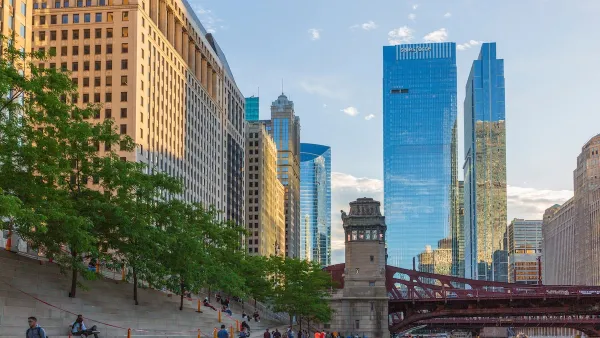
Chicago Avenue bridge construction delays enrages city leaders
The bridge has been closed since 2025. The city originally aimed to re-open it in December, and now expects to finish construction in 2027.
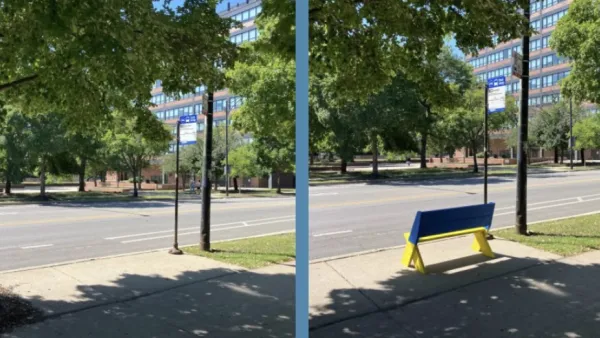
Guerilla urbanists are building DIY bus stop benches in Chicago
The new benches are not officially sanctioned or permitted, but the residents who placed them hope they will be the start of a network of DIY benches across the city.

Planetizen Federal Action Tracker
A weekly monitor of how Trump’s orders and actions are impacting planners and planning in America.

California plans to bury El Niño’s downpour
If the state plays its cards right, it may be able to store a billion acre-feet of El Niño’s water in aquifers.

Desperate measures: Advocates weigh draining Lake Powell to fill Colorado River
Draining the reservoir could reduce evaporation losses by a couple hundred thousand acre-feet.

Chicago voters approve permanent festival grounds, penalty for vacant property owners
Currently, major summer and fall festivals take over public parks for weeks at a time, drawing criticism from nearby residents

NYC votes to cut outdoor dining red tape, speed up permitting
New York City also voted to allow the Department of Transportation to begin work on urgent projects before notifying elected officials.

California appears to reject Prop. 45
The proposition would have expanded the projects that qualify for a streamlined environmental review, effectively paring down the California Environmental Quality Act.

FREE Course: Walkable City 1: Why Walkability?
After describing his path towards focusing on walkability as the essence of good planning, Jeff Speck marches through his five principal reasons for making more walkable places.
Reinventing Malls: Planning Alchemy—Turning Gray Fields Into Gold
The course focuses on the opportunities and imperatives that shape reinvention of mall sites.

City of Rosemead
Rutgers University, Edward J. Bloustein School of Planning and Public Policy
One Hundred Miles
Hunter College, City University of New York (CUNY)
The Architects Foundation
University of Cincinnati Online
City of Cambridge
Montrose County
The Pocatello Development Authority