The Metropolitan Atlanta Rapid Transit Authority (MARTA) is working on mixed-use development plans for a location near Kensington Station, in DeKalb County.



"MARTA is seeking a developer to build a mixed use project, complete with affordable housing, at its Kensington Station, which is located in eastern DeKalb County between Avondale Estates and I-285," reports David Pendered.
According to Pendered, the property's current zoning presents a "stumbling block" for the project. "The site is zoned for any of an array of single and multi family structures – detached houses, townhouses, apartments, boarding houses, group personal homes and nursing homes, even adult and child day care centers," writes Pendered. That's all residential, with no room for any of the office or retail uses that would make any potential project mixed-use.
Pendered also describes MARTA's lofty ambitions for the site. "The RFP notes that the Kensington Station is ranked as MARTA’s 12-busiest rail station. An average of 5,565 riders board at the station every weekday, according to the RFP. This level of ridership seems likely to support a fairly dense development adjacent to the station."
In a separate article, following up on Pendered's scoop, Sean Keenan presents MARTA's development plans as the latest in a series of suburban transit oriented developments along MARTA lines.
This month, developer Columbia Residential debuted a senior housing complex less than a mile from both the Decatur and Avondale MARTA stations, and the city’s economic development arm Invest Atlanta launched a $15 million fund specifically for transit-oriented development.
Elsewhere, the City of College Park has adopted the first-ever transit-oriented zoning district on the south side of metro Atlanta.
Read the full story: MARTA’s Kensington Station up for development, if zoning can be resolved

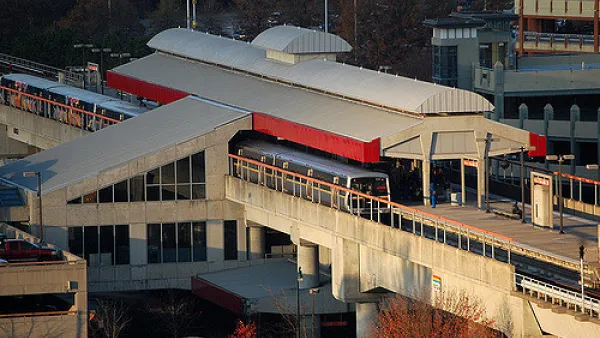
Transit-Oriented Development Coming to the Atlanta Region
Public meetings to learn more about TOD will be hosted in November by MARTA and the DeKalb County government
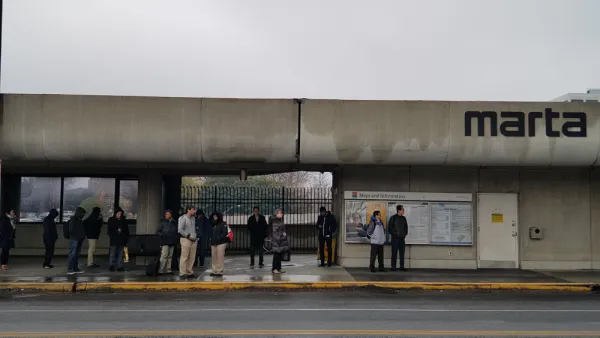
$100 Million to Preserve Transit Oriented Affordable Housing in Atlanta
Atlanta continues its commitment to ensuring affordable housing supply in the city, announcing the most recent in a series of funded programs earlier this month.

Atlanta's Quarry Yards Bought for $127 Million by Microsoft; Development Plans Still Secret
Observers can only speculate about the development plans of the new owners of one of the city of Atlanta's largest development opportunities.

Planetizen Federal Action Tracker
A weekly monitor of how Trump’s orders and actions are impacting planners and planning in America.

Amtrak, CN end decades-long dispute with eight-year agreement
The new operating agreement establishes an updated framework for the companies to work together, including processes to resolve disputes.

Judges permit Denver to divert 77,000 acre feet from the Colorado River for reservoir expansion
Overuse and climate change have caused the Colorado River’s water levels to plummet.

Boston has spent millions making the Green Line more accessible — and there’s no end in sight
While the city has invested millions into expanding and adding platforms to the Green Line to make it more accessible, new train cars set to arrive next year will be too tall for disabled passengers to board without raising the current platforms.

Idaho may see an 18% drop in federal surface transit funding — the largest estimated cut in the US
Transit systems in rural communities are much more reliant on federal funding to provide their services.

How ‘post-disaster gentrification’ alters neighborhoods after natural calamities
After hurricanes, fires or other calamities, the original residents of a community are often replaced by younger, wealthier residents.

FREE Course: Walkable City 1: Why Walkability?
After describing his path towards focusing on walkability as the essence of good planning, Jeff Speck marches through his five principal reasons for making more walkable places.
Reinventing Malls: Planning Alchemy—Turning Gray Fields Into Gold
The course focuses on the opportunities and imperatives that shape reinvention of mall sites.

City of Wisconsin Rapids
Harvard University Graduate School of Design
KFH Group Inc.
The Architects Foundation
University of Cincinnati Online
The Pocatello Development Authority
The Urban Renewal Agency of the City of Pocatello