Tulane researchers received major funding support from the National Institutes of Health to study the effects of blight remediation on youth and family violence.


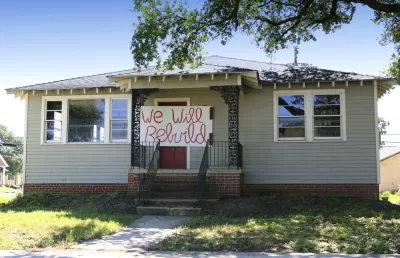
A new Tulane University research project will "study whether maintaining vacant lots and fixing up blighted properties in high-crime areas reduces incidents of youth and family violence," according to an article by Keith Brannon.
Researchers from Tulane’s schools of Public Health and Tropical Medicine and Architecture received $2.3 million in funding from the National Institutes of Health to study the question, reports Brannon.
The researchers will work with the city of New Orleans to clean up 300 blighted properties around the city.
"They will split the properties into two randomized intervention groups — half featuring overgrown vacant lots that are cleared and maintained and another featuring both remediated buildings and lots," explains Brannon. "Researchers will compare crime rates in the intervention groups with those in matched, untouched control areas to see whether mending disordered spaces can trigger healing psychosocial effects within a neighborhood."
Principal investigator Katherine Theall is quoted in the article saying this study will be the first to measure the connection between blight remediation and youth and family violence.
Read the full story: Tulane awarded $2.3 million to study whether clearing blight stems teen violence in New Orleans
How Cities Are Stopping the Blight Contagion
Every city with neighborhoods in decline and a lack of demand for new investment is faced with the challenge of how to address blight. Each city's challenges are unique, but many are finding new and effective strategies to end the spread of blight.
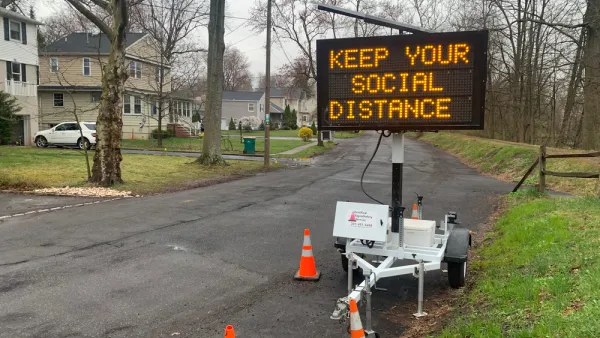
Report: Expect to Live with Two More Years of Social Distancing
As a majority of states relax stay-at-home restrictions, a prestigious team of experts from the University of Minnesota, Harvard and Tulane universities warns that the coronavirus will likely last 18 to 24 more months, returning in successive waves.
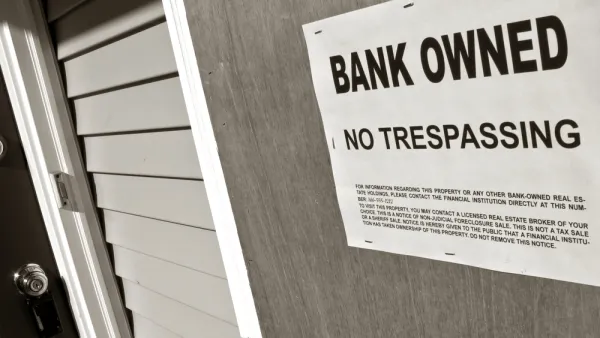
From Vacant Property to Affordable Housing Development
The city of St. Petersburg provides a model for transforming blight to a blessing.

Planetizen Federal Action Tracker
A weekly monitor of how Trump’s orders and actions are impacting planners and planning in America.

California plans to bury El Niño’s downpour
If the state plays its cards right, it may be able to store a billion acre-feet of El Niño’s water in aquifers.

Desperate measures: Advocates weigh draining Lake Powell to fill Colorado River
Draining the reservoir could reduce evaporation losses by a couple hundred thousand acre-feet.

Housing is the top priority of Seattle’s sole new councilmember
Jenks campaigned on building 1,000 new units of affordable housing.

New tax cuts may slash $1.5 billion in funding for Miami transit, public parks
Amendment 3 will save Miami-Dade homeowners $2,700 in 2028.

Arizona, Wisconsin, Pennsylvania hope to finally advance climate goals post-midterms
The three states have spent years under Republican or divided control.

FREE Course: Walkable City 1: Why Walkability?
After describing his path towards focusing on walkability as the essence of good planning, Jeff Speck marches through his five principal reasons for making more walkable places.
Reinventing Malls: Planning Alchemy—Turning Gray Fields Into Gold
The course focuses on the opportunities and imperatives that shape reinvention of mall sites.

City of Rosemead
Rutgers University, Edward J. Bloustein School of Planning and Public Policy
One Hundred Miles
University of Michigan School for Environment and Sustainability (SEAS)
Hunter College, City University of New York (CUNY)
The Architects Foundation
City of Cambridge
Montrose County
The Pocatello Development Authority