The environment and climate change may not be top issues in the nation's hotly contested gubernatorial contests next Tuesday, but their outcomes can cause policy changes. Take North Carolina and the election of Roy Cooper, a Democrat, two years ago.


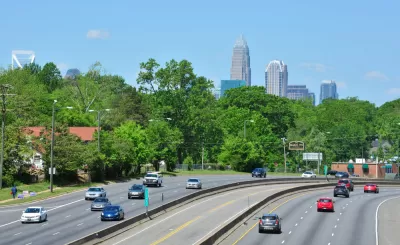
"North Carolina would cut its greenhouse gas emissions by 40 percent by 2025 under an ambitious statewide goal set by Gov. Roy Cooper on Monday," report John Murawski and Will Doran for The Charlotte Observer.
With Cooper’s signing of the executive order North Carolina joins states like Colorado, California and others that have set statewide targets for reducing emissions of gases that are associated with global warming and climate change...Colorado has set a goal of cutting emissions by at least 26 percent by 2025 from 2005 levels.
The order commits North Carolina to adhering to the 2015 Paris Agreement environmental treaty, even though President Donald Trump, a Republican, previously said he will pull the U.S. out of the treaty on the earliest possible date, which is in 2020. Cooper, a Democrat, is among 17 state governors who have joined the U.S. Climate Alliance to commit to the goals of the Paris Agreement.
Hurricane-inspired?
“With historic storms lashing our state, we must combat climate change, make our state more resilient and lessen the impact of future natural disasters," stated the Democratic governor in a press release that also commits the state to a "clean energy economy."
"He noted that Hurricane Florence, which soaked the state [in September], was the third 500-year flooding event in the state in the past 19 years and the second in the past 23 months," add Murawski and Doran. Hurricane Matthew pummeled the state in October 2016 and Hurricane Floyd in September 1999. Texas had it worse last year with Hurricane Harvey causing Houston’s third 500-year flood in as many years.
Executive orders vs. legislation
Executive order #80 is similar to, though much stronger than, aforementioned executive order signed by Gov. Richard Hickenlooper (D-Colo.) on July 11, 2017. It lacks the same impact of legislation, e.g., the renewable standard portfolio described below or California's ambitious climate targets, and only affects state government, and can be repealed by a future governor. Cooper's order will:
[C]reate the state’s first-ever climate change committee, made up of people from every state-run agency. By next October, that committee and the N.C. Department of Environmental Quality are supposed to have a report for Cooper on how state government can use more renewable energy...
Cooper’s goal lists few details at this time, but includes a target of having at least 80,000 electric cars and other zero-emission vehicles in the state by 2025 and developing electric vehicle corridors and other infrastructure.
Renewable Portfolio Standard (RPS)
The Tar Heel State was #2 nationally in solar energy production last year according to the Solar Energy Industries Association. Credit goes to state legislation, Senate Bill 3 [pdf] in August 2007, requiring "all investor-owned utilities in the state to supply 12.5% of 2020 retail electricity sales (in North Carolina) from eligible energy resources by 2021," according to the U.S. Department of Energy.
For more information, see "The Economic Impact of North Carolina’s Renewable Energy and Energy Efficiency Portfolio Standard" [pdf], released by The Beacon Hill Institute For Public Policy Research, Suffolk University, in 2009.
Gubernatorial elections: last year, this year
As posted Nov. 17, 2017, "a movement initiated by Gov. Terry McAuliffe (D-Va.) to join the East Coast carbon cap-and-trade program has accelerated with the election of his Democratic lieutenant governor, Ralph Northam, as governor. Similar news is expected from New Jersey [where Democrat Philip D. Murphy bested Lt. Gov. Kim Guadagno (R), to replace two-term Republican Gov. Chris Christie.]" However, a check of the Regional Greenhouse Gas Initiative (RGGI) website reveals that neither state has yet been added to the nine-state group.
A key gubernatorial election to watch on Nov. 6 in terms of climate change is in Florida, where current Republican Gov. Rick Scott in 2015 banned the Florida Department of Environmental Protection and other state agencies from using the term, "climate change." A post on September 12, 2017, two days after Hurricane Irma made landfall in the Florida Keys, examined the lack of hurricane preparation by the Scott administration, unlike the leadership shown by Miami Beach Mayor Phillip Levine.
See related Washington Post article, "Florida’s Senate race was Rick Scott’s to lose, but he is haunted by his environmental record," Oct. 31.
Hat tip to InsideClimate News.
FULL STORY: Cooper sets global warming goal to cut NC greenhouse gas emissions by 40 percent


When Red States Turn Blue
Michigan Gov. Gretchen Whitmer has followed the path laid by New Mexico Gov. Michelle Lujan Grisham and Illinois Gov. J.B. Pritzker in joining the U.S. Climate Alliance. All three are new Democratic governors replacing Republican predecessors.

Trump Attacks Environmental Rules Amid Flurry of Executive Orders
Several executive orders signed on Monday seek to repeal Obama- and Biden-era environmental regulations and roll back goals to encourage the shift to electric vehicles.

Desert Species, Endangered by Climate Change and Renewable Energy, Create Controversy
The wind strewn and sunny parts of California are home to many species threatened both by climate change and renewable energy facilities like wind and solar power facilities. What is an environmentalist to do?

Planetizen Federal Action Tracker
A weekly monitor of how Trump’s orders and actions are impacting planners and planning in America.

The state-sanctioned urbicide of Austin
People don’t kill cities. Freeways do.

US to reduce Colorado River water deliveries to Mexico
A new Colorado Treaty amendment reduces Mexico’s Colorado River water allocation by 250,000 acre feet.

Mamdani overhauls NYC's Vision Zero plan with 100 new policy goals
The overhaul aims to reduce traffic deaths and make streets safer for pedestrians, cyclists and drivers through lower speed limits, new safety infrastructure and more.

Amtrak not solely to blame for New Jersey commuter rail's unreliability, report finds
A new study from the Garden State Initiative found that NJ Transit’s budget grew 20% across a 4 year period, but reliability declined significantly over the same period.

EPA erases limits on planet-warming pollution from power plants
Under Monday’s plan, power plants would still have some limits on how much mercury, arsenic and other contaminants they can emit.

FREE Course: Walkable City 1: Why Walkability?
After describing his path towards focusing on walkability as the essence of good planning, Jeff Speck marches through his five principal reasons for making more walkable places.
Reinventing Malls: Planning Alchemy—Turning Gray Fields Into Gold
The course focuses on the opportunities and imperatives that shape reinvention of mall sites.

Eagle County Government
Harvard University Graduate School of Design
Nashville Planning Department
The Architects Foundation
University of Cincinnati Online
The Pocatello Development Authority
The Urban Renewal Agency of the City of Pocatello
Journal of the American Planning Association