The wind strewn and sunny parts of California are home to many species threatened both by climate change and renewable energy facilities like wind and solar power facilities. What is an environmentalist to do?


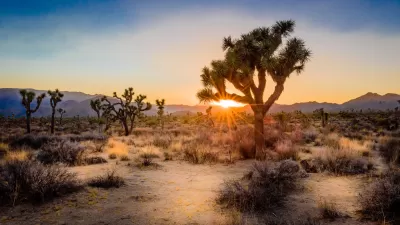
"Renewable energy corporations have launched an eleventh-hour campaign to derail a petition seeking endangered species protection for Joshua trees, saying it could hinder development of the solar and wind power projects California needs to wean itself off fossil fuels," reports Louis Sahagun.
The political action by renewable energy companies coalescing under the banner of the Solar Energy Industries Association comes ahead of an expected vote by the Fish and Game Commission on August 20 about whether to accept the petition filed by the Center for Biological Diversity and already approved by state biologists.
The renewable energy interests are arguing that by lowering the amount of emissions that cause climate change, renewable energy facilities will be protecting the delicate climate balance that allows Joshua Trees to flourish in California's desert regions.
Brendan Cummings, conservation director at the Center for Biological Diversity and a resident of the community of Joshua Tree, is quoted in the article recognizing the importance of renewable energy to fight climate change but also inciting that renewable energy facilities be built somewhere other than Joshua tree habitat.
"A final decision by the five-member state panel is expected next year. If the trees are listed, the law requires state wildlife managers to devise a recovery plan, which could limit development across thousands of acres of southeastern California’s sunniest real estate," according to Sahagun.
Read the full story: Renewable energy corporations fight endangered species status for Joshua trees


The Nation's Largest Wind Farm: Planned in Wyoming, Built for California
This project could "save California," according to the Los Angeles Times. But it won't be easy.
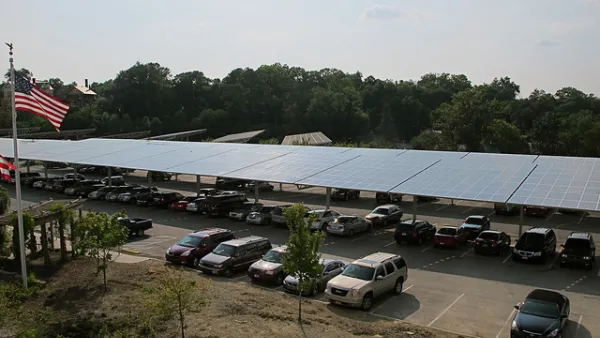
Bipartisan Coalition of Mayors Support Tax Credits for Solar Power
One issue has solidly bipartisan support at the local level: tax credits for investments that build new solar power capacity.
State Gubernatorial Elections Have Environmental Consequences
The environment and climate change may not be top issues in the nation's hotly contested gubernatorial contests next Tuesday, but their outcomes can cause policy changes. Take North Carolina and the election of Roy Cooper, a Democrat, two years ago.

Planetizen Federal Action Tracker
A weekly monitor of how Trump’s orders and actions are impacting planners and planning in America.

California plans to bury El Niño’s downpour
If the state plays its cards right, it may be able to store a billion acre-feet of El Niño’s water in aquifers.

Desperate measures: Advocates weigh draining Lake Powell to fill Colorado River
Draining the reservoir could reduce evaporation losses by a couple hundred thousand acre-feet.

Chicago Avenue bridge construction delays enrages city leaders
The bridge has been closed since 2025. The city originally aimed to re-open it in December, and now expects to finish construction in 2027.

NYC bus network redesign speeds up Queens buses
Rush routes have seen a 4.6% speed increase after the redesign.

California High-Speed Rail Authority picks trainset manufacturer
The California High-Speed Rail Authority aims to start servicing passengers by 2033.

FREE Course: Walkable City 1: Why Walkability?
After describing his path towards focusing on walkability as the essence of good planning, Jeff Speck marches through his five principal reasons for making more walkable places.
Reinventing Malls: Planning Alchemy—Turning Gray Fields Into Gold
The course focuses on the opportunities and imperatives that shape reinvention of mall sites.

City of Rosemead
Rutgers University, Edward J. Bloustein School of Planning and Public Policy
One Hundred Miles
Hunter College, City University of New York (CUNY)
The Architects Foundation
University of Cincinnati Online
City of Cambridge
Montrose County
The Pocatello Development Authority