Visualize 2045 makes plans for 600 projects totaling $291 billion in investments—there's some serious "blue sky" planning here.


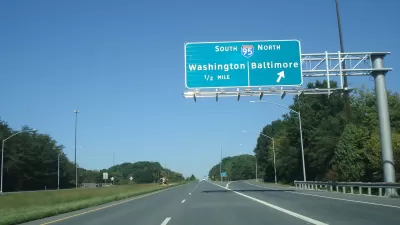
Jordan Pascale reports that the D.C. region has a new 25-year transportation plan.
The National Capital Region Transportation Planning Board (TPB) approved the plan, which includes "projects that the region’s transportation agencies expect to be able to afford between now and 2045, the plan includes aspirational projects, programs, and policies that go beyond financial constraints," according to the TPB website for the plan.
Pascale explains more about the scope of the plan:
The plan, called Visualize 2045, looks at all the ways people will get around the region in the future and plans for $291 billion worth of maintenance and new road, bike and public transportation projects.
The plan expects growth to continue to strain the region's transportation infrastructure, reports Pascale. "Even with all that investment, the plan predicts the hours of traffic delays will still increase 46 percent by 2045." The plan's prescription for those challenges tend toward more efficient land use planning, expanded transit options, and increased telecommuting.
Pascale also notes that one project included in the plan proved especially controversial as the TPB considered the plan: Maryland’s proposal to add express toll lanes to the Beltway and I-270.
FULL STORY: Transportation Plan Says Congestion Will Increase 43 Percent — Here’s The Plan To Fix It

New Long-Range Transportation Plan for the D.C. Region Will Include a Climate Addendum
The National Capital Region Transportation Planning Board has almost completed the latest version fo the Visualize 2045 long-range transportation plan, but it is already making plans to add a climate plan to the final product.
Equitable Transportation Planning Initiative Advances in Northeast Ohio
The Northeast Ohio Areawide Coordinating Agency (NOACA) is moving forward with a groundbreaking policy to consider regional economic inequities when evaluating potential highway projects.
Metropolitan Planning Organizations, Explained and Evaluated
Knowing is half the battle, and most people have a lot to learn about metropolitan planning organizations (MPOs) and how they maintain the status quo of transportation planning and spending in the United States.

Planetizen Federal Action Tracker
A weekly monitor of how Trump’s orders and actions are impacting planners and planning in America.

The state-sanctioned urbicide of Austin
People don’t kill cities. Freeways do.

US to reduce Colorado River water deliveries to Mexico
A new Colorado Treaty amendment reduces Mexico’s Colorado River water allocation by 250,000 acre feet.

5 New England states march closer to 800 megawatt wind energy project
Securing federal approval for the project may be complicated under the Trump administration, which has historically been hostile towards domestic wind power.

Baltimore to break ground on $50 million Transit Priority Project
The project will bring faster bus trips, safer streets and better bike connections to Baltimore.

Airbnb launches $250 million 'last-dollar financing' housing accelerator, makes first investment in Austin
The company will put $6.4 million towards affordable housing development in Texas’ capital.

FREE Course: Walkable City 1: Why Walkability?
After describing his path towards focusing on walkability as the essence of good planning, Jeff Speck marches through his five principal reasons for making more walkable places.
Reinventing Malls: Planning Alchemy—Turning Gray Fields Into Gold
The course focuses on the opportunities and imperatives that shape reinvention of mall sites.

Eagle County Government
Harvard University Graduate School of Design
Nashville Planning Department
The Architects Foundation
University of Cincinnati Online
The Pocatello Development Authority
The Urban Renewal Agency of the City of Pocatello
Journal of the American Planning Association