A Siemens tram is carrying passengers now, but the project remains a pilot as the tram is not commercially available.



The German city of Potsdam has a normal looking low floor tram with a unique feature. "The world’s first autonomous tram was launched in unspectacular style in the city of Potsdam, west of Berlin, on Friday," reports Kate Connolly. The vehicle from Siemens uses radar, lidar, and other sensors to avoid collisions with the traffic and pedestrians that cross its tracks. "Its makers say it is some way from being commercially viable, but they do expect it to contribute to the wider field of driverless technology, and have called it an important milestone on the way to autonomous driving," Connolly writes.
The tram is co-piloted by a human driver who watches the tracks as the green and white vehicle moves through the smallish German town.
FULL STORY: Germany launches world's first autonomous tram in Potsdam

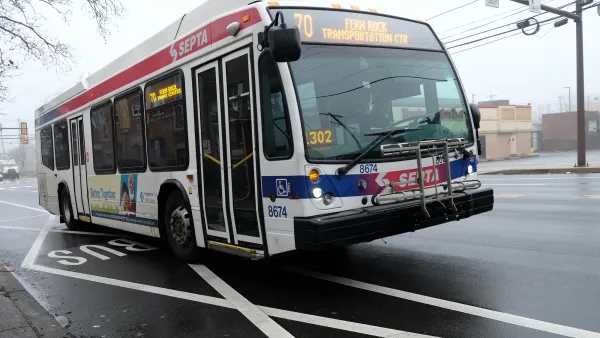
Pennsylvania lawmaker wants to ban fully self-driving buses
State Rep. Ben Waxman's proposed bill would require autonomous buses to have a licensed driver on board.
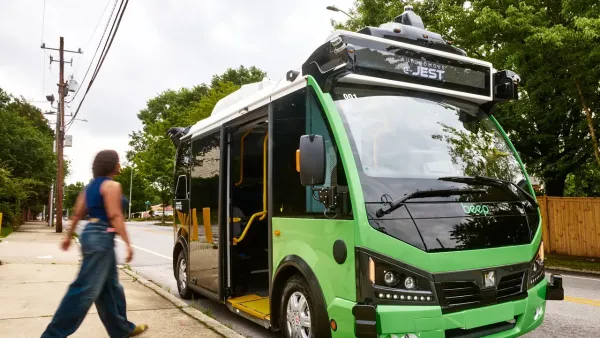
Atlanta launches autonomous Beltline shuttle
The ATL Spoke service connects the Beltline to a MARTA rail station.
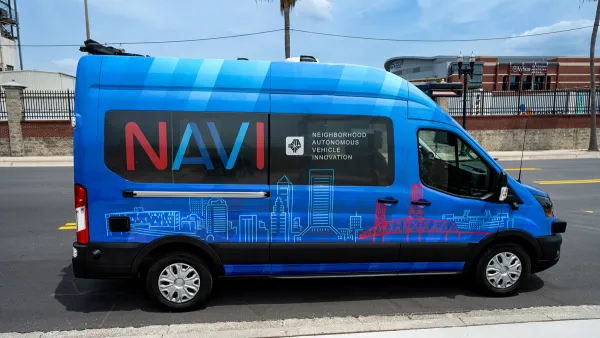
Jacksonville Launches First Autonomous Transit Shuttle in US
A fleet of 14 fully autonomous vehicles will serve a 3.5-mile downtown Jacksonville route with 12 stops.

Planetizen Federal Action Tracker
A weekly monitor of how Trump’s orders and actions are impacting planners and planning in America.

The state-sanctioned urbicide of Austin
People don’t kill cities. Freeways do.

US to reduce Colorado River water deliveries to Mexico
A new Colorado Treaty amendment reduces Mexico’s Colorado River water allocation by 250,000 acre feet.

5 New England states march closer to 800 megawatt wind energy project
Securing federal approval for the project may be complicated under the Trump administration, which has historically been hostile towards domestic wind power.

Baltimore to break ground on $50 million Transit Priority Project
The project will bring faster bus trips, safer streets and better bike connections to Baltimore.

Airbnb launches $250 million 'last-dollar financing' housing accelerator, makes first investment in Austin
The company will put $6.4 million towards affordable housing development in Texas’ capital.

FREE Course: Walkable City 1: Why Walkability?
After describing his path towards focusing on walkability as the essence of good planning, Jeff Speck marches through his five principal reasons for making more walkable places.
Reinventing Malls: Planning Alchemy—Turning Gray Fields Into Gold
The course focuses on the opportunities and imperatives that shape reinvention of mall sites.

Eagle County Government
Harvard University Graduate School of Design
Nashville Planning Department
The Architects Foundation
University of Cincinnati Online
The Pocatello Development Authority
The Urban Renewal Agency of the City of Pocatello
Journal of the American Planning Association