A pilot project in downtown Toronto shows improvements in travel times after the signal priority system is reactivated.


Oliver Moore reports that transit signal priority is back in use in downtown Toronto, allowing transit vehicles to pass through intersections more quickly. The system was shut down last November at the start of a King Street pilot project to speed up streetcars, when the city implemented new traffic regulations preventing motorists from using the road as a thoroughfare.
The system uses transponders on approaching vehicles to hold green lights longer and to turn red lights to green faster. In July, the technology was turned back on, and travel times throughout the pilot area decreased anywhere from 30 seconds to over two minutes compared to the month before.
Moore points out that while streetcars are traveling faster with the technology in operation, other outcomes can pose challenges. “Fiddling with the length of a traffic signal can mess up vehicle flow on the intersecting streets and also reduce the crossing time available for pedestrians. And the effects may be prolonged since it can take a few light cycles to adjust back to the normal timing, only to have another streetcar come along,” says Moore.
FULL STORY: City reactivates transit signal priority for streetcars along King Street

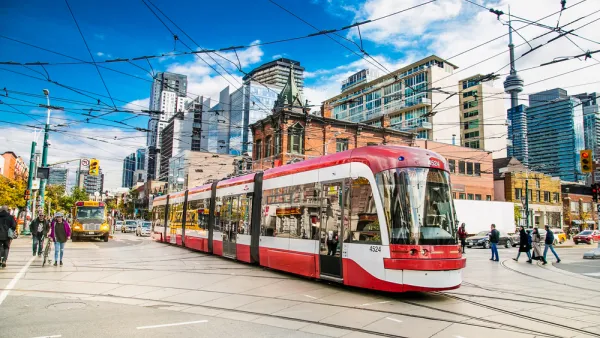
How a Broken Traffic Signal Improved Transit
A brief outage of traffic lights at one Toronto intersection inadvertently gave area streetcars more priority, speeding up service for transit users.
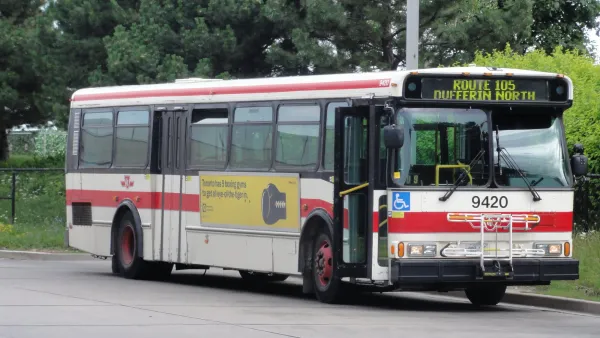
Toronto Could Give Buses and Streetcars Priority
In a shift away from subway expansions and upgrades, Toronto looks to improve the bus and streetcar systems.
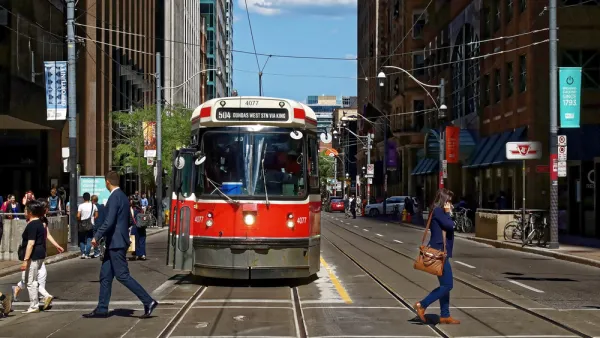
Toronto Streetcar Experiment Likely to Be Made Permanent
The city of Toronto did something radical and gave its streetcar its own lane on King Street as part of a pilot project launched in 2018. The results included improved service and increased ridership.

Planetizen Federal Action Tracker
A weekly monitor of how Trump’s orders and actions are impacting planners and planning in America.

The state-sanctioned urbicide of Austin
People don’t kill cities. Freeways do.

US to reduce Colorado River water deliveries to Mexico
A new Colorado Treaty amendment reduces Mexico’s Colorado River water allocation by 250,000 acre feet.

5 New England states march closer to 800 megawatt wind energy project
Securing federal approval for the project may be complicated under the Trump administration, which has historically been hostile towards domestic wind power.

Baltimore to break ground on $50 million Transit Priority Project
The project will bring faster bus trips, safer streets and better bike connections to Baltimore.

Airbnb launches $250 million 'last-dollar financing' housing accelerator, makes first investment in Austin
The company will put $6.4 million towards affordable housing development in Texas’ capital.

FREE Course: Walkable City 1: Why Walkability?
After describing his path towards focusing on walkability as the essence of good planning, Jeff Speck marches through his five principal reasons for making more walkable places.
Reinventing Malls: Planning Alchemy—Turning Gray Fields Into Gold
The course focuses on the opportunities and imperatives that shape reinvention of mall sites.


Eagle County Government
Harvard University Graduate School of Design
Nashville Planning Department
The Architects Foundation
University of Cincinnati Online
The Pocatello Development Authority
The Urban Renewal Agency of the City of Pocatello
Journal of the American Planning Association