Think "The Graduate," but now the emphasis in the future of plastics may be on restrictions. California may become the first state to restrict access to plastic straws, and balloons could be next due to the harm they cause the marine environment.


Restaurants in California would not be able to give out plastic straws unless a customer asked for one under a bill passed by the state Legislature Thursday and headed to Gov. Jerry Brown," reports the San Francisco Chronicle.
The bill is a light first step. It does not apply to the biggest source of plastic straw pollution — fast-food restaurants, cafes, delis or any takeout orders. The bill passed the Assembly 45-20 on Thursday, with Republicans largely voting against it. It passed the Senate 27-12 on Monday.
Plastic straws and stirrers are the sixth-most-common type of litter on state beaches, according to logs from the California Coastal Commission’s annual coastal cleanup days, which list the types of trash found.
Gutierrez adds that the bill "has been significantly watered down since it was introduced in January" by reducing the fines for non-compliance, presumably one reason why the restaurant industry didn't oppose it. However, there is no preemption clause in the bill that prevents cities from going as far as Seattle, which is where San Francisco appears headed.
The San Francisco Board of Supervisors passed an ordinance last month prohibiting restaurants, bars and retailers in the city from giving customers plastic straws, stirrers or toothpicks beginning July 1, 2019. The measure is pending approval by Mayor London Breed.
In addition, at least seven city and county governments in California have already passed plastic straw restrictions, as noted in the July post on Seattle's ban.
Will other states follow in California's path should Gov. Brown sign AB 1884?
Don't count on it. In fact, if precedent is to be followed, it's more likely that the state's straw restriction would have a boomerang effect similar to the plastic bag ban.
Following in the footsteps of Arizona and Missouri in 2015 and Idaho in 2016, Michigan passed legislation to preempt cities or counties from regulating single-use plastic bags or other disposable containers. Other than Hawaii, California remains the only state to ban single-use plastic bags.
Balloons come under scrutiny
Associated Press reporter Candice Choi drew a connection between balloons and plastic straws – plastic pollution in the ocean.
"The issue of straws has really broadened the marine debris issue," says Emma Tonge of the National Oceanic and Atmospheric Administration.
In April, the Town of New Shoreham, R.I., banned the sale, distribution, and use of all balloons on Block Island due to their contribution to ocean pollution and beach trash, according to WRPI News.
Choi reports that balloon manufacturers, conservation groups, and government agencies are working to educate consumers to avoid releasing balloons, as they eventually descend and can be mistaken for food, such as jellyfish, by marine life.
"We don't want to say don't use them at all. We're saying just don't release them," says Laura McKay of the Virginia Coastal Zone Management Program.
California passed a so-called "ballon law", SB 1990 in that year, but the focus was more on preventing power outages caused by mylar (foil) balloons filled with helium.
FULL STORY: Bill restricting plastic straws passes, heads to Gov. Brown

Seattle Beats San Francisco to Plastic Straw and Utensil Ban
Seattle's ban took effect Sunday, while San Franciso's proposed legislation, if successful, would begin July 1, 2019. Other cities have plastic straw restrictions, but Seattle's is the first outright ban. Compostable alternatives are permitted.
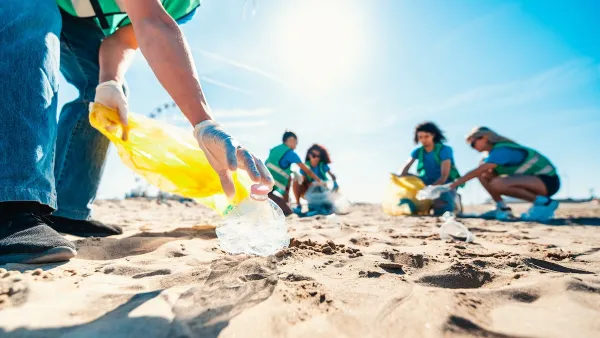
Plastic Bag Bans Actually Worked
U.S. coastal areas with plastic bag bans or fees saw significant reductions in plastic bag pollution — but plastic waste as a whole is growing.
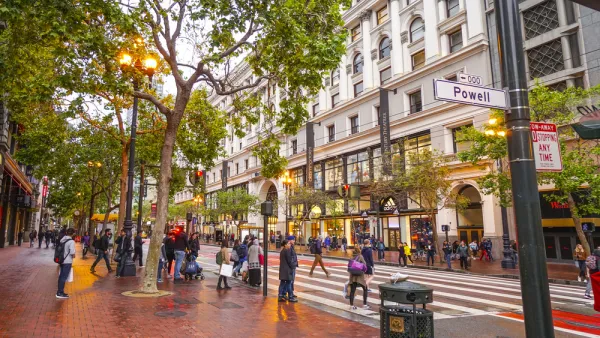
Car-Free Streets Aren't a Silver Bullet
The San Francisco Chronicle's urban design critic tempers expectations for Market Street in San Francisco, where the city this week undertook an ambitious, but perhaps over-sold, redesign of the busy street.

Planetizen Federal Action Tracker
A weekly monitor of how Trump’s orders and actions are impacting planners and planning in America.

The state-sanctioned urbicide of Austin
People don’t kill cities. Freeways do.

US to reduce Colorado River water deliveries to Mexico
A new Colorado Treaty amendment reduces Mexico’s Colorado River water allocation by 250,000 acre feet.

5 New England states march closer to 800 megawatt wind energy project
Securing federal approval for the project may be complicated under the Trump administration, which has historically been hostile towards domestic wind power.

Baltimore to break ground on $50 million Transit Priority Project
The project will bring faster bus trips, safer streets and better bike connections to Baltimore.

Airbnb launches $250 million 'last-dollar financing' housing accelerator, makes first investment in Austin
The company will put $6.4 million towards affordable housing development in Texas’ capital.

FREE Course: Walkable City 1: Why Walkability?
After describing his path towards focusing on walkability as the essence of good planning, Jeff Speck marches through his five principal reasons for making more walkable places.
Reinventing Malls: Planning Alchemy—Turning Gray Fields Into Gold
The course focuses on the opportunities and imperatives that shape reinvention of mall sites.

Eagle County Government
Harvard University Graduate School of Design
Nashville Planning Department
The Architects Foundation
University of Cincinnati Online
The Pocatello Development Authority
The Urban Renewal Agency of the City of Pocatello
Journal of the American Planning Association