Suburban Starbucks models are bumming urbanists out. But they also served as a nice allegory of what the future there might hold. Scott Doyon's latest blog post explains.



"Is the suburban Starbucks a canary in the coal mine, instructing urban reformers to abandon the ‘burbs altogether and simply direct their available energies towards the existing city instead?"
"I don’t know. But I do know this: Starbucks created an entirely new niche when they discovered people will pay vastly more for coffee if it’s delivered as an experience rather than just a product. Yet somehow, in growing to become synonymous with the typical American’s morning cup o’ joe, they’ve seemingly transcended that fact — evolving to a point where people — people perhaps trapped in our overall culture of busyness — will now forego the experience altogether, yet still pay the premium."
"What’s up with that? It certainly doesn’t bode well for taking on the status quo. It’s hard to effect change in an environment where there’s still so much money to be made delivering so little."
Doyon discusses the piece of plastic in question (the plastic "doodad" that, placed in the lid of a cup of coffee, prevents coffee from spilling in transit) as a signifier of the suburban Starbucks.
Read the full story: What This Innocuous Piece of Plastic Says About Our Suburban Future

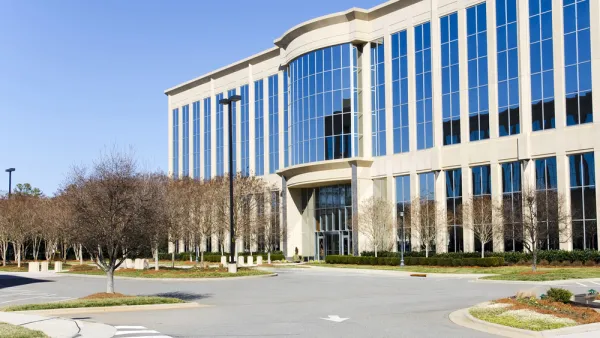
A Deep Dive into Suburban Retrofits
An interview with Ellen Dunham-Jones, co-author of "Retrofitting Suburbia," and Hazel Borys.
Healthy, or Unhealthy, by Design
We've engineered physical activity out of our daily lives but it need not be a chronic condition. Hazel Borys points to recent suburban retrofits for ways to get moving again.
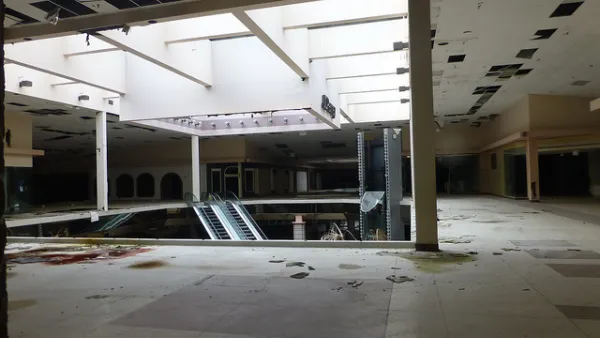
How To: Makeovers for Struggling Malls
Lean Urbanism recently released a "lean" guide to sprawl repair—focusing on how to bring struggling shopping malls back to life.

Planetizen Federal Action Tracker
A weekly monitor of how Trump’s orders and actions are impacting planners and planning in America.

Amtrak, CN end decades-long dispute with eight-year agreement
The new operating agreement establishes an updated framework for the companies to work together, including processes to resolve disputes.
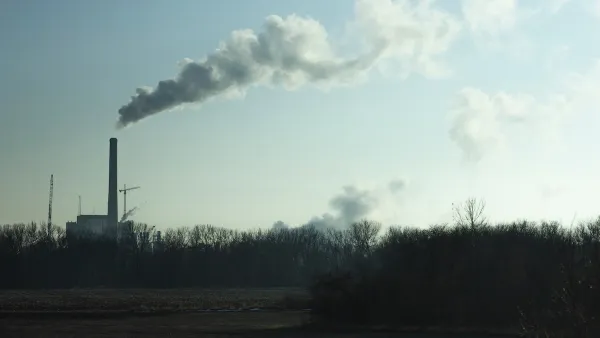
Nation's most wind-powered state turns to coal as data centers increase energy demand
For the first time in decades, Iowa has increased its generation of coal power.

Alabama scores up to $2.5 billion federal loan for largest infrastructure project in state’s history
The Mobile River Bridge and Bayway Project aims to ease congestion at Alabama’s worst bottleneck.

Trump is considering data centers on 6 states' public land — some state officials say they had no idea
If the administration approves the proposed projects, data center and data center-related developments will cover 17,600 acres of public land.

Despite court ruling, Trump is keeping nearly all wind projects in the US on hold
At least 110 wind energy projects have not heard from the government since a federal judge ruled that the Trump administration's freeze on wind turbine clearances was likely illegal.

FREE Course: Walkable City 1: Why Walkability?
After describing his path towards focusing on walkability as the essence of good planning, Jeff Speck marches through his five principal reasons for making more walkable places.
Reinventing Malls: Planning Alchemy—Turning Gray Fields Into Gold
The course focuses on the opportunities and imperatives that shape reinvention of mall sites.

KFH Group Inc.
Greater Baltimore Committee
Eagle County Government
The Architects Foundation
University of Cincinnati Online
The Pocatello Development Authority
The Urban Renewal Agency of the City of Pocatello