Two case studies exemplify the extreme economic and legal pressures surrounding water supply in the state of Arizona.


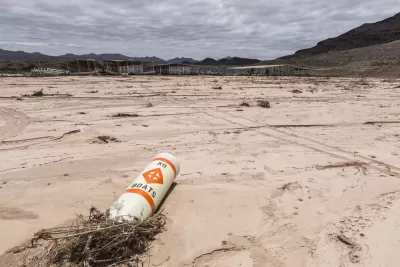
"Serious water shortages on the Colorado River could be less than two years away, according to new federal estimates," according to an article by Matt Weiser.
"Yet after 19 years of drought, just 500 farmers in one Arizona county may decide the fate of the entire Southwest: By holding tight to their own temporary water supply, they could stall a conservation plan designed to save the entire region from water shortages."
The article focuses on Pinal County, the 54th-largest farming county in the country and the third largest in the state, where about 540 farms use irrigation delivered via the Arizona Water project, a 336-mile canal built by the U.S. Bureau of Water Reclamation in 1993 to divert water from the Colorado River.
"Under a proposed drought contingency plan (DCP) aimed at saving Arizona residents from severe water shortages, Pinal County farmers could lose access to all their Colorado River water," reports Weiser.
Although the local irrigation districts and farmers are fighting the decision, Weiser says preventing the DCP will only prolong the inevitable—the farmers will run out of water in 12 years because of the temporary water deal the irrigation districts signed in 2004. It turns out, the Pinal County farmers are the most "junior" users of the Colorado River.
The Pinal County case isn't the only Arizona water news to catch our attention this month. A separate article by Bret Jaspers shifts the action to Maricopa County, where a water rights dispute known as the Gila River General Adjudication has dragged on since the 1970s. "Through the adjudication process, [a Maricopa County Superior Court] judge will decide on claims to water from several Arizona rivers – or water pumped from wells close to the rivers."
The reason for the dispute reveals another key aspect of water rights in Arizona, which is that only a few areas have long-term deals for water. In 1980, Arizona designated five Active Management Areas – Prescott, Phoenix, Pinal, Tucson and Santa Cruz – that are heavily reliant on the mining of groundwater. Each AMA pursues a goal of stabilizing water tables under the Arizona Groundwater Code," writes Jasper. Without an AMA, there's little certainty about where water will be delivered. That arrangement is constantly pressure by the state's ongoing growth.
FULL STORY: Why One Arizona County Could Upend the Southwest’s Drought Plan

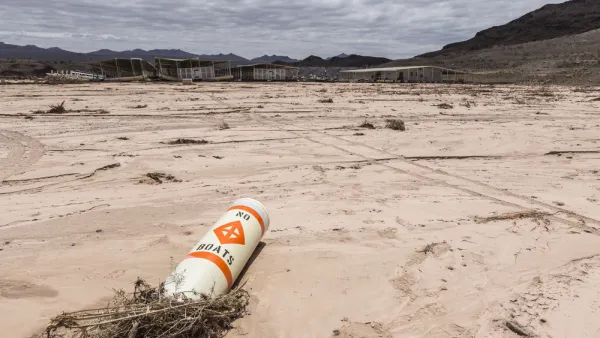
Op-Ed: Implications for Phoenix as Lake Mead Runs Dry
Metro Phoenix has a lot to think about as Lake Mead water shortages become ever more likely. A three-state drought contingency plan may only be a temporary fix for a problem that'll divide cities and stakeholders.
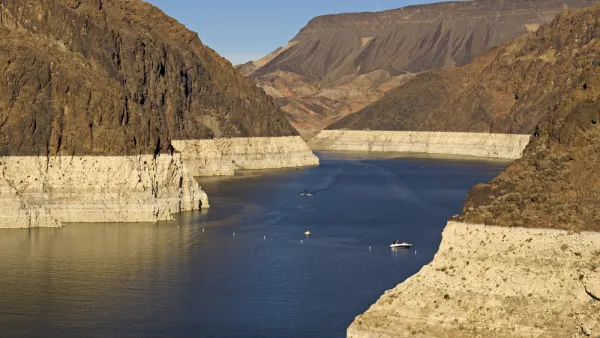
How Arizona Is Preparing for the Coming Water Shortage
Arizona will lose one-fifth of its water allotment from the Colorado River in 2022 as cuts from the river's Drought Contingency Plan take effect.
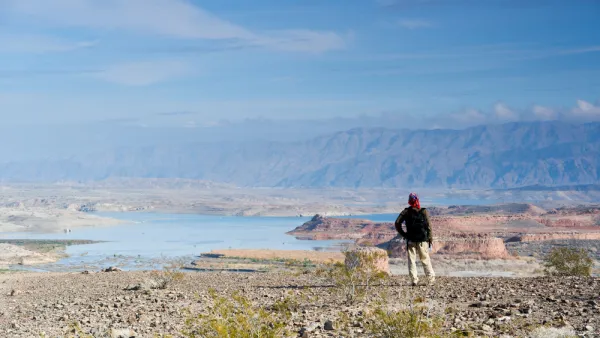
More Need Than Ever for Drought Resilience on the Colorado River
The effects of climate change are already cutting deeply into the lifeblood of the U.S. West—the Colorado River.

Planetizen Federal Action Tracker
A weekly monitor of how Trump’s orders and actions are impacting planners and planning in America.

The state-sanctioned urbicide of Austin
People don’t kill cities. Freeways do.

US to reduce Colorado River water deliveries to Mexico
A new Colorado Treaty amendment reduces Mexico’s Colorado River water allocation by 250,000 acre feet.

Mamdani overhauls NYC's Vision Zero plan with 100 new policy goals
The overhaul aims to reduce traffic deaths and make streets safer for pedestrians, cyclists and drivers through lower speed limits, new safety infrastructure and more.

Amtrak not solely to blame for New Jersey commuter rail's unreliability, report finds
A new study from the Garden State Initiative found that NJ Transit’s budget grew 20% across a 4 year period, but reliability declined significantly over the same period.

EPA erases limits on planet-warming pollution from power plants
Under Monday’s plan, power plants would still have some limits on how much mercury, arsenic and other contaminants they can emit.

FREE Course: Walkable City 1: Why Walkability?
After describing his path towards focusing on walkability as the essence of good planning, Jeff Speck marches through his five principal reasons for making more walkable places.
Reinventing Malls: Planning Alchemy—Turning Gray Fields Into Gold
The course focuses on the opportunities and imperatives that shape reinvention of mall sites.

Eagle County Government
Harvard University Graduate School of Design
Nashville Planning Department
The Architects Foundation
University of Cincinnati Online
The Pocatello Development Authority
The Urban Renewal Agency of the City of Pocatello
Journal of the American Planning Association