Charlotte's North Tryon Vision Plan is "among the more ambitious long-term urban planning projects in American cities," this article. Released in 2015, the plan's work is not done.



The North Tryon Vision Plan is moving the city of Charlotte creating a new model for planning in the downtown core compared to the car-centric mode of the 20th century planning.
"In a part of town that houses old churches, the main branch of the library and the NFL and NBA stadiums — plus all the surface parking lots that come with that — the city has designated a 60-acre, 50-square block area as a place for modern, urban redesign, dubbed the North Tryon Vision Plan," according to Daniel J. McGraw.
"The plan prioritizes walkable areas, a shrunken complete-streets grid, limited underground parking, play parks, and other small gathering places built for people and not their cars."
According to McGraw's take on the North Tryon Vision Plan, the city of Charlotte is working to do accomplish less than the reversal of historic trends that moved bedroom communities and office parks to the periphery, while leaving only office buildings, devoid of live in the evenings, in the central city. According to an Urban Land Institute study completed in November 2016 [pdf], Charlotte is the 50th most walkable city in the United States.
As noted by McGraw, the plan was released in 2015, but is still playing out for specific developments, such as the Hal Marshall Center and Spirit Square.
FULL STORY: Charlotte Moves toward a Car-Free City Center

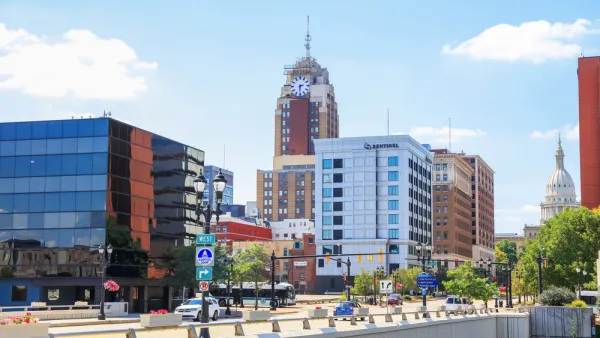
East Lansing Parking Plan Aims for Walkability
East Lansing wants to ditch some of its surface parking to encourage economic activity and walkability.
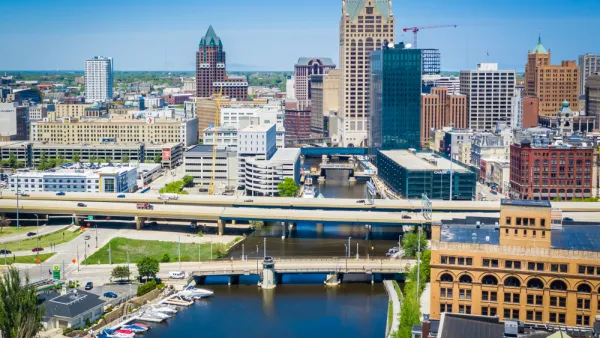
Project Team for Milwaukee's New Downtown Area Plan Takes Shape
A new plan for Milwaukee's downtown will build on a "major renaissance" in the area since the approval of the last version of the plan in 2010.
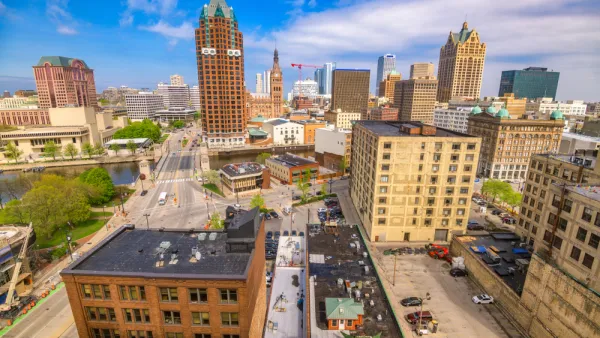
Downtown Milwaukee Area Plan Update Kicks Off
Billions of dollars in investment and thousands of new residential units later, Milwaukee is ready to update the plan for its downtown.

The state-sanctioned urbicide of Austin
People don’t kill cities. Freeways do.

US to reduce Colorado River water deliveries to Mexico
A new Colorado Treaty amendment reduces Mexico’s Colorado River water allocation by 250,000 acre feet.

New Jersey’s second-largest city bans standalone data centers
Jersey City will continue to allow co-location facilities, such as those meant for research institutions that store their own data.

Amtrak not solely to blame for New Jersey commuter rail's unreliability, report finds
A new study from the Garden State Initiative found that NJ Transit’s budget grew 20% across a 4 year period, but reliability declined significantly over the same period.

EPA erases limits on planet-warming pollution from power plants
Under Monday’s plan, power plants would still have some limits on how much mercury, arsenic and other contaminants they can emit.

Phoenix announces new on-demand transit service, more frequent RAPID buses
Both new services will launch in October, and are part of Phoenix's Project Effective Access Solutions for Easing Congestion.

FREE Course: Walkable City 1: Why Walkability?
After describing his path towards focusing on walkability as the essence of good planning, Jeff Speck marches through his five principal reasons for making more walkable places.
Reinventing Malls: Planning Alchemy—Turning Gray Fields Into Gold
The course focuses on the opportunities and imperatives that shape reinvention of mall sites.

Eagle County Government
Harvard University Graduate School of Design
Nashville Planning Department
The Architects Foundation
University of Cincinnati Online
The Pocatello Development Authority
The Urban Renewal Agency of the City of Pocatello
Journal of the American Planning Association