The Daily Source of Urban Planning News
Saying Bye-Bye to Fireplaces And Wood-Burning Heaters in the Bay Area
In a Bay Area first, new home construction in most of the region will be banned from having these heating devices installed as the result of a rule adopted unanimously by the Bay Area Air Quality Management District on Oct. 21.

BLOG POST
Complete Streets Concepts Are Now Being Applied Worldwide
Dehli announced a major new Complete Streets program that will redesign urban roads to favor walking, cycling and public transport over car traffic. This is very good news. It shows that the Complete Streets concept is now being applied worldwide.,
Same Old Transportation Policy Found in Texas' Prop 7
By shifting salves tax revenue to highway construction and prohibiting the use of tolls, Prop 7 would ensure that Texas continues on a path of sprawl and congestion, according to opponents of the proposed constitutional amendment.

California's Bay Delta Explained
As California's drought drags on, the Delta—which provides water to much of the state—has come to symbolize the tension among water users with competing interests. But the strained resource has also prompted ambitious initiatives for sustainability.

Why Some BIDs Succeed Where Others Fail
An in-depth study of business improvement districts (BIDs) in two Los Angeles neighborhoods examines the factors behind their success or failure.
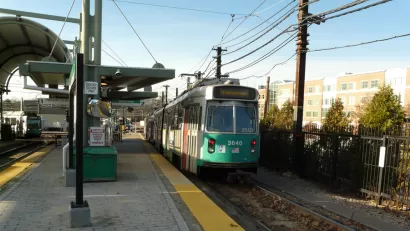
A Citizen's Wish List for Boston Transportation
As part of the city's long-term Go Boston 2030 plan, residents were consulted about what improvements they would like to see. Answers included an end to fatal crashes and better-integrated, more frequent transit.
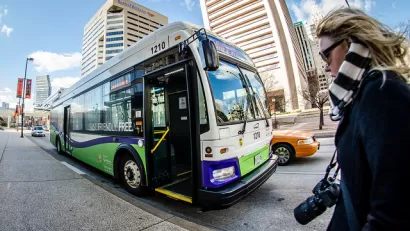
Maryland Governor Pitches Frequent Bus Lines as Alternative to Dead Light Rail Plans
Maryland Gov. Larry Hogan infamously killed plans for the $2.9 billion Red Line light rail project earlier this year, but now he's back with an alternative that would spend $135 million to overhaul Baltimore's bus system.
Delhi to Implement Complete Streets Policies
Dehli's Aam Aadmi Party-led government announced steps to ensure that pedestrians, cyclists, and public transport users get preference over car users.

The Walking City
What implications does pedestrian activity have on urban design? Creating walkable environments for pedestrians can improve urban conditions according to Arup architect Demetrio Scopelliti. We spoke to him about upcoming research on the topic.
Debunking the Data Behind Seattle's 'Explosion of Demolitions'
According to an article by The Urbanist, some Seattle publications might have been caught telling people what they want to hear, rather than offering clear perspective on the building trends of the city.

The Urban Agenda of New Canadian Prime Minister Justin Trudeau
Justin Trudeau is Canada's 23rd prime minister, after his election victory over incumbent Stephen Harper. Trudeau is the son of iconic PM Pierre Elliott Trudeau, and has promised large spending programs to benefit urban areas.

Blaming Millennials for Decaying Road Infrastructure
If you thought inflation and fuel efficiency, along with politicians unwillingness to raise gas taxes were the main causes of America's decaying road and bridges, S&P adds another contributing factor—millennial transportation preferences.
A Case Study of California's Lowest-Ranked Transit Station
Build it and they will come hasn't worked out so well for the Gillespie Field station on the Green Line of the San Diego Metropolitan Transit System. A recent scorecard rated the station lowest among 489 competitors.

The Motown Sound Came From Single-Family Homes
Would the Motor City have produced Motown without pianos in every living room?

Portland, Maine Approves Inclusionary Zoning
The latest city to implement mandatory inclusionary zoning: Portland, Maine. The City Council decision contradicted the Planning Board's recommendation.

Coming Soon to Dallas-Fort Worth: 8 Million Square Feet of Office Buildings
Large corporations are making huge investments in new office parks in the Dallas-Fort Worth area, reflecting a desire to attract young talent with Google- and Facebook-like workplaces.
New Releases: A Field Guide for Transforming Vacant Lots
Detroit Future City has released a guidebook for the process of redeveloping, renovating, and remediating neighborhoods full of vacant and blighted properties.
Scaling Up Local, Sustainable Food Production
The local food production industry so far has mostly been constrained to a niche market—expensive and available only to a small percentage of consumers. A project in Portland is working to change that.
Survey: Residents of Public Housing Don't See the Benefits of Gentrification
Conventional planning think says that mixed-income development benefits low-income neighborhoods. But a survey finds that residents of public housing in New York don't agree—rather, they feel left behind by newcomers to the neighborhood.

One Year Later: What has Cards Against Urbanity Taught Planners?
Reflection on the education provided by the irreverent game called Cards Against Urbanity has led the game's creators to create a new, less snarky version of the game.
One Hundred Miles
County of Mendocino
planning NEXT
The Architects Foundation
University of Cincinnati Online
Montrose County
Northern Illinois Transit Authority (NITA)
The Pocatello Development Authority

FREE Course: Walkable City 1: Why Walkability?
After describing his path towards focusing on walkability as the essence of good planning, Jeff Speck marches through his five principal reasons for making more walkable places.
Reinventing Malls: Planning Alchemy—Turning Gray Fields Into Gold
The course focuses on the opportunities and imperatives that shape reinvention of mall sites.