The Daily Source of Urban Planning News

The Reality of Neighborhood Change: Planners Should Worry About Decline
City living is back. After half a century of relentless population decline and several false starts at revitalization, residential investment in America's urban centers began to pick up in the mid-1990s.
Where People Choose to Live—Simple and Also Not-So-Simple
A new study confirms much of what we already suspect about the choices people make about where to live, but with a far-reaching, scientific approach.
Offshore Wind Power Picks Up Momentum Along the Atlantic Coast
The potential for offshore wind power along the Atlantic Coast has moved closer to reality in fits and starts. Recent leases, however, indicate what the future of the industry could looks like.

How the Pope's Visit Reduced Traffic in Washington, D.C.
Pope Francis' much-publicized visit to the capital in late September saw reductions in congestion and better travel times. Event-specific telecommuting policies and transit route changes appear responsible for the minor miracle.

The Deadly Costs of Failing Infrastructure
Failing infrastructure is a life and death matter. Decaying roads, bridges, dam, pipelines, water delivery, and railroads lacking safety controls are responsible for the loss of thousands of lives annually, on top of illnesses and injuries.
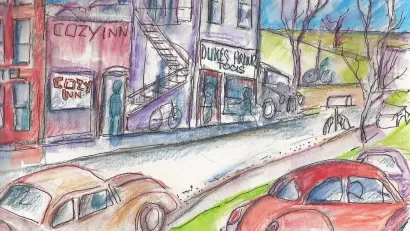
Are Small Towns the Next Arts Districts?
As rising costs expel artists from urban cores, some small towns are positioning themselves as unlikely magnets for creative expression.
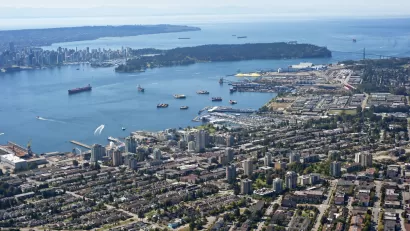
Gentrification and Affordability Worries Arise Over a Proposed Vancouver Tower
A 12-story residential tower proposed for a Vancouver neighborhood is receiving pushback from housing advocates and the local Chinese community.

Battling the Ugly: Denver Contemplates an Effective Design Review Process
As Denver booms, planners and architects discuss the good and the bad of imposing design guidelines on new construction.

Are Land Use Policies Mostly Hurting the Poor?
In a new paper, researchers find that land use regulations in cities have effectively created a "zoning tax," which primarily impacts the poor and renting class.

The Ride-Share Revolution
"If the 20th century was devoted to building the infrastructure to service the personal automobile, then perhaps the 21st century will be devoted to undoing most of it."

Madrid Takes Drastic Action to Curb Pollution
With a growing reputation for heavy local pollution, the city of Madrid will impose reduced speed limits and driving restrictions in its central core. On bad days, transit will be free to ride.

Asian Subways Are the Busiest
Rankings from the International Association of Public Transport have Tokyo on top, followed by Beijing and Shanghai. New York comes in seventh.

A Parking Kerfuffle in Downtown Dallas
The big, contentious question of contemporary downtowns is under consideration in Dallas: Is there too much parking or not enough parking?
Report: Detroit's Property Tax System in Need of Major Overhaul
Detroit's comeback has been well documented, as has its efforts to remove blight and demolish vacant properties. A new report sheds light on another of the city's deepest challenges: how to reform property taxes to achieve fiscal certainty.
Commercial Linkage Fee Approved—Seattle Moving Forward with Affordable Housing Agenda
The Seattle City Council recently took the first legislative step in the Housing Affordability and Livability Agenda (HALA) process.

Researchers Finding Evidence of the Negative Impacts of Trees in Urban Settings
More and more evidence has emerged in recent years about the many benefits of trees in urban environments. Every now and then, however, a study finds evidence that tress might not always be as benevolent as they seem.

Can Climate Change be Addressed by Halting Drilling on Federal Lands?
A production-side approach to tackling climate change is the basis of new legislation by Sen. Jeff Merkley (D-Ore.). The "Keep it in the Ground Act" would prevent new drilling for any fossil fuel on federal lands or renewal of nonproductive leases.
New Report Recommends Tough Medicine to Fix Bay Area's Housing Ailments
A new report by the Bay Area Council argues that the regionwide housing crisis demands a regionwide response, i.e., all nine counties and 101 cities need to build more housing, and if they don't, there needs to be consequences.
In Illinois: an Affordable Housing Board in Name Only
More evidence of the inability of the Illinois Housing Planning and Appeal Act to achieve its stated goals.

Something's Missing in Boston's Reinvented Seaport
Boston would hardly seem capable of resembling "Anytown, USA" but that might be precisely what's happening in the Seaport neighborhood of the city's waterfront.
City of Thousand Oaks
City of Wisconsin Rapids
Harvard University Graduate School of Design
The Architects Foundation
University of Cincinnati Online
The Pocatello Development Authority
The Urban Renewal Agency of the City of Pocatello

FREE Course: Walkable City 1: Why Walkability?
After describing his path towards focusing on walkability as the essence of good planning, Jeff Speck marches through his five principal reasons for making more walkable places.
Reinventing Malls: Planning Alchemy—Turning Gray Fields Into Gold
The course focuses on the opportunities and imperatives that shape reinvention of mall sites.