As rising costs expel artists from urban cores, some small towns are positioning themselves as unlikely magnets for creative expression.


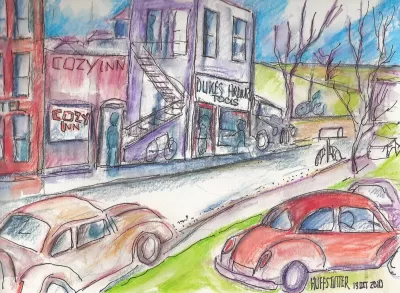
Traditionally, artists and other bohemian creatives favor low-cost urban living, often gathering in "arts districts." Today's rising urban rents might turn that pattern on its head as artists migrate to the ultimate destination in ironic cool: small towns.
According to this piece in Nonprofit Quarterly, "small towns are reinventing themselves through the arts and attracting new revenue streams and business." Anne Katz, executive director of Arts Wisconsin, cites an "explosion" of art facilities and programs in her state. From community centers to galleries, festivals to theater companies, many towns are encouraging investment in an arts scene.
The author notes that "[Nonprofit Quarterly] is exposed to a lot of pitches for stories about the civil sector where the hype clearly outpaces any real movement. It's a tendency we are not fond of, though those stories clearly do show some creativity. But Katz's narrative is helped by the reality on the ground."
Read the full story: Developing a Narrative to Advance an Issue: The Case for Creative Placemaking in Small Towns

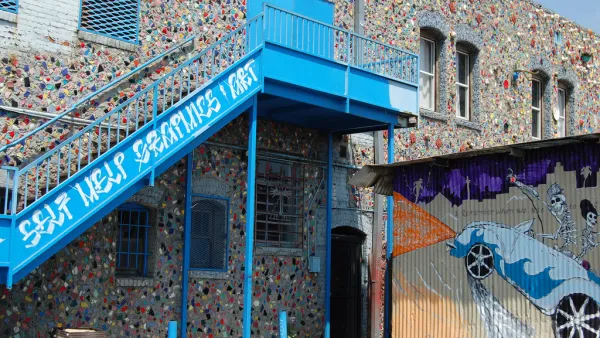
On the Natural Urbanism of East L.A. Artists
The planning process often suffers from a lack of community engagement. According to James Rojas, planners can learn from the on-the-ground urbanism of artists in East L.A.
Rural Areas Embrace the Arts for Economic Development
A burgeoning revitalization model uses the arts as an opportunity to bring in outside money while hiring local.
Artists Breathe New Life Into Pennsylvania Town
Long suffering Rust Belt woes and lacking the name recognition of a Pittsburgh or Detroit, York opened its doors to another overlooked group: artists. The results so far are impressive.

Planetizen Federal Action Tracker
A weekly monitor of how Trump’s orders and actions are impacting planners and planning in America.

Amtrak, CN end decades-long dispute with eight-year agreement
The new operating agreement establishes an updated framework for the companies to work together, including processes to resolve disputes.

Judges permit Denver to divert 77,000 acre feet from the Colorado River for reservoir expansion
Overuse and climate change have caused the Colorado River’s water levels to plummet.

NYC DOT wants faster, more permanent street upgrades
The city is examining ways to build more concrete infrastructure without getting entangled in 'decades-long' projects.

'Something we’ve never seen before:' rising utility rates could strain city finances nationwide
Data centers, climate change and other factors have caused utility rates in the United States to increase by 38% since 2020.

Trump to overrule local leaders, lease millions of acres of America’s Pacific Island territories’ seafloors to mining companies
International law says that the Indigenous people of America’s territories have a right to prior and informed consent regarding projects that impact their countries.

FREE Course: Walkable City 1: Why Walkability?
After describing his path towards focusing on walkability as the essence of good planning, Jeff Speck marches through his five principal reasons for making more walkable places.
Reinventing Malls: Planning Alchemy—Turning Gray Fields Into Gold
The course focuses on the opportunities and imperatives that shape reinvention of mall sites.

Harvard University Graduate School of Design
KFH Group Inc.
Greater Baltimore Committee
The Architects Foundation
University of Cincinnati Online
The Pocatello Development Authority
The Urban Renewal Agency of the City of Pocatello