Cities with low fatality rates for people on bikes have made strong commitments to building safe, protected bike networks and supporting Complete Streets.


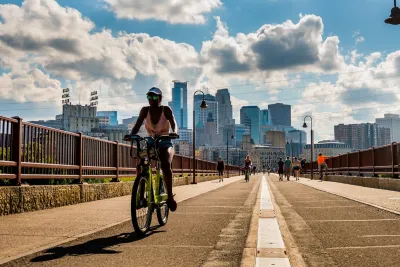
The Pedestrian & Cyclist Safety Index Report highlights the safest cities for cyclists in the United States, and the results reveal some patterns.
As Ron Johnson explains in Momentum, “The study covered nearly 300 U.S. cities with populations over 100,000, comparing rates of pedestrian and cyclist deaths against state averages and matching them with Walk and Bike Scores to create an overall safety index.”
The findings show a clear pattern: cities that have made sustained, data-driven investments in infrastructure and traffic-calming policies are seeing real results. In other words, safety isn’t luck — it’s policy.cities that have made sustained, data-driven investments in infrastructure and traffic-calming policies are seeing real results. In other words, safety isn’t luck — it’s policy.
New York City took the top spot, with the city having built over 600 miles of protected bike lanes since it launched its Vision Zero plan in 2014. Irvine, California, a master-planned community with ample bike paths and multi-use trails, came in second. Boston, Minneapolis, and Portland, Oregon round out the top five.
According to the report, the safest cities have five key things in common:
- Protected, connected networks
- Lower speed limits
- Complete Streets Policies
- Data-driven Vision Zero programs
- Cultural commitment to safety
FULL STORY: List of America’s Safest Cities for Cyclists Proves Safety has Nothing to do with Luck

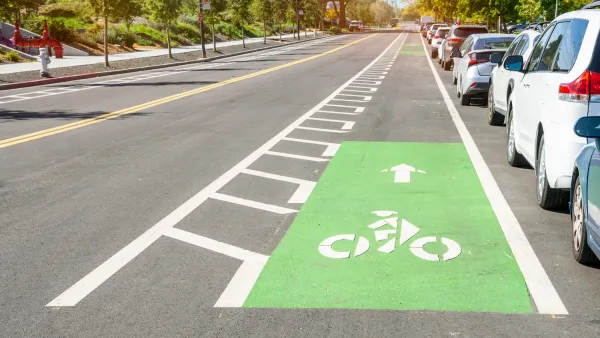
Why Bike Lanes Are Good: An Explainer for the US Transportation Secretary
Sean Duffy says there’s no evidence that bike lanes have benefits. Streetsblog — and federal agencies’ own data — beg to differ.
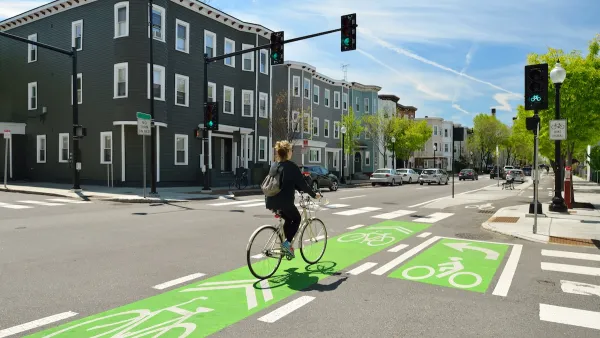
NACTO Releases Updated Urban Bikeway Guide
The third edition of the nationally recognized road design guide includes detailed design advice for roads that prioritize safety and accessibility for all users.
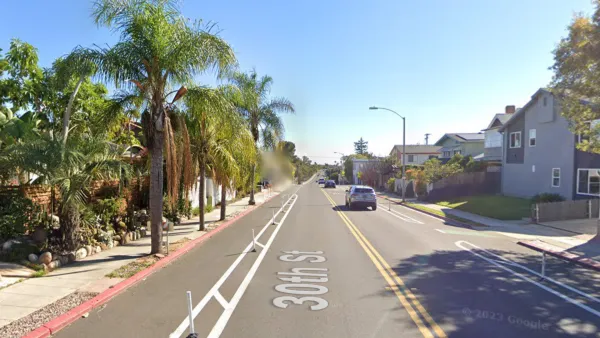
After San Diego Installed a Protected Bike Lane, Ridership More Than Doubled — and Hasn’t Stopped Growing.
“When people feel safe, they ride.”

Planetizen Federal Action Tracker
A weekly monitor of how Trump’s orders and actions are impacting planners and planning in America.

The state-sanctioned urbicide of Austin
People don’t kill cities. Freeways do.

US to reduce Colorado River water deliveries to Mexico
A new Colorado Treaty amendment reduces Mexico’s Colorado River water allocation by 250,000 acre feet.

Baltimore to break ground on $50 million Transit Priority Project
The project will bring faster bus trips, safer streets and better bike connections to Baltimore.

Airbnb launches $250 million 'last-dollar financing' housing accelerator, makes first investment in Austin
The company will put $6.4 million towards affordable housing development in Texas’ capital.

Guerilla urbanists are building DIY bus stop benches in Chicago
A before-and-after of one of the bus stops with a new bench. The new benches are not officially sanctioned or permitted, but the residents who placed them hope they will be the start of a network of DIY benches across the city.

FREE Course: Walkable City 1: Why Walkability?
After describing his path towards focusing on walkability as the essence of good planning, Jeff Speck marches through his five principal reasons for making more walkable places.
Reinventing Malls: Planning Alchemy—Turning Gray Fields Into Gold
The course focuses on the opportunities and imperatives that shape reinvention of mall sites.

Eagle County Government
Harvard University Graduate School of Design
Nashville Planning Department
The Architects Foundation
University of Cincinnati Online
The Pocatello Development Authority
The Urban Renewal Agency of the City of Pocatello
Journal of the American Planning Association