The $4.25 million RESTORE Program supports the recovery of parks, trails, and open spaces damaged by the January 2025 wildfires through targeted grants that promote community healing, wildfire resilience, and equitable access to nature.


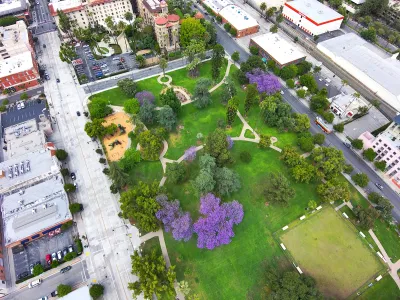
In response to the widespread destruction caused by the January 2025 wildfires, the Los Angeles County Regional Park and Open Space District (RPOSD) has launched the $4.25 million RESTORE Program to aid in rebuilding public parks, trails, and open spaces across Los Angeles County. Known formally as Recovery and Emergency Support for Trails, Open Space, and Recreation, the program offers non-competitive grants to cities, public agencies, and nonprofit landowners to help restore damaged recreational infrastructure, reforest burned areas, and improve wildfire resilience. Funding also supports planning and technical assistance to prepare jurisdictions for future Measure A opportunities.
RESTORE specifically focuses on areas most affected by the fires, including the Cities of Los Angeles, Malibu, Pasadena, Sierra Madre, and regional partners like the County of Los Angeles and the Mountains Recreation and Conservation Authority. The program includes $3 million in direct allocations based on fire impact, $1 million in partnership grants with nonprofits or Conservation Corps, and $250,000 for nonprofit landowners maintaining publicly accessible lands. RPOSD has designed the application process to be simple, responsive, and community-oriented, ensuring support reaches those in need efficiently.
RPOSD recognizes that parks and trails are more than just amenities — they are places for community healing, connection, and climate resilience. RESTORE grants will help not only repair what was lost but invest in a stronger, greener future. The program exemplifies RPOSD’s broader mission to ensure equitable access to parks and nature while fostering recovery and resilience in the face of climate-driven disasters.
FULL STORY: $4.25 Million RESTORE Program Launches to Rebuild Parks and Trails After January Wildfires

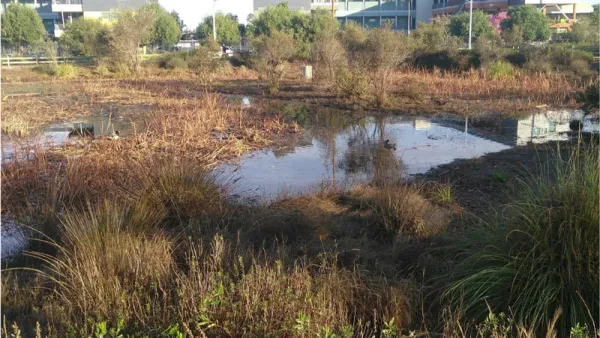
How South LA Green Spaces Power Community Health and Hope
Green spaces like South L.A. Wetlands Park are helping South Los Angeles residents promote healthy lifestyles, build community, and advocate for improvements that reflect local needs in historically underserved neighborhoods.
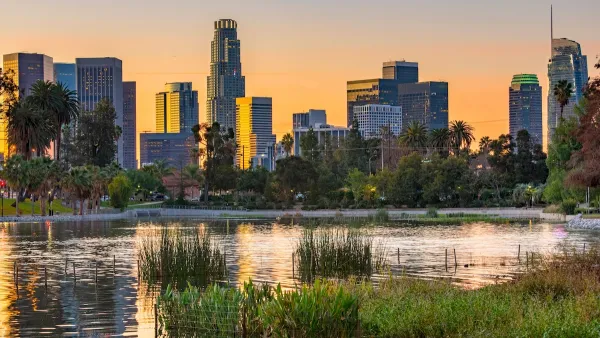
Delivering on the Promise of Parks
In LA County, even amid budget challenges, new parks are opening, targeted investments are being made in underserved communities, and long-term plans are guiding progress — demonstrating a sustained commitment to parks as essential infrastructure.
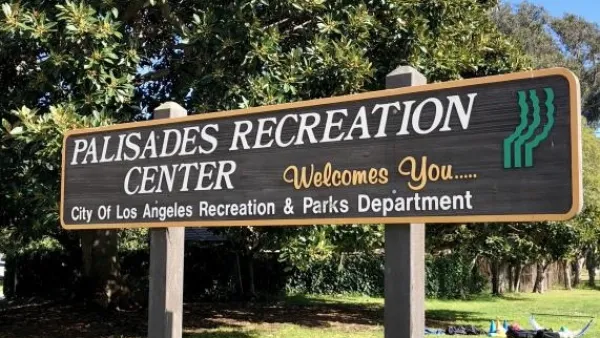
Private Donations Propel Early Restoration of Palisades Playground
Los Angeles has secured over $1.3 million in private funding to restore the Pacific Palisades playground months ahead of schedule, creating a modern, accessible space that supports community healing after recent wildfires.

Planetizen Federal Action Tracker
A weekly monitor of how Trump’s orders and actions are impacting planners and planning in America.

The state-sanctioned urbicide of Austin
People don’t kill cities. Freeways do.

US to reduce Colorado River water deliveries to Mexico
A new Colorado Treaty amendment reduces Mexico’s Colorado River water allocation by 250,000 acre feet.

5 New England states march closer to 800 megawatt wind energy project
Securing federal approval for the project may be complicated under the Trump administration, which has historically been hostile towards domestic wind power.

Baltimore to break ground on $50 million Transit Priority Project
The project will bring faster bus trips, safer streets and better bike connections to Baltimore.

Airbnb launches $250 million 'last-dollar financing' housing accelerator, makes first investment in Austin
The company will put $6.4 million towards affordable housing development in Texas’ capital.

FREE Course: Walkable City 1: Why Walkability?
After describing his path towards focusing on walkability as the essence of good planning, Jeff Speck marches through his five principal reasons for making more walkable places.
Reinventing Malls: Planning Alchemy—Turning Gray Fields Into Gold
The course focuses on the opportunities and imperatives that shape reinvention of mall sites.

Eagle County Government
Harvard University Graduate School of Design
Nashville Planning Department
The Architects Foundation
University of Cincinnati Online
The Pocatello Development Authority
The Urban Renewal Agency of the City of Pocatello
Journal of the American Planning Association