Los Angeles has secured over $1.3 million in private funding to restore the Pacific Palisades playground months ahead of schedule, creating a modern, accessible space that supports community healing after recent wildfires.


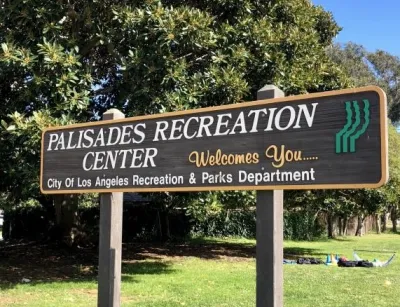
Mayor Karen Bass and other Los Angeles city leaders have announced over $1.3 million in private funding to restore the Pacific Palisades playground, enabling the project to move forward months ahead of schedule. The funding includes a nearly $1 million gift from FireAid, $300,000 in-kind support from GameTime, and additional support from Banc of California’s Wildfire Relief & Recovery Fund. The project is part of the city’s broader effort to rebuild the Palisades Village, which was heavily impacted by recent wildfires, and to provide spaces for families — especially children — to recover and reconnect.
The LA Parks Foundation will oversee the revitalization effort, which marks a significant milestone in public-private collaboration. Councilwoman Traci Park highlighted the community’s strong advocacy for a safer, more accessible play area and expressed deep gratitude to the donors for making the project possible. The new playground will replace a well-loved community space that had served local families for 35 years, and its modernized design is intended to better meet today’s safety and accessibility standards.
The redesigned playground will feature two adjacent areas for children aged 5 to 14, complete with rubber surfacing, integrated shade structures, and a special play fire truck honoring local first responders. The project has received enthusiastic support from city departments and local community leaders, including the Palisades Park Advisory Board, who view it as a symbol of resilience and healing. The upgraded space will provide a much-needed recreational hub for families and young people, playing a vital role in restoring a sense of normalcy and unity in the Palisades community.

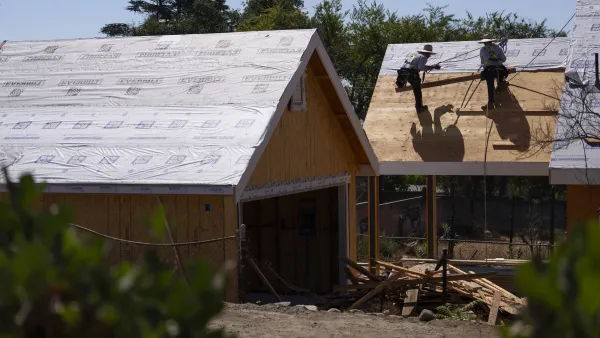
One Year After the LA Fires, Just 13% of Damaged Homes Have a Rebuilding Permit
After a slow start, permitting is starting to pick up.
What Housing Crisis?
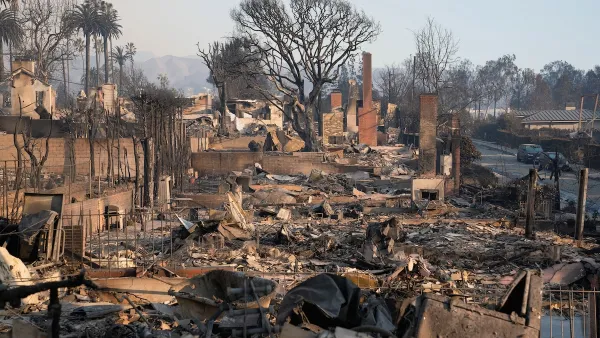
Los Angeles Mayor Karen Bass issued an executive order that prohibits the construction of duplexes, triplexes or fourplexes from replacing single-family-homes destroyed by the recent wildfires in Pacific Palisades, i.e., the suspension of SB 9.
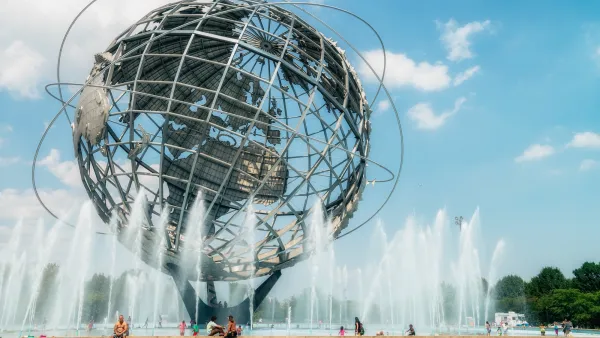
Historic Queens park is getting a $120M upgrade
The borough's largest park will undergo significant upgrades for accessibility, flood mitigation and historic preservation.

The state-sanctioned urbicide of Austin
People don’t kill cities. Freeways do.

US to reduce Colorado River water deliveries to Mexico
A new Colorado Treaty amendment reduces Mexico’s Colorado River water allocation by 250,000 acre feet.

New Jersey’s second-largest city bans standalone data centers
Jersey City will continue to allow co-location facilities, such as those meant for research institutions that store their own data.

Amtrak not solely to blame for New Jersey commuter rail's unreliability, report finds
A new study from the Garden State Initiative found that NJ Transit’s budget grew 20% across a 4 year period, but reliability declined significantly over the same period.

EPA erases limits on planet-warming pollution from power plants
Under Monday’s plan, power plants would still have some limits on how much mercury, arsenic and other contaminants they can emit.

Phoenix announces new on-demand transit service, more frequent RAPID buses
Both new services will launch in October, and are part of Phoenix's Project Effective Access Solutions for Easing Congestion.

FREE Course: Walkable City 1: Why Walkability?
After describing his path towards focusing on walkability as the essence of good planning, Jeff Speck marches through his five principal reasons for making more walkable places.
Reinventing Malls: Planning Alchemy—Turning Gray Fields Into Gold
The course focuses on the opportunities and imperatives that shape reinvention of mall sites.

Eagle County Government
Harvard University Graduate School of Design
Nashville Planning Department
The Architects Foundation
University of Cincinnati Online
The Pocatello Development Authority
The Urban Renewal Agency of the City of Pocatello
Journal of the American Planning Association