A new study ranks California State University campuses among the top institutions in California for economic mobility, demonstrating their success in providing affordable education that significantly boosts students’ long-term earnings.


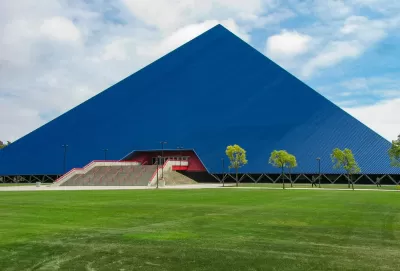
A new study, the California Mobility Index (CMI), ranks Cal State L.A. as the top university in California for boosting economic mobility among low- and moderate-income students. The study, created by the HEA Group and College Futures Foundation, evaluates how effectively four-year colleges improve students' socioeconomic standing based on educational costs and post-graduation earnings. As reported by Daniel Miller, nine of the top ten schools in the ranking are California State University (CSU) campuses, reinforcing the system’s role in providing affordable, high-quality education. The experiences of students like Marco Florez, whose mother’s CSU education transformed their family's trajectory, highlight the CSU’s impact in making higher education a vehicle for upward mobility.
The CMI’s methodology focuses on affordability and return on investment, showing that top CSU schools enable students to recover their educational costs quickly. At Cal State L.A., for instance, students from low-income backgrounds typically spend just over $18,000 on a four-year degree but earn a median of $59,000 a decade after enrolling. The study contrasts CSU’s accessibility with the higher costs of private institutions, which often take longer for students to financially justify. CSU’s strong placement in the rankings signals the system’s commitment to economic opportunity, with leaders like Cal State L.A. President Berenecea Johnson Eanes emphasizing the university's intentional focus on social mobility and community impact.
Despite the CSU system’s success in elevating students' economic standing, it faces financial challenges, including a proposed $375-million funding cut in the state budget. Advocates argue that continued investment in CSU is critical for sustaining its role as a leading engine of economic mobility. The findings of the CMI challenge traditional college rankings, which often prioritize exclusivity and prestige over affordability and long-term financial benefits. By centering on student outcomes, the CMI underscores the importance of institutions like CSU that provide accessible education while significantly improving graduates’ economic prospects.
Read the full story: When it comes to elevating livelihoods, a CSU degree is tops in California, study says

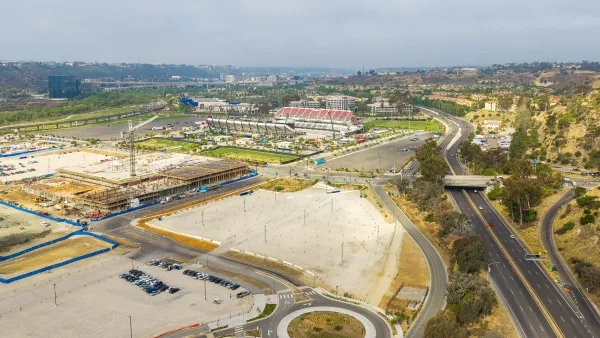
San Diego State intergenerational housing project will bring 250 homes for older adults to campus
The project is part of the university's Mission Valley campus that includes 4,600 housing units.
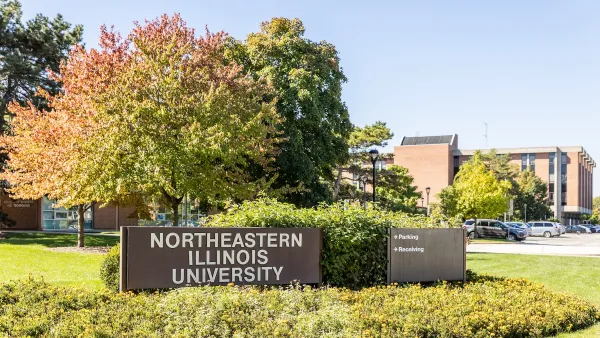
This university-owned city block in Chicago has languished for over a decade. Neighbors say it's time to let go
The university never built its planned student housing, letting a row of storefronts sit vacant for years.
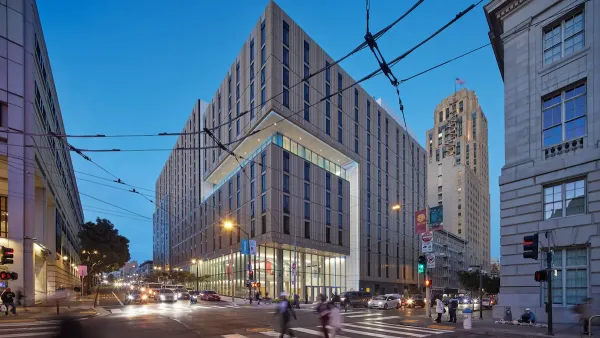
A San Francisco University Just Built Over 650 Affordable Units. Are Institutions the Answer to the Housing Crisis?
With access to planning resources not always available to private developers, universities are uniquely positioned to build housing quickly and cost-effectively.

Amtrak, CN end decades-long dispute with eight-year agreement
The new operating agreement establishes an updated framework for the companies to work together, including processes to resolve disputes.

Judges permit Denver to divert 77,000 acre feet from the Colorado River for reservoir expansion
Overuse and climate change have caused the Colorado River’s water levels to plummet.

Nation's most wind-powered state turns to coal as data centers increase energy demand
For the first time in decades, Iowa has increased its generation of coal power.

Boston has spent millions making the Green Line more accessible — and there’s no end in sight
While the city has invested millions into expanding and adding platforms to the Green Line to make it more accessible, new train cars set to arrive next year will be too tall for disabled passengers to board without raising the current platforms.

Idaho may see an 18% drop in federal surface transit funding — the largest estimated cut in the US
Transit systems in rural communities are much more reliant on federal funding to provide their services.

How ‘post-disaster gentrification’ alters neighborhoods after natural calamities
After hurricanes, fires or other calamities, the original residents of a community are often replaced by younger, wealthier residents.

FREE Course: Walkable City 1: Why Walkability?
After describing his path towards focusing on walkability as the essence of good planning, Jeff Speck marches through his five principal reasons for making more walkable places.
Reinventing Malls: Planning Alchemy—Turning Gray Fields Into Gold
The course focuses on the opportunities and imperatives that shape reinvention of mall sites.

City of Wisconsin Rapids
Harvard University Graduate School of Design
KFH Group Inc.
The Architects Foundation
University of Cincinnati Online
The Pocatello Development Authority
The Urban Renewal Agency of the City of Pocatello