The Eaton Fire has devastated Altadena, destroying homes, cultural landmarks, and community institutions, while residents rally to rebuild and preserve the town's rich history, diversity, and neighborly character.


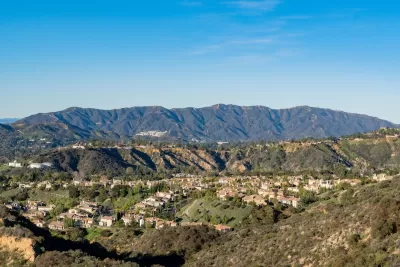
The Eaton Fire has devastated Altadena, a historically diverse and culturally vibrant community in Los Angeles County. Once a haven for Black families and artists, Altadena is grappling with the loss of generational homes, cultural landmarks, and its tight-knit community. Residents like Dennis “Buzz” Chatman and Adonis Jones mourn the destruction of spaces that symbolized progress, pride, and resilience for families of color, as well as the unique social fabric of their community.
Altadena’s rich cultural and artistic heritage has also been profoundly impacted, with institutions like the Zorthian Ranch, the Bunny Museum, and several beloved religious centers reduced to ashes. Artists and creatives, drawn to the town’s unique charm, lost not only homes but also irreplaceable artworks and archives. Despite the devastation, the community spirit persists, as residents reflect on the town’s significance and express determination to rebuild while preserving Altadena’s identity and history.
The fire has exacerbated economic challenges, as rising housing costs and fears of opportunistic developers threaten Altadena’s future. Displaced families worry about affordability and retaining their community's character amid the rebuilding process. Advocates like Rafael Agustin emphasize the importance of preventing private equity from reshaping the town into profit-driven developments, which could displace long-term residents and erode Altadena’s soul.
Efforts to restore Altadena’s infrastructure and community are already underway, with residents mobilizing to preserve the town’s heritage and inclusivity. Community leaders are calling for a mortgage moratorium and safeguards against exploitative redevelopment, hoping to ensure that Altadena’s residents can return and rebuild the unique, neighborly culture that defines their beloved community.
FULL STORY: L.A. County wildfires leave diverse and historic Altadena in ashes and rubble


UCLA Experts Offer Critical Support for LA Wildfire Response and Recovery
The UCLA Luskin Center for Innovation offers expert guidance on LA wildfire response and recovery, addressing critical issues like water safety, air quality, equitable rebuilding, and climate adaptation to promote resilience and sustainability.
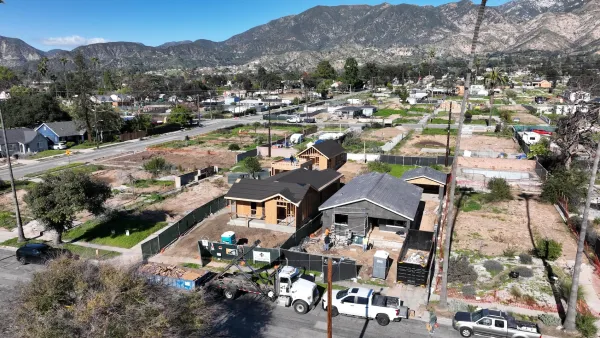
Almost 40% of LA fire survivors face a housing crisis
Many Angelenos who lost their homes in the Altadena and Pacific Palisades fires have already run out of temporary housing funds.
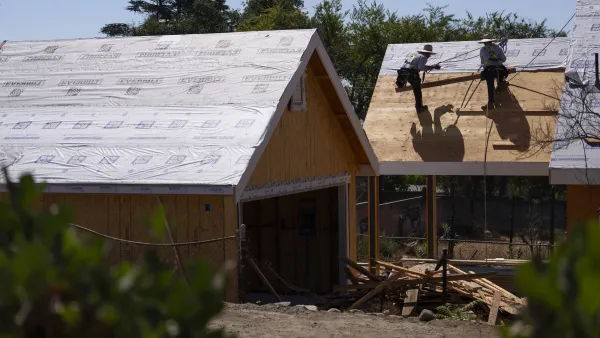
One Year After the LA Fires, Just 13% of Damaged Homes Have a Rebuilding Permit
After a slow start, permitting is starting to pick up.

Planetizen Federal Action Tracker
A weekly monitor of how Trump’s orders and actions are impacting planners and planning in America.

The state-sanctioned urbicide of Austin
People don’t kill cities. Freeways do.

US to reduce Colorado River water deliveries to Mexico
A new Colorado Treaty amendment reduces Mexico’s Colorado River water allocation by 250,000 acre feet.

Guerilla urbanists are building DIY bus stop benches in Chicago
A before-and-after of one of the bus stops with a new bench. The new benches are not officially sanctioned or permitted, but the residents who placed them hope they will be the start of a network of DIY benches across the city.

Mamdani overhauls NYC's Vision Zero plan with 100 new policy goals
The overhaul aims to reduce traffic deaths and make streets safer for pedestrians, cyclists and drivers through lower speed limits, new safety infrastructure and more.

Amtrak not solely to blame for New Jersey commuter rail's unreliability, report finds
A new study from the Garden State Initiative found that NJ Transit’s budget grew 20% across a 4 year period, but reliability declined significantly over the same period.

FREE Course: Walkable City 1: Why Walkability?
After describing his path towards focusing on walkability as the essence of good planning, Jeff Speck marches through his five principal reasons for making more walkable places.
Reinventing Malls: Planning Alchemy—Turning Gray Fields Into Gold
The course focuses on the opportunities and imperatives that shape reinvention of mall sites.

Eagle County Government
Harvard University Graduate School of Design
Nashville Planning Department
The Architects Foundation
University of Cincinnati Online
The Pocatello Development Authority
The Urban Renewal Agency of the City of Pocatello
Journal of the American Planning Association