The Traffic Monitoring site uses community-collected speed and volume data to reveal traffic patterns on local roads.


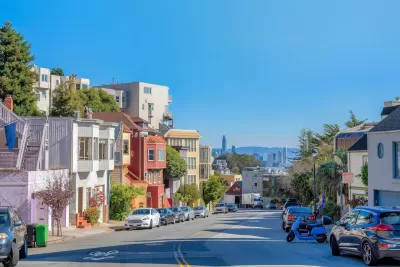
A new online tool compiles data from window-mounted computers that collect traffic data, reports Roger Rudick in Streetsblog San Francisco.
The tool brings together data from individually owned Telraam devices in the San Francisco Bay Area to allow road safety advocates to gain a better understanding of street safety and conditions.
As Rudick explains, “Residents on Lake Street in San Francisco purchased and installed the first Telraam sensors in North America and have sent several requests to SFMTA leadership begging the agency to acknowledge Telraam's data which shows daily vehicle volume and speeds exceeding thresholds set for Lake Street.” The city did not take action, saying it cannot use community-collected data to inform its decisions.
Now, the Traffic Monitoring map offers “a faster and easier way to interact with Telraam’s data so advocates can quickly pull insights from it.” Its creator, Stephen Braitsch, hopes the data will help move the needle on street safety.
FULL STORY: New ‘Traffic Monitoring’ Site Consolidates Data on Car Volumes & Speeds


Boston budget proposal kills funding for dozens of road safety projects
Mayor Wu's FY2027 budget eliminates or reduces funding for multiple unbuilt street safety projects.
Sacramento Faces a $5 Billion Backlog of Transportation Projects
Between 2015 and 2024, 22,538 injury or fatal crashes occurred on Sacramento streets.

SF Street Safety Act Replaces Expired Vision Zero Plan
In 2025, 15 people have died in crashes in San Francisco, putting the city far behind its goal of eliminating traffic deaths by 2024.

Planetizen Federal Action Tracker
A weekly monitor of how Trump’s orders and actions are impacting planners and planning in America.

The state-sanctioned urbicide of Austin
People don’t kill cities. Freeways do.

US to reduce Colorado River water deliveries to Mexico
A new Colorado Treaty amendment reduces Mexico’s Colorado River water allocation by 250,000 acre feet.

Brightline West’s future may rely on $6 billion federal loan
The company has until Nov. 2 to make a $400 million equity investment into its proposed high-speed rail line.

LA Metro’s ultimatum: no extra buses for LA28 if federal funding isn’t imminently secured
If Metro does not provide additional buses, LA28 organizers will have to find a new way to manage Olympic traffic. LA28’s budget does not include a line item for transit.

Colorado’s Largest Data Center Could Rise Next to Homes — Without a Public Hearing
The proposed campus would consume 11 times the power of Denver International Airport; as it has across the country, opposition mounts.

FREE Course: Walkable City 1: Why Walkability?
After describing his path towards focusing on walkability as the essence of good planning, Jeff Speck marches through his five principal reasons for making more walkable places.
Reinventing Malls: Planning Alchemy—Turning Gray Fields Into Gold
The course focuses on the opportunities and imperatives that shape reinvention of mall sites.

Eagle County Government
Harvard University Graduate School of Design
Nashville Planning Department
The Architects Foundation
University of Cincinnati Online
The Pocatello Development Authority
The Urban Renewal Agency of the City of Pocatello
Journal of the American Planning Association