Bike infrastructure tends to make vehicle travel faster, improve road safety, and bring more revenue to local businesses.


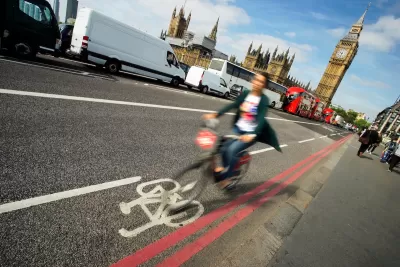
In an article for CBC, Nicole Mortillaro highlights research from cities around the world that shows that, despite popular misconceptions, bike lanes do not increase traffic congestion.
The article is in part a response to a contentious proposed Ontario, Canada law that would “would require municipalities to get provincial approval to install any bike lanes that would remove a lane of vehicle traffic.”
According to studies, dedicated bike lanes increase the number of people biking and reduce the number of cars on the street. “Bike Share Toronto statistics show that ridership on its network of shared bikes has increased dramatically since 2015, when 665,000 bike trips were made annually. In 2023, that shot up to 5.7 million trips.”
In New York City, the average time it takes cars to travel on a major thoroughfare decreased from 4.5 minutes to 3 minutes after bike lanes were installed. “Other case studies found either no impacts on traffic, or minimal delays — anywhere from a few seconds to just over a minute.”
The article highlights other studies from Canada and beyond, noting that bike lanes are also shown to increase safety for pedestrians by decreasing traffic speeds. And in many cases, they also bring additional revenue to local businesses.
Read the full story: Do bike lanes really cause more traffic congestion? Here's what the research says

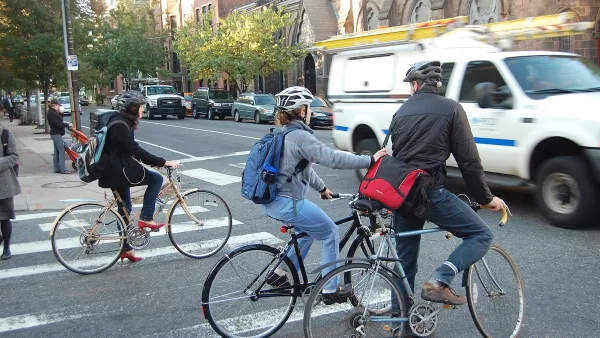
Philadelphia Swaps Car Lanes for Bikeways in Unanimous Vote
The project will transform one of the handful of streets responsible for 80% of the city’s major crashes.
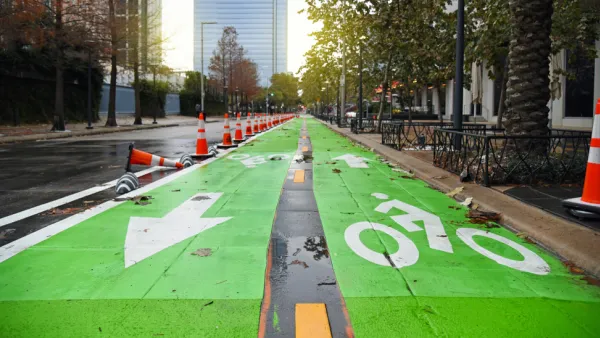
Houston Mayor Pauses Complete Streets Projects
The move raises concerns among road safety advocates who point out that traffic deaths continue to rise.
NYC Streets Plan Remains Largely on Paper
For the second year in a row, the city failed to meet legally required targets for building protected bike lanes and bus lanes.

Planetizen Federal Action Tracker
A weekly monitor of how Trump’s orders and actions are impacting planners and planning in America.

Amtrak, CN end decades-long dispute with eight-year agreement
The new operating agreement establishes an updated framework for the companies to work together, including processes to resolve disputes.

Judges permit Denver to divert 77,000 acre feet from the Colorado River for reservoir expansion
Overuse and climate change have caused the Colorado River’s water levels to plummet.

How ‘post-disaster gentrification’ alters neighborhoods after natural calamities
After hurricanes, fires or other calamities, the original residents of a community are often replaced by younger, wealthier residents.

Maryland local governments examine if they should have more power to raise property taxes
Maryland’s housing market is out of reach for the majority of moderate-income residents.

Northwest rail fans eager for Sept. 30 debut of Amtrak’s Airo fleet
Get ready for that new train smell and more seats. But they won’t go faster or run more frequently on the Cascades route in Washington and Oregon.

FREE Course: Walkable City 1: Why Walkability?
After describing his path towards focusing on walkability as the essence of good planning, Jeff Speck marches through his five principal reasons for making more walkable places.
Reinventing Malls: Planning Alchemy—Turning Gray Fields Into Gold
The course focuses on the opportunities and imperatives that shape reinvention of mall sites.

Harvard University Graduate School of Design
KFH Group Inc.
Greater Baltimore Committee
The Architects Foundation
University of Cincinnati Online
The Pocatello Development Authority
The Urban Renewal Agency of the City of Pocatello