Verbal and physical assaults against transit operators have grown alarmingly in the last decade.


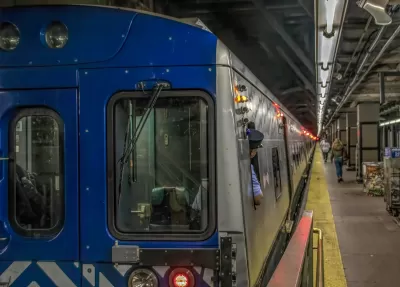
A General Directive issued by the Federal Transit Administration (FTA) requires transit agencies to address violence against transit workers. “The General Directive is necessary because from 2013 to 2021, the National Transit Database (NTD) documented a 120 percent increase in the number of assaults against transit workers,” according to a FTA press release.
As U.S. Transportation Deputy Secretary Polly Trottenberg noted, “Over the past decade, we’ve seen a tragic and unacceptable rise in verbal and physical assaults on the men and women who are critical in providing a transportation lifeline for millions of people.”
Over 700 agencies subject to FTA’s Public Transportation Agency Safety Plans (PTASP) regulation must complete a series of actions including conducting a risk assessment, identifying strategies to mitigate risk, and reporting to the FTA. “Every transit agency serving a large, urbanized area (with a population of more than 200,000 people) must comply with PTASP requirements to involve the joint labor-management Safety Committee when identifying safety risk mitigations and strategies.”
FULL STORY: Biden-Harris Administration Requires Transit Agencies Nationwide to Address Assaults Against Transit Workers


FTA Issues Draft Directive on Transit Worker Safety
The agency says assaults on transit workers are at ‘unacceptable’ levels.

How Inequality Impacts Transit Safety
Transit workers are being assaulted by riders at alarming rates, and inequity may be partly to blame.
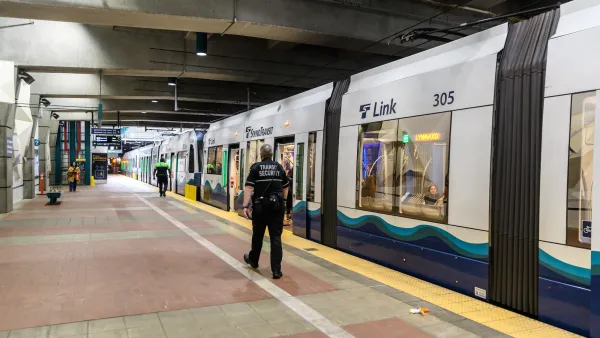
Perception vs. reality: NYC transit crime declined by 14% since 2019
In spite of popular perceptions, crime on many US transit systems is steadily dropping.

Planetizen Federal Action Tracker
A weekly monitor of how Trump’s orders and actions are impacting planners and planning in America.

The state-sanctioned urbicide of Austin
People don’t kill cities. Freeways do.

US to reduce Colorado River water deliveries to Mexico
A new Colorado Treaty amendment reduces Mexico’s Colorado River water allocation by 250,000 acre feet.

5 New England states march closer to 800 megawatt wind energy project
Securing federal approval for the project may be complicated under the Trump administration, which has historically been hostile towards domestic wind power.

Baltimore to break ground on $50 million Transit Priority Project
The project will bring faster bus trips, safer streets and better bike connections to Baltimore.

Airbnb launches $250 million 'last-dollar financing' housing accelerator, makes first investment in Austin
The company will put $6.4 million towards affordable housing development in Texas’ capital.

FREE Course: Walkable City 1: Why Walkability?
After describing his path towards focusing on walkability as the essence of good planning, Jeff Speck marches through his five principal reasons for making more walkable places.
Reinventing Malls: Planning Alchemy—Turning Gray Fields Into Gold
The course focuses on the opportunities and imperatives that shape reinvention of mall sites.

Eagle County Government
Harvard University Graduate School of Design
Nashville Planning Department
The Architects Foundation
University of Cincinnati Online
The Pocatello Development Authority
The Urban Renewal Agency of the City of Pocatello
Journal of the American Planning Association