PeopleForBikes has evaluated bike networks in thousands of cities across the United States and identified several that have achieved “incredible increases” in just a few years.


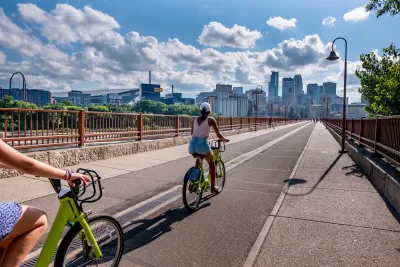
According to a recent article on PeopleforBikes.org, “Each year, PeopleForBikes’ City Ratings program evaluates thousands of communities worldwide on the quality of their low-stress bike networks through our Bicycle Network Analysis (BNA).
City Ratings data has revealed that 39 cities in the United States boosted their scores by at least 20 points between 2020 and 2024 through policy changes like Complete Street mandates, lower speed limits, and increased state and local funding, as well as implementation of strategies like protected bike lanes, reallocated space, intersection treatments, network connections, and data.
So which cities have earned the title of “most-improved bike network” between 2020 and 2024?
- Minneapolis, Minnesota (54-point increase)
- Saint Paul, Minnesota (52-point increase)
- Jackson, Wyoming (48-point increase)
- Bloomington, Indiana (45-point increase)
- Aurora, Illinois (40-point increase)
- St. Louis Park, Minnesota (40-point increase)
- Corvallis, Oregon (39-point increase)
- Key West, Florida (39-point increase)
- Coeur D'Alene, Idaho (39-point increase)
- Somerville, Massachusetts (38-point increase)
- Cambridge, Massachusetts (37-point increase)
For details on how these cities improved their scores, and for an impressive list of honorable mentions, check out the original article below.
FULL STORY: 2024’s Most Improved Cities for Biking

How to Build More Bike Infrastructure
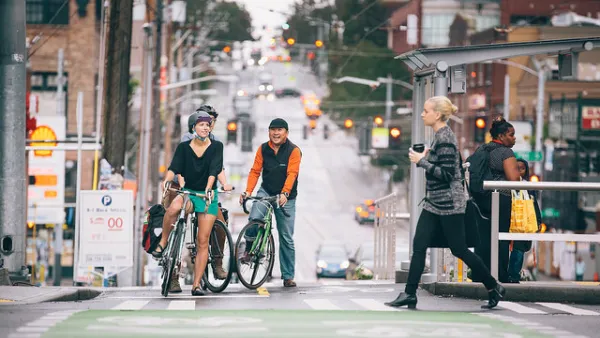
A national philanthropic program designed to help cities produce more bike infrastructure has been a resounding success, according to recent analysis.
What's Behind Copenhagen's Success as a Cycling City?
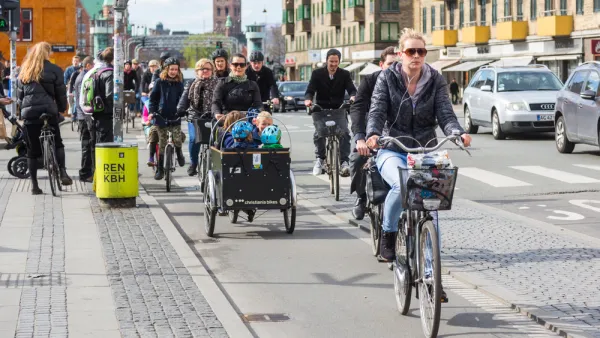
Denmark's capital is a model city in terms of biking, but the reasons that bikes rule go beyond political leadership and robust infrastructure.
Copenhagen Update: On-Street Auto Parking Replaced by Bike Parking
Copenhagen may have already met its bicycling goal of 50 percent of modal share for commuting, but it needs to improve the share for all trips. With less funding available, the city is pursuing low cost strategies, such as auto parking removal.

The state-sanctioned urbicide of Austin
People don’t kill cities. Freeways do.

US to reduce Colorado River water deliveries to Mexico
A new Colorado Treaty amendment reduces Mexico’s Colorado River water allocation by 250,000 acre feet.

New Jersey’s second-largest city bans standalone data centers
Jersey City will continue to allow co-location facilities, such as those meant for research institutions that store their own data.

Amtrak not solely to blame for New Jersey commuter rail's unreliability, report finds
A new study from the Garden State Initiative found that NJ Transit’s budget grew 20% across a 4 year period, but reliability declined significantly over the same period.

EPA erases limits on planet-warming pollution from power plants
Under Monday’s plan, power plants would still have some limits on how much mercury, arsenic and other contaminants they can emit.

Phoenix announces new on-demand transit service, more frequent RAPID buses
Both new services will launch in October, and are part of Phoenix's Project Effective Access Solutions for Easing Congestion.

FREE Course: Walkable City 1: Why Walkability?
After describing his path towards focusing on walkability as the essence of good planning, Jeff Speck marches through his five principal reasons for making more walkable places.
Reinventing Malls: Planning Alchemy—Turning Gray Fields Into Gold
The course focuses on the opportunities and imperatives that shape reinvention of mall sites.

Eagle County Government
Harvard University Graduate School of Design
Nashville Planning Department
The Architects Foundation
University of Cincinnati Online
The Pocatello Development Authority
The Urban Renewal Agency of the City of Pocatello
Journal of the American Planning Association