Advocates of the program are calling on Gov. Hochul to reinstate the program in light of the decision.


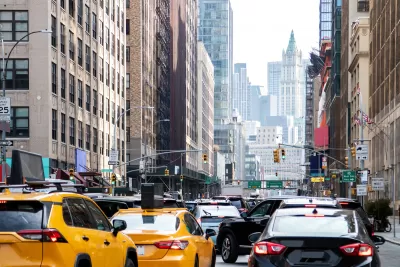
In the ongoing saga of New York City’s beleaguered congestion pricing program, a federal judge ruled against a lawsuit challenging the program, throwing Governor Kathy Hochul’s decision to suspend it into further question.
As Gersh Kuntzman explains in Streetsblog NYC, the lawsuit accused the MTA of violating the National Environmental Policy Act. The judge disagreed, saying that the MTA conducted a “meticulous” 45,000-page analysis of the program’s potential impacts.
Kuntzman outlines the judge’s point-by-point refutation of the plaintiffs’ arguments. “Liman's 113-page opinion dealt mostly with jurisdictional claims and whether plaintiffs had sued the right people or whether they had standing in the first place. But it also included a clear lack of patience for most of the plaintiffs' arguments, such as the contention that congestion pricing was such a significant change that its magnitude alone required a formal environmental impact statement instead of the supposedly less-rigorous environmental assessment.”
Commenting on the decision, Riders Alliance Executive Director Betsy Plum said, “Now that a federal court has upheld the MTA's exhaustive environmental review, our governor should feel comfortable with moving forward and delivering the program's benefits.”
A ruling in a separate case brought by the state of New Jersey is still pending.
Read the full story: Federal Judge Sets Aside a Key Congestion Pricing Lawsuit
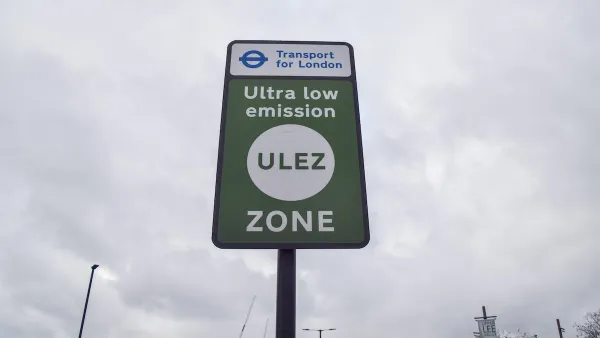
London Congestion Pricing Zone Has No Impact on Local Spending
The city’s cordon pricing scheme did not affect how much people spent at local businesses, new research finds.

Congestion Pricing Compromise?
A CBS News New York report suggests that Gov. Kathy Hochul is considering lifting her ‘indefinite pause’ on the Manhattan congestion pricing project if the $15 toll was lowered. Litigation threatened by the NYC comptroller may be a factor.
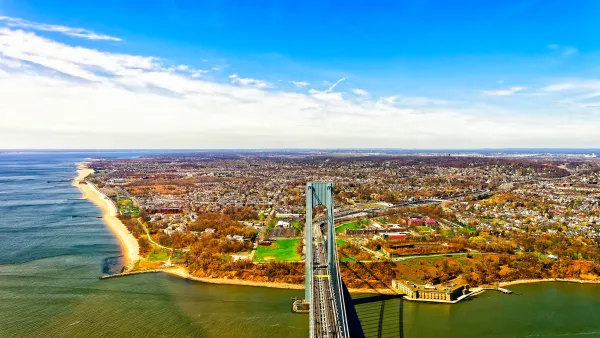
Staten Island Sues Over Congestion Pricing, Too
The borough’s president says the plan would bring more traffic to Staten Island and unjustly burden its residents with air pollution and tolls.

Planetizen Federal Action Tracker
A weekly monitor of how Trump’s orders and actions are impacting planners and planning in America.

California plans to bury El Niño’s downpour
If the state plays its cards right, it may be able to store a billion acre-feet of El Niño’s water in aquifers.

Desperate measures: Advocates weigh draining Lake Powell to fill Colorado River
Draining the reservoir could reduce evaporation losses by a couple hundred thousand acre-feet.

Mamdani’s pied-à-terre tax survives legal challenge
A panel of judges found that the plaintiffs failed to demonstrate injury as a result of New York City's implementation of the tax.

Eastern Nebraska is running out of electricity
Data centers and electrification are straining eastern Nebraska’s grid, throttling economic development.

Seattle passes record-breaking transit services expansion
Proposition 1 will double the city’s transit tax to add 95,000 more bus trips and preserve 180,000 bus trips annually.

FREE Course: Walkable City 1: Why Walkability?
After describing his path towards focusing on walkability as the essence of good planning, Jeff Speck marches through his five principal reasons for making more walkable places.
Reinventing Malls: Planning Alchemy—Turning Gray Fields Into Gold
The course focuses on the opportunities and imperatives that shape reinvention of mall sites.

City of Rosemead
Rutgers University, Edward J. Bloustein School of Planning and Public Policy
One Hundred Miles
University of Michigan School for Environment and Sustainability (SEAS)
Hunter College, City University of New York (CUNY)
The Architects Foundation
City of Cambridge
Montrose County
The Pocatello Development Authority