Developers are working on a new cultural commercial development that will offer unique Asian architecture, culture, shopping, restaurant, and retail services to Nashvillians and visitors from surrounding cities and states.



According to an article from the Nashville Post, a group of local business owners and developers are working on plans to bring the first Chinatown to the city by 2027. It will be located in the Antioch neighborhood, 12 miles southeast of downtown Nashville. “District 32 Metro Councilmember Joy Styles said the development makes sense given Antioch's fast growth and population representing multiple cultural backgrounds,” reports Nicolle S. Praino.
The 4.83-acre property, which will be known as Tennessee Nashville Chinatown, was purchased by the partnership in May and has already secured its first tenant: Pan-Asia Supermarket, which will offer grocery items and a food court. Plans include a total of 100,000 square feet of mixed-use buildings that will feature restaurants, retail and services, offices, and rooftop space geared toward both the local Asian community, non-Asian residents, and tourists alike. It’s expected to create 300 jobs during construction and 500 jobs when complete.
Read the full story: Investors to develop city’s first Chinatown in Antioch


New York City's Dancing Prohibition Remains a Barrier to Entry, Equality
New York’s 1960s-era zoning code still prohibits dancing in small bars and restaurants in more than 80 percent of the city, but Mayor Eric Adams and advocates want to change that.
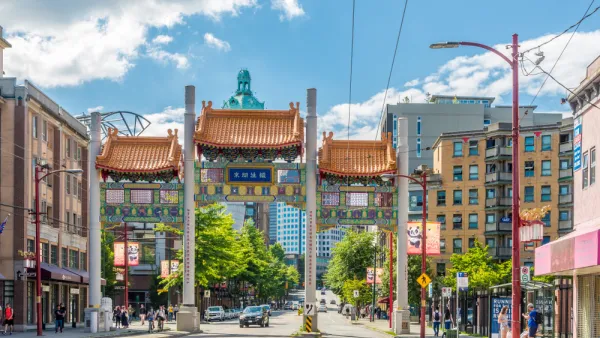
Gentrification in Chinatown Harms Social Cohesion, Food Security
A new report focuses on the consequences of gentrification in Vancouver's Chinatown neighborhood.
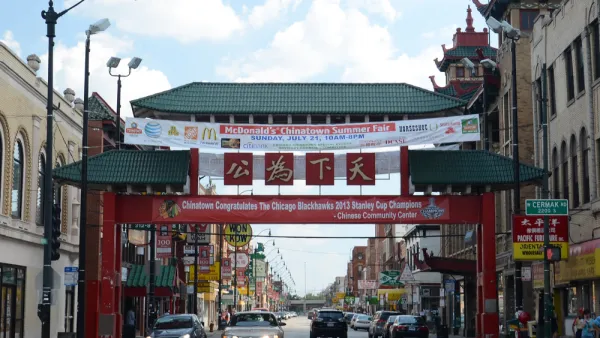
Chicago Chinatown's an Outlier of Success
While the cultural authenticity and geographic footprint of Chinatowns around the United States shrink, Chicago's is growing. What can other cities learn from Chicago's model?

Planetizen Federal Action Tracker
A weekly monitor of how Trump’s orders and actions are impacting planners and planning in America.

California plans to bury El Niño’s downpour
If the state plays its cards right, it may be able to store a billion acre-feet of El Niño’s water in aquifers.

Chicago breaks ground on $3 billion megadevelopment
The new neighborhood, titled Foundry Park, will one day host 3,700 residences.

California High-Speed Rail Authority CEO resigns after $600,000 scandal
Under Ian Choudri, the authority used taxpayer dollars to fund first class flights and trips to nightclubs.

Want to study the Missouri River? Soon, you may need unanimous approval from 10 states
Legislation would require 10 governors’ permission to study or build projects moving water outside the basin.

Desperate measures: Advocates weigh draining Lake Powell to fill Colorado River
Draining the reservoir could reduce evaporation losses by a couple hundred thousand acre-feet.

FREE Course: Walkable City 1: Why Walkability?
After describing his path towards focusing on walkability as the essence of good planning, Jeff Speck marches through his five principal reasons for making more walkable places.
Reinventing Malls: Planning Alchemy—Turning Gray Fields Into Gold
The course focuses on the opportunities and imperatives that shape reinvention of mall sites.

City of Rosemead
Rutgers University, Edward J. Bloustein School of Planning and Public Policy
One Hundred Miles
Hunter College, City University of New York (CUNY)
The Architects Foundation
University of Cincinnati Online
City of Cambridge
Montrose County
The Pocatello Development Authority