Recent extreme flooding along the San Jacinto River has prompted a review of the progress of Harris County’s flood-prone home buyout program.


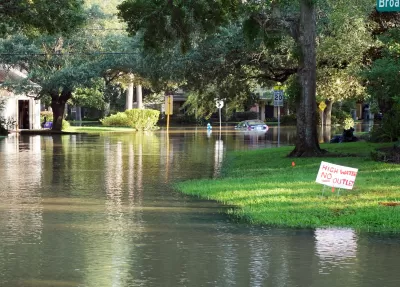
The site of the United States’s “longest-running experiment in the adaptation policy known as ‘managed retreat’” experienced extensive flooding last week when severe rainstorms dropped months’ worth of rain on Houston in just a few days, reports Jake Bittle in an article for Grist. Over the past decade, “Harris County has spent millions of dollars buying out and demolishing at-risk homes along the [San Jacinto River],” where some of the deepest flooding happened. According to Bittle, “the past week’s flooding has demonstrated that even this nation-leading program hasn’t been able to keep pace with escalating disaster.
Over the past thirty years, the county has bought around 600 at-risk homes along the waterway, but still has another 1,600 on its list, along with the challenges of uncertain funding and reluctant property owners. Houston is no stranger to property buy-outs. Bittle reports that Harris County was one of the first local governments in the country to buy out flood-prone homes with federal money, and his article details the county’s various efforts—and struggles—over the years. Perhaps the biggest challenge is, even if recent flooding has convinced all the homeowners in the area it is time to leave, the program doesn’t currently have enough money to make it happen.
Buyout programs to relocate homeowners are certainly a better alternative to rebuilding over and over again — and likely less costly in the long run. But as Houston’s program shows us, without proper funding they cannot keep pace with the increasingly severe weather events and sea level rise caused by climate change.
FULL STORY: Texas flooding brings new urgency to Houston home buyout program

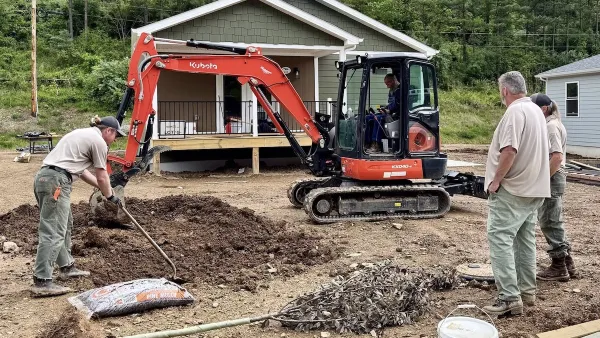
Kentucky Nonprofits Build ‘Higher Ground’ Homes
After destructive floods displaced thousands of Kentucky families, developers are building climate-resilient homes away from flood-prone areas.
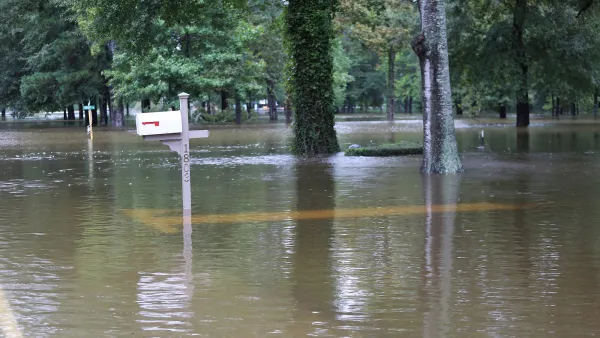
Black Towns Face Threats From Flooding and Buyouts
Many of the historic towns would disappear if flood buyout programs force residents to relocate.
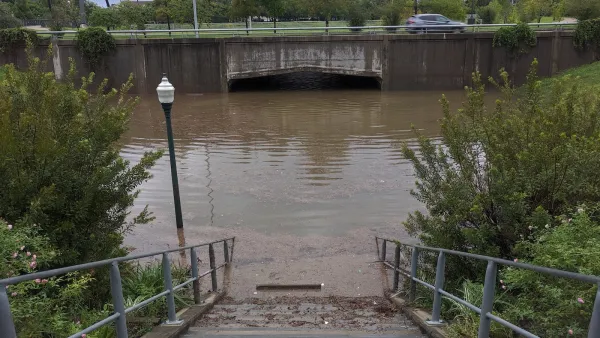
Houston's pedestrian tunnels are flooding, exposing flaws in the city's pedestrian infrastructure
The city has received over 4,000 complaints about inaccessible sidewalks this year.

Planetizen Federal Action Tracker
A weekly monitor of how Trump’s orders and actions are impacting planners and planning in America.

The state-sanctioned urbicide of Austin
People don’t kill cities. Freeways do.

US to reduce Colorado River water deliveries to Mexico
A new Colorado Treaty amendment reduces Mexico’s Colorado River water allocation by 250,000 acre feet.

5 New England states march closer to 800 megawatt wind energy project
Securing federal approval for the project may be complicated under the Trump administration, which has historically been hostile towards domestic wind power.

Baltimore to break ground on $50 million Transit Priority Project
The project will bring faster bus trips, safer streets and better bike connections to Baltimore.

Airbnb launches $250 million 'last-dollar financing' housing accelerator, makes first investment in Austin
The company will put $6.4 million towards affordable housing development in Texas’ capital.

FREE Course: Walkable City 1: Why Walkability?
After describing his path towards focusing on walkability as the essence of good planning, Jeff Speck marches through his five principal reasons for making more walkable places.
Reinventing Malls: Planning Alchemy—Turning Gray Fields Into Gold
The course focuses on the opportunities and imperatives that shape reinvention of mall sites.

Eagle County Government
Harvard University Graduate School of Design
Nashville Planning Department
The Architects Foundation
University of Cincinnati Online
The Pocatello Development Authority
The Urban Renewal Agency of the City of Pocatello
Journal of the American Planning Association