A number of factors explain the partisan divide in support for transit.


Writing in Governing, Jared Brey examines the partisan divide over public transit. “It’s not a perfect partisan divide — transit investments have Republican supporters and Democratic detractors — but it’s been a feature of transportation planning going back decades.”
As Brey explains, “The reason for it has as much to do with geography as politics,” with support for transit largely splitting along rural-urban lines. “Republicans may also be less receptive to environmental arguments in favor of public transit than Democrats. But the ideological lines are messy: Advocates often point out that transit service gives people more choices for how to get around, while roads designed for private vehicles require huge public investments, too.”
Meanwhile, rural voters are unlikely to support state-level investments in public transit that primarily serves rural areas. “But it isn’t just a disinterest in big-city issues that makes transit a tough sell for rural legislators.” Rural communities have a harder time raising the matching funds needed for many state and federal grants, and rural transit — which can be a lifeline for many residents — is rarely cost-effective.
Read the full story: What Drives Republican Opposition to Transit?

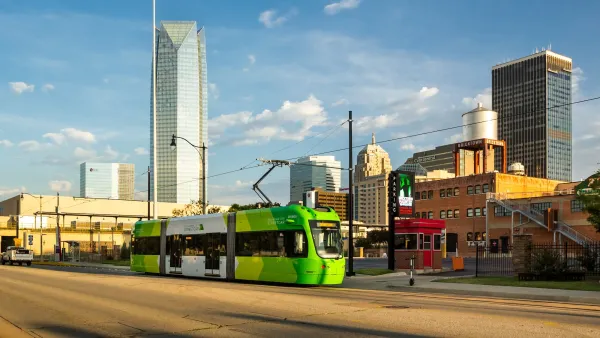
Oklahoma City bets on transit
The city's mayor is urging residents to support a new sales tax that would fund transit expansion in the growing city.
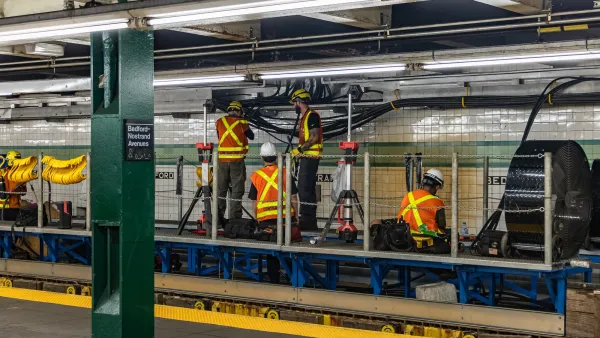
Report: BUILD Act would strip over $2B in transit projects from California and New York alone
The proposed federal transportation bill would eliminate billions in funding from the Federal Transit Administration, the Federal Railroad Administration and other federal agencies that fund transit and multimodal transportation programs.
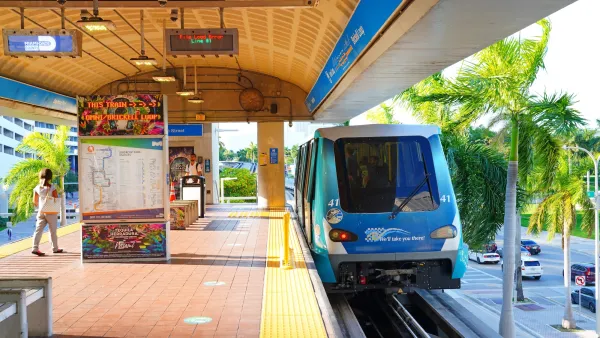
Miami-Dade budget proposes draining rail fund, bus service cuts
The county mayor says the diversion of rail funds is necessary to prevent deeper service cuts.

Planetizen Federal Action Tracker
A weekly monitor of how Trump’s orders and actions are impacting planners and planning in America.

‘Going backwards:’ Baltimore mayor, students rally against state's transit funding plan
Maryland's proposed six-year plan provides no funding for Baltimore’s BMORE bus program and reduces its road maintenance funding.

Detroit to transform waterfront with $2.2 billion investment
Developers will convert about 18 acres of unused parking lot space into civic spaces.

MTA invests $1.1 billion in ‘nearly-impossible’-to-evade fare gates
The new technology marks the Metropolitan Transit Authority's first turnstile redesign in decades.

HUD modernizes 50-year-old manufactured housing framework
The Next Generation Manufactured Housing Action Plan establishes new energy-efficiency standards for manufactured homes, and new guidelines for anchoring them.

New CA housing laws tear down development red tape
Recently-signed legislation makes building starter homes and ADUs cheaper and faster in California.

FREE Course: Walkable City 1: Why Walkability?
After describing his path towards focusing on walkability as the essence of good planning, Jeff Speck marches through his five principal reasons for making more walkable places.
Reinventing Malls: Planning Alchemy—Turning Gray Fields Into Gold
The course focuses on the opportunities and imperatives that shape reinvention of mall sites.

One Hundred Miles
County of Mendocino
planning NEXT
The Architects Foundation
University of Cincinnati Online
Montrose County
Northern Illinois Transit Authority (NITA)
The Pocatello Development Authority