An analysis of California transit employees found a high rate of burnout among operators who face unpredictable work schedules, high housing costs, and occasional violence.


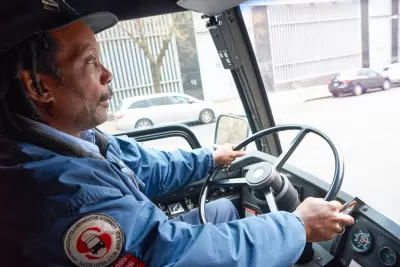
A new report from UCLA's Institute for Transportation Studies highlights the causes of the persistent labor shortage in public transit at agencies across California.
As Melanie Curry explains in Streetsblog California, the report finds that while better pay is an important factor for attracting and retaining transit workers, other obstacles include “a culture of exhaustion, burnout, and physical injuries” perpetuated by “understaffing, unpredictable and complicated scheduling practices, overtime requirements, long commutes, and too-short, sometimes rare breaks.”
The report notes that part of the problem stems from “the divide between operations vs capital funding,” which makes it easier for agencies to access capital funding — for building new lines or buying equipment — than operational funding, which supports worker wages and maintenance costs.
The report’s authors suggest changes such as streamlining hiring practices, reducing split shifts, providing bathrooms and bathroom breaks for workers, and limiting fare enforcement duties for operators.
Read the full story: To Recruit Transit Workers, More Than Higher Pay Is Needed

Transit Scheduling 101: Never Cheat the Layover!
Letting drivers take their bathroom break keeps buses running on time, prevents burnout, and might even save the world from tech-fueled social entropy. Why risk it?!
NJ Transit Strike Ends in Tentative Agreement
Striking locomotive engineers will go back to work Tuesday morning after a weekend of negotiations between their union and NJ Transit.

Detroit Transit Agency Requests $20M Budget Increase
The Detroit Department of Transportation wants to boost ridership by hiring more drivers, buying new buses, and enhancing station infrastructure.

Planetizen Federal Action Tracker
A weekly monitor of how Trump’s orders and actions are impacting planners and planning in America.

Amtrak, CN end decades-long dispute with eight-year agreement
The new operating agreement establishes an updated framework for the companies to work together, including processes to resolve disputes.

Judges permit Denver to divert 77,000 acre feet from the Colorado River for reservoir expansion
Overuse and climate change have caused the Colorado River’s water levels to plummet.

Maryland local governments examine if they should have more power to raise property taxes
Maryland’s housing market is out of reach for the majority of moderate-income residents.

Northwest rail fans eager for Sept. 30 debut of Amtrak’s Airo fleet
Get ready for that new train smell and more seats. But they won’t go faster or run more frequently on the Cascades route in Washington and Oregon.

NYC DOT wants faster, more permanent street upgrades
The city is examining ways to build more concrete infrastructure without getting entangled in 'decades-long' projects.

FREE Course: Walkable City 1: Why Walkability?
After describing his path towards focusing on walkability as the essence of good planning, Jeff Speck marches through his five principal reasons for making more walkable places.
Reinventing Malls: Planning Alchemy—Turning Gray Fields Into Gold
The course focuses on the opportunities and imperatives that shape reinvention of mall sites.

Harvard University Graduate School of Design
KFH Group Inc.
Greater Baltimore Committee
The Architects Foundation
University of Cincinnati Online
The Pocatello Development Authority
The Urban Renewal Agency of the City of Pocatello