The Washington Department of Transportation expanded part of I-5 in hopes of reducing a common traffic bottleneck.


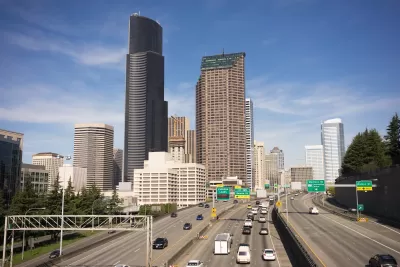
“Drivers on Interstate 5 will endure less weaving and fewer waves of brake lights entering downtown Seattle, after the state finally widened the original northbound two-lane mainline to three lanes at Seneca Street,” reports Mike Lindblom for The Seattle Times.
The Washington State Department of Transportation (WSDOT) opened the project, in the works since 2007, “without fanfare” last weekend. “There wasn’t much hype because some features aren’t finished yet, spokesperson Amy Moreno said.”
According to the article, “Some drivers could find longer delays, because ramp-metering lights will operate in the collector-distributor lanes, where traffic from Interstate 90 merges into I-5 right of the mainline, as well as metering from the Cherry Street onramp.” Lindblom also points to the possibility of induced demand encouraging more drivers to take the new lane. “WSDOT doesn’t have any recent modeling or traffic predictions available for this long-developing project,” Lindblom notes.
FULL STORY: Seattle’s I-5 squeeze finally not so tight as new lane opens

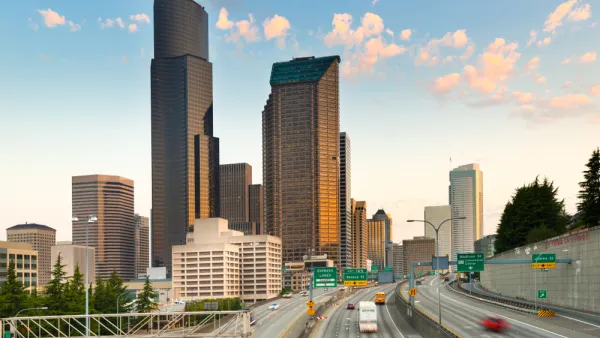
I-5 Widening Kicks Off in Downtown Seattle
Congestion relief is promised as the Washington Department of Transportation begins to rework the existing I-5 roadway in Downtown Seattle to mitigate a stretch of freeway with a reputation as the state's worst bottleneck.
San Mateo Formally Opposes Freeway Project
The city council will send a letter to Caltrans urging the agency to reconsider a plan to expand the 101 through the city of San Mateo.
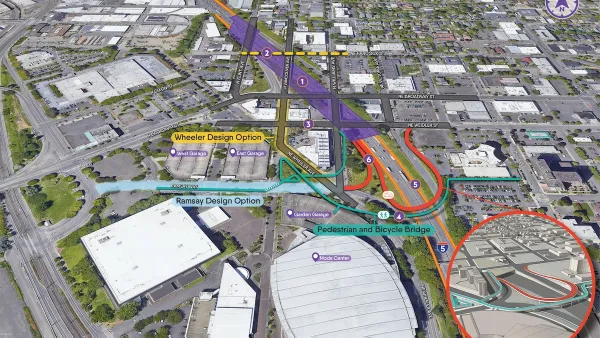
Portland Advocates Call on Feds to Oppose Freeway Expansion
The Oregon DOT is requesting a federal grant to fund a controversial freeway expansion through the Rose Quarter.

Planetizen Federal Action Tracker
A weekly monitor of how Trump’s orders and actions are impacting planners and planning in America.

The state-sanctioned urbicide of Austin
People don’t kill cities. Freeways do.

US to reduce Colorado River water deliveries to Mexico
A new Colorado Treaty amendment reduces Mexico’s Colorado River water allocation by 250,000 acre feet.

Colorado’s Largest Data Center Could Rise Next to Homes — Without a Public Hearing
The proposed campus would consume 11 times the power of Denver International Airport; as it has across the country, opposition mounts.

5 New England states march closer to 800 megawatt wind energy project
Securing federal approval for the project may be complicated under the Trump administration, which has historically been hostile towards domestic wind power.

Baltimore to break ground on $50 million Transit Priority Project
The project will bring faster bus trips, safer streets and better bike connections to Baltimore.

FREE Course: Walkable City 1: Why Walkability?
After describing his path towards focusing on walkability as the essence of good planning, Jeff Speck marches through his five principal reasons for making more walkable places.
Reinventing Malls: Planning Alchemy—Turning Gray Fields Into Gold
The course focuses on the opportunities and imperatives that shape reinvention of mall sites.

Eagle County Government
Harvard University Graduate School of Design
Nashville Planning Department
The Architects Foundation
University of Cincinnati Online
The Pocatello Development Authority
The Urban Renewal Agency of the City of Pocatello
Journal of the American Planning Association