The Los Angeles Dodgers Foundation (LADF) and the city of Inglewood recently unveiled two fields for baseball and softball, helping to revitalize a local park and bring hope to residents.


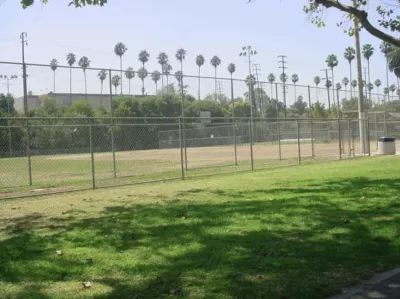
The Los Angeles Dodgers Foundation (LADF) builds Dodgers Dreamfields to give families in neighborhoods across Los Angeles safe havens and points of pride. The addition of revitalized baseball and softball fields improves existing green spaces, promotes physical activity and exercise, and expands opportunities for play in underserved communities. Recently, LADF and the City of Inglewood opened two Dodgers Dreamfields at Edward Vincent Jr. Park in Inglewood for baseball and softball players from 5 to 18 years old. According to the Los Angeles Countywide Parks Needs Assessment, Inglewood only has 0.8 acres of parkland per 1,000 residents (comparing to 3.3 acres per 1,000 residents countywide) and has a very high level of park need.
The $1 million project includes a new playing surface and grass, enclosed fields and fencing, upgraded dugouts, upgraded irrigation systems, new pitchers' mounds, bases, home plates, and LED scoreboards. They are the 59th and 60th fields in Greater Los Angeles, and third and fourth in Inglewood. LADF has plans to complete an additional 15 fields to commemorate the 75th anniversary of the Dodgers’ move to Los Angeles in 2033.
Funding for the two Dodger Dreamfields was provided by the City of Inglewood, Kershaw’s Challenge, Security Benefit, FundPlay/LeagueApps, Annenberg Foundation, NIKE, Delta Air Lines, LA84 Foundation, San Manuel Band of Mission Indians, Helen & Will Webster Foundation, and The Kenneth T. and Eileen L. Norris Foundation.
Read the full story: Dodgers Dreamfields unveiled in Inglewood
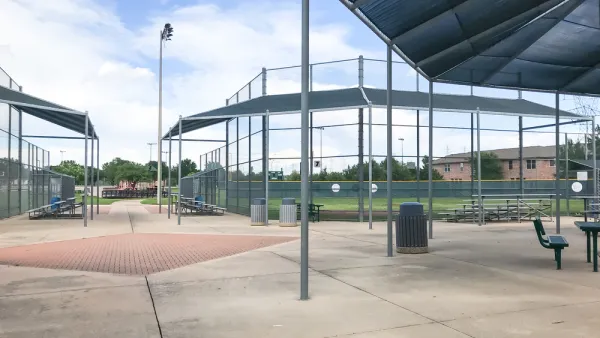
No Place to Play During the Pandemic
Youth sports in America have been devastated by the coronavirus which prompted the shutdown of programs and facilities for play and practice.
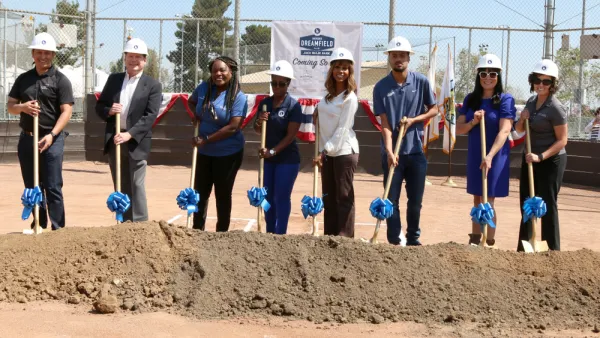
Field of Dreams Coming to L.A.'s Chinatown
The Los Angeles Dodgers and the Dodgers Foundation will renovate an unplayable ballfield into a new Dodgers Dreamfield, which will serve almost 3,500 youth in the surrounding community.

Planetizen Federal Action Tracker
A weekly monitor of how Trump’s orders and actions are impacting planners and planning in America.

California plans to bury El Niño’s downpour
If the state plays its cards right, it may be able to store a billion acre-feet of El Niño’s water in aquifers.

Desperate measures: Advocates weigh draining Lake Powell to fill Colorado River
Draining the reservoir could reduce evaporation losses by a couple hundred thousand acre-feet.

Mamdani’s pied-à-terre tax survives legal challenge
A panel of judges found that the plaintiffs failed to demonstrate injury as a result of New York City's implementation of the tax.

Eastern Nebraska is running out of electricity
Data centers and electrification are straining eastern Nebraska’s grid, throttling economic development.

Seattle passes record-breaking transit services expansion
Proposition 1 will double the city’s transit tax to add 95,000 more bus trips and preserve 180,000 bus trips annually.

FREE Course: Walkable City 1: Why Walkability?
After describing his path towards focusing on walkability as the essence of good planning, Jeff Speck marches through his five principal reasons for making more walkable places.
Reinventing Malls: Planning Alchemy—Turning Gray Fields Into Gold
The course focuses on the opportunities and imperatives that shape reinvention of mall sites.

City of Rosemead
Rutgers University, Edward J. Bloustein School of Planning and Public Policy
One Hundred Miles
University of Michigan School for Environment and Sustainability (SEAS)
Hunter College, City University of New York (CUNY)
The Architects Foundation
City of Cambridge
Montrose County
The Pocatello Development Authority