The legislation, which would ban parking requirements near transit to encourage housing development and bring down housing costs, would be a rare federal preemption of local control.


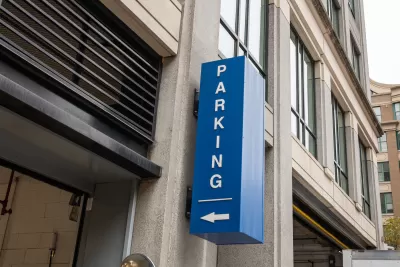
Following a flurry of parking reform bills at the local and state level, Rep. Robert Garcia (D—California) is introducing a bill that would eliminate minimum parking requirements near transit stations nationwide. As explained by Eliza Relman and Bryan Metzger in Business Insider, “The legislation aims to promote housing density and walkability in urban areas by getting rid of requirements that developers provide a certain amount of off-street parking with every project.”
Garcia hopes at least some Republican lawmakers will support the bill, saying that housing affordability and accessibility are issues that “everyone should be behind.”
An article in Reason by Christian Britschgi further explains the historic nature of federal-level zoning reform, a project traditionally considered the right of local jurisdictions. Although federal legislation affecting zoning and land use is rare, laws such as the Religious Land Use and Institutionalized Persons Act (RLUIPA) of 2000 and the Telecommunications Act of 1996 provide past models for federal preemption of local zoning controls.


Austin Eliminates Parking Requirements
After eliminating downtown parking requirements ten years ago, the city will now end minimum parking mandates citywide.
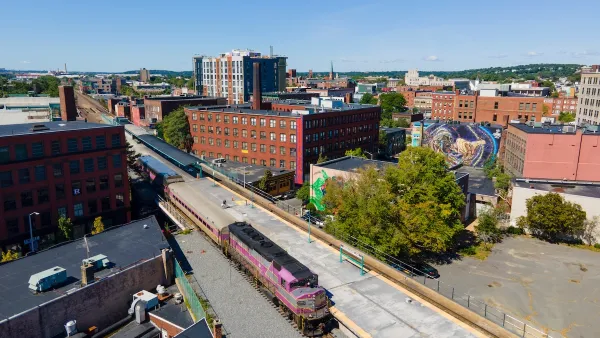
Judge Rules in Favor of Massachusetts TOD Law
The court rejected an argument that the MBTA Communities law, which requires zoning for multifamily housing, is an “unfunded mandate.”
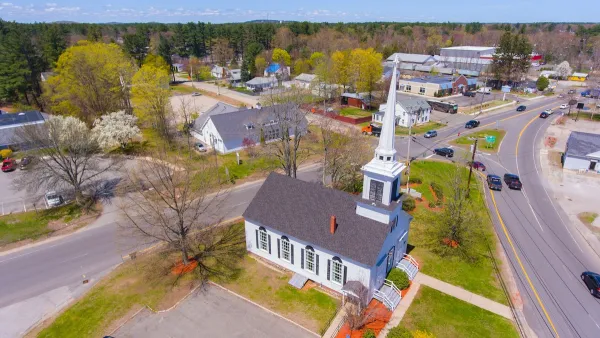
Small Towns Lead in Parking Reform
Small towns and communities around the country are eliminating parking requirements at a faster rate than big cities.

Planetizen Federal Action Tracker
A weekly monitor of how Trump’s orders and actions are impacting planners and planning in America.

The state-sanctioned urbicide of Austin
People don’t kill cities. Freeways do.

US to reduce Colorado River water deliveries to Mexico
A new Colorado Treaty amendment reduces Mexico’s Colorado River water allocation by 250,000 acre feet.

Colorado’s Largest Data Center Could Rise Next to Homes — Without a Public Hearing
The proposed campus would consume 11 times the power of Denver International Airport; as it has across the country, opposition mounts.

5 New England states march closer to 800 megawatt wind energy project
Securing federal approval for the project may be complicated under the Trump administration, which has historically been hostile towards domestic wind power.

Baltimore to break ground on $50 million Transit Priority Project
The project will bring faster bus trips, safer streets and better bike connections to Baltimore.

FREE Course: Walkable City 1: Why Walkability?
After describing his path towards focusing on walkability as the essence of good planning, Jeff Speck marches through his five principal reasons for making more walkable places.
Reinventing Malls: Planning Alchemy—Turning Gray Fields Into Gold
The course focuses on the opportunities and imperatives that shape reinvention of mall sites.

Eagle County Government
Harvard University Graduate School of Design
Nashville Planning Department
The Architects Foundation
University of Cincinnati Online
The Pocatello Development Authority
The Urban Renewal Agency of the City of Pocatello
Journal of the American Planning Association