Did you know? The amount of public subsidies given to free parking far outweighs federal funding for the National Park Service.


In a sendup of America’s parking obsession in Streetsblog, Kea Wilson invites the reader to visit one of America’s “internationally infamous” parking lots through a series of posters designed to look like vintage National Park Service posters.
“Fun fact: the National Park Service only gets about $3.6 billion a year from the federal government, while free parking alone draws between $102 and $374 billion in public subsidies annually, depending on how you calculate it.”
“Residents of St. Louis, for instance, can take a sweet staycation on 105 acres of lots in the downtown core alone, according to a recent analysis from the Parking Reform Network.” In Arlington, Texas, a whopping 42 percent of downtown land is dedicated to parking.
Not interested in touring your local parking lots? Well, Wilson notes, “you could visit an actual National Park … but you’d probably still have to drive.”
FULL STORY: Visit Your Nearest National Park(ing Lot) Today!

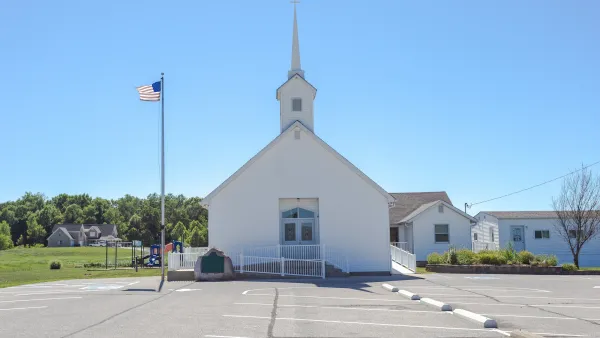
Three Ways to Activate Church Parking Lots Seven Days a Week
Churches need parking, but most of their lots are wasted space six days a week.
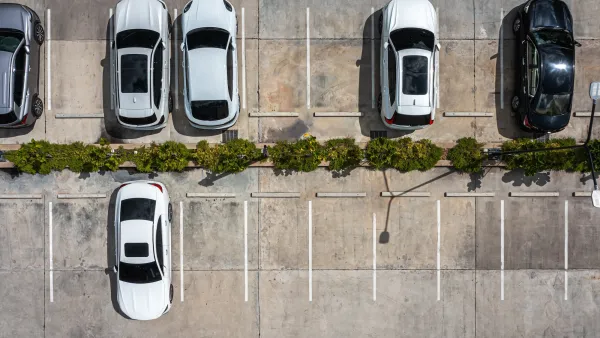
Who Wants to Play SimParkingLot?
The original urban planning game wanted to model real life cities. One grim reality of American urbanism held it back.

Has Anyone at USDOT Read Donald Shoup?
USDOT employees, who are required to go back to the office, will receive free parking at the agency’s D.C. offices — flying in the face of a growing research body that calls for pricing parking at its real value.

Planetizen Federal Action Tracker
A weekly monitor of how Trump’s orders and actions are impacting planners and planning in America.

The state-sanctioned urbicide of Austin
People don’t kill cities. Freeways do.

US to reduce Colorado River water deliveries to Mexico
A new Colorado Treaty amendment reduces Mexico’s Colorado River water allocation by 250,000 acre feet.

Colorado’s Largest Data Center Could Rise Next to Homes — Without a Public Hearing
The proposed campus would consume 11 times the power of Denver International Airport; as it has across the country, opposition mounts.

5 New England states march closer to 800 megawatt wind energy project
Securing federal approval for the project may be complicated under the Trump administration, which has historically been hostile towards domestic wind power.

Baltimore to break ground on $50 million Transit Priority Project
The project will bring faster bus trips, safer streets and better bike connections to Baltimore.

FREE Course: Walkable City 1: Why Walkability?
After describing his path towards focusing on walkability as the essence of good planning, Jeff Speck marches through his five principal reasons for making more walkable places.
Reinventing Malls: Planning Alchemy—Turning Gray Fields Into Gold
The course focuses on the opportunities and imperatives that shape reinvention of mall sites.

Eagle County Government
Harvard University Graduate School of Design
Nashville Planning Department
The Architects Foundation
University of Cincinnati Online
The Pocatello Development Authority
The Urban Renewal Agency of the City of Pocatello
Journal of the American Planning Association