The first $185 million in grants were awarded to projects that aim to improve mobility and reconnect neighborhoods isolated by highways and other infrastructure projects.


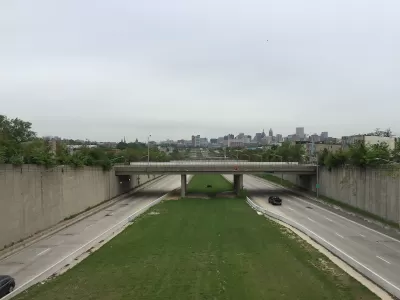
The U.S. Department of Transportation has announced 45 recipients of grants totaling $185 million under the Reconnecting Communities Pilot Program, funded via the Infrastructure Investment and Jobs Act (IIJA).
The program “provides technical assistance and funding for communities’ planning and construction projects that aim to connect neighborhoods back together by removing, retrofitting, or mitigating transportation barriers such as highways and railroad tracks.”
According to a press release from USDOT, “This first round of grants will fund construction and planning for transformative community-led solutions, including capping interstates with parks, filling in sunken highways to reclaim the land for housing, converting inhospitable transportation facilities to tree-lined Complete Streets, and creating new crossings through public transportation, bridges, tunnels and trails.” Some of the awarded projects include a highway cap and tunnel in Buffalo, New York; a freeway redesign in Long Beach, California; and planning for the redesign or removal of Baltimore’s infamous, never-completed ‘Highway to Nowhere.’
Some recent articles warn that Reconnecting Communities dollars could end up funding road expansion projects and perpetuating car-centric planning.
The press release states that “President Biden’s Inflation Reduction Act also established a new, $3 billion program called the Neighborhood Access and Equity Grant Program which can also fund projects that reconnect communities. DOT anticipates launching this program later this Spring.”
FULL STORY: Biden-Harris Administration Announces First-Ever Awards from Program to Reconnect Communities

Congress Moves to End Reconnecting Communities and Related Grants
The House Transportation and Infrastructure Committee moved to rescind funding for the Neighborhood Equity and Access program, which funds highway removals, freeway caps, transit projects, pedestrian infrastructure, and more.
More Options Presented for Minneapolis I-94 Project
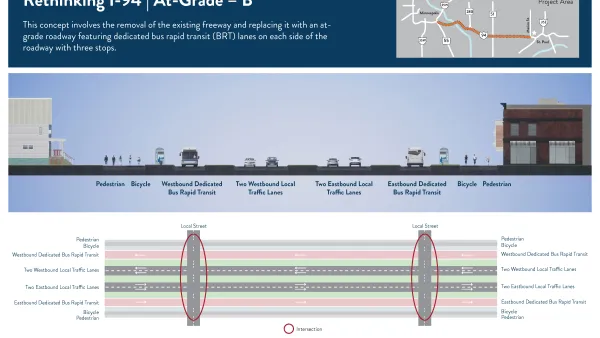
Two new proposals for replacing the freeway with at-grade segments offer new visions for the future of downtown Minneapolis.
GAO: Reconnecting Communities Lacks Clear Goals and Metrics
The program, aimed at supporting highway removals and other projects that work to reverse the impacts of freeway construction, is light on accountability and performance measures, according to a new report.

Planetizen Federal Action Tracker
A weekly monitor of how Trump’s orders and actions are impacting planners and planning in America.

The state-sanctioned urbicide of Austin
People don’t kill cities. Freeways do.

US to reduce Colorado River water deliveries to Mexico
A new Colorado Treaty amendment reduces Mexico’s Colorado River water allocation by 250,000 acre feet.

Baltimore to break ground on $50 million Transit Priority Project
The project will bring faster bus trips, safer streets and better bike connections to Baltimore.

Airbnb launches $250 million 'last-dollar financing' housing accelerator, makes first investment in Austin
The company will put $6.4 million towards affordable housing development in Texas’ capital.

Guerilla urbanists are building DIY bus stop benches in Chicago
A before-and-after of one of the bus stops with a new bench. The new benches are not officially sanctioned or permitted, but the residents who placed them hope they will be the start of a network of DIY benches across the city.

FREE Course: Walkable City 1: Why Walkability?
After describing his path towards focusing on walkability as the essence of good planning, Jeff Speck marches through his five principal reasons for making more walkable places.
Reinventing Malls: Planning Alchemy—Turning Gray Fields Into Gold
The course focuses on the opportunities and imperatives that shape reinvention of mall sites.


Eagle County Government
Harvard University Graduate School of Design
Nashville Planning Department
The Architects Foundation
University of Cincinnati Online
The Pocatello Development Authority
The Urban Renewal Agency of the City of Pocatello
Journal of the American Planning Association