State water officials say the region’s agencies will only receive 5 percent of their requested supplies for the start of 2023 due to intense drought conditions that continue to sap western water supplies.


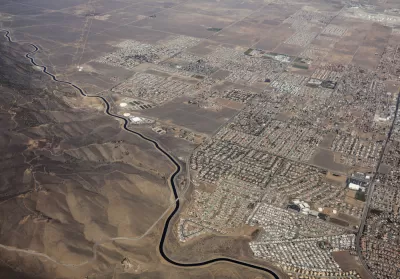
The Associated Press reports that the largest water supplier in the United States has declared a drought emergency in Southern California, triggering the possibility of stricter mandatory restrictions on water use in the heavily populated region.
The Metropolitan Water District of Southern California serves roughly 19 million people across 26 water agencies, relying primarily on water imported from the Colorado River and other sources. Because of historically low reservoir levels, agencies including Metropolitan will only receive 5 percent of the supply requested at the beginning of 2023.
Officials across the west have been scrambling to develop new agreements to manage dwindling water supplies in the region as water levels in western reservoirs continue to drop. Meanwhile, voluntary restrictions haven’t worked: while Governor Gavin Newsom called on Californians to cut water use by 15 percent last year, residents statewide only reduced their usage by 5.2 percent.
Read the full story: Nation's largest water supplier declares drought emergency


Virginia Data Centers Draining State’s Water Supply
Being the world’s largest data center hub is having a severe impact on local water resources.
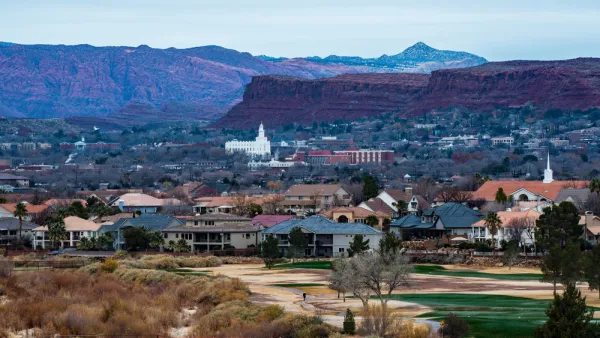
Can Southwest Utah’s Water Supply Handle its Explosive Growth?
A remote corner of the state is the nation’s fastest-growing metro area, but concerns about water supplies across the Southwest signal an uncertain future.
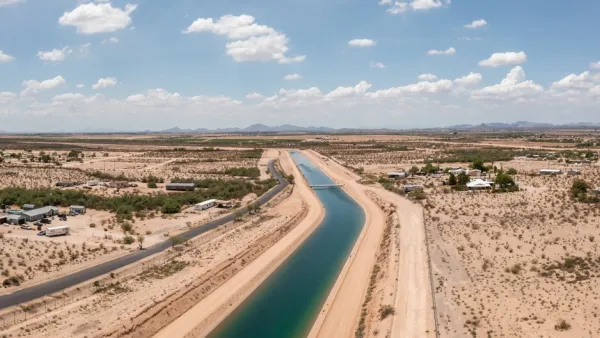
Arizona Governor Takes Steps to Modernize Water Policy
A newly released report warns of rapidly dwindling groundwater resources as developers plan to build hundreds of thousands of new homes.

Planetizen Federal Action Tracker
A weekly monitor of how Trump’s orders and actions are impacting planners and planning in America.

California plans to bury El Niño’s downpour
If the state plays its cards right, it may be able to store a billion acre-feet of El Niño’s water in aquifers.

Chicago breaks ground on $3 billion megadevelopment
The new neighborhood, titled Foundry Park, will one day host 3,700 residences.

Satanic Place Names
From streams and lakes to valleys and canyons, I mapped more than 1,000 places named after the Devil.

California High-Speed Rail Authority CEO resigns after $600,000 scandal
Under Ian Choudri, the authority used taxpayer dollars to fund first class flights and trips to nightclubs.

Want to study the Missouri River? Soon, you may need unanimous approval from 10 states
Legislation would require 10 governors’ permission to study or build projects moving water outside the basin.

FREE Course: Walkable City 1: Why Walkability?
After describing his path towards focusing on walkability as the essence of good planning, Jeff Speck marches through his five principal reasons for making more walkable places.
Reinventing Malls: Planning Alchemy—Turning Gray Fields Into Gold
The course focuses on the opportunities and imperatives that shape reinvention of mall sites.

City of Rosemead
Rutgers University, Edward J. Bloustein School of Planning and Public Policy
One Hundred Miles
Hunter College, City University of New York (CUNY)
The Architects Foundation
University of Cincinnati Online
City of Cambridge
Montrose County
The Pocatello Development Authority