A scenic Southern California line could require relocation as rising sea levels destabilize the coastal soil that supports its tracks.


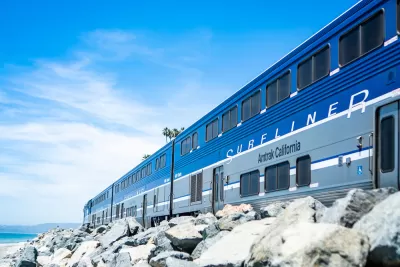
California’s most scenic train trip faces an uncertain future as rising sea levels threaten the ground beneath its tracks, forcing Amtrak and the regional Metrolink agency to evaluate how to stabilize the faltering coastline and protect the tracks. Allison Nicole Smith reports on the story for Bloomberg CityLab.
On September 30, Amtrak and Metrolink stopped service on a stretch of rail south of Los Angeles due to safety concerns. “After Tropical Storm Kay tore into the Golden State’s seaboard with heavy rains and high tides, geotechnical sensors detected that the fragile landscape of sand and rock underneath the tracks near San Clemente was moving as much as nearly a half an inch a day.” The same segment was shut down last September for three weeks.
Officials secured $6 million to stabilize the tracks. “The plan is to drive large metal anchors into the adjacent slope to prevent it from pushing the track further toward the coast, according to a news release.” The San Diego Association of Governments (SANDAG) has developed a plan to move the tracks into an inland tunnel at a cost of over $2.5 billion. Other alternatives include building seawalls or other coastal barriers.
The long-term future of the line—and coastal development in general—remains unclear as climate change speeds up coastal erosion in California, where 44 percent of residents live along the coast.
FULL STORY: The Race to Save a Scenic California Train From Rising Seas

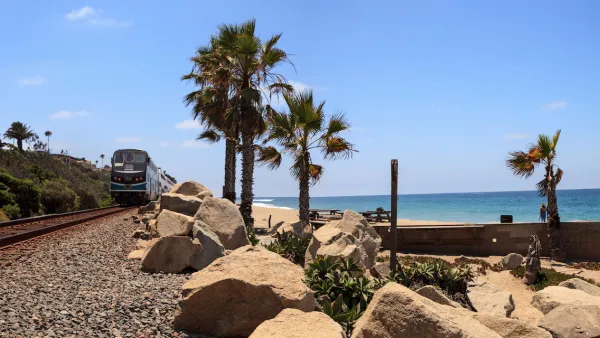
State Leaders Warn of Risks to Southern California Rail Corridor
Coastal erosion and rising sea levels threaten one of the nation’s most scenic—and strategically important—rail corridors.
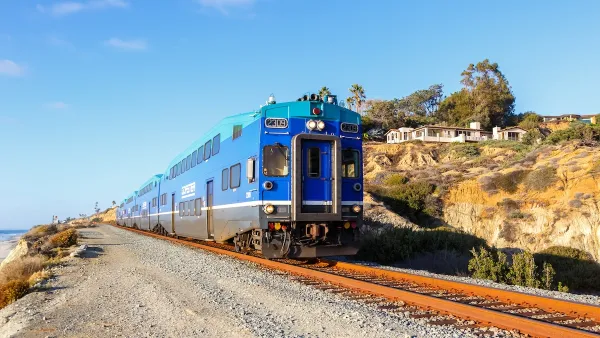
SoCal Leaders Debate Moving Coastal Rail Line
Train tracks running along the Pacific Ocean are in danger from sea level rise, but residents are divided on how to fix the problem.
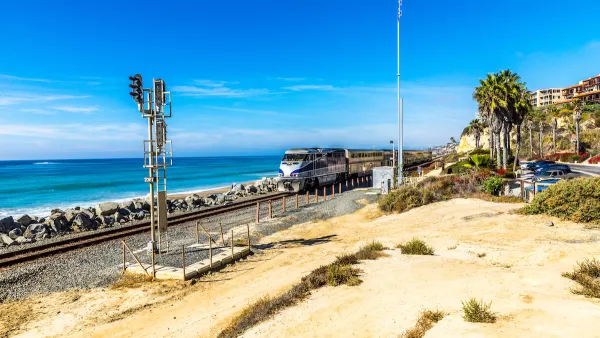
Storms Sever California Rail Line—Again
The coast-hugging rail corridor linking Los Angeles and San Diego faces an uncertain future as mudslides once again force part of the line to close.

Planetizen Federal Action Tracker
A weekly monitor of how Trump’s orders and actions are impacting planners and planning in America.

The state-sanctioned urbicide of Austin
People don’t kill cities. Freeways do.

US to reduce Colorado River water deliveries to Mexico
A new Colorado Treaty amendment reduces Mexico’s Colorado River water allocation by 250,000 acre feet.

5 New England states march closer to 800 megawatt wind energy project
Securing federal approval for the project may be complicated under the Trump administration, which has historically been hostile towards domestic wind power.

Baltimore to break ground on $50 million Transit Priority Project
The project will bring faster bus trips, safer streets and better bike connections to Baltimore.

Airbnb launches $250 million 'last-dollar financing' housing accelerator, makes first investment in Austin
The company will put $6.4 million towards affordable housing development in Texas’ capital.

FREE Course: Walkable City 1: Why Walkability?
After describing his path towards focusing on walkability as the essence of good planning, Jeff Speck marches through his five principal reasons for making more walkable places.
Reinventing Malls: Planning Alchemy—Turning Gray Fields Into Gold
The course focuses on the opportunities and imperatives that shape reinvention of mall sites.

Eagle County Government
Harvard University Graduate School of Design
Nashville Planning Department
The Architects Foundation
University of Cincinnati Online
The Pocatello Development Authority
The Urban Renewal Agency of the City of Pocatello
Journal of the American Planning Association