Nine of the 52 cities impacted by the state of Oregon’s parking requirements changes, approved earlier this year, plan to sue to stop the reforms.



The state of Oregon’s Land Conservation and Development Commission approved Climate-Friendly and Equitable Communities rules earlier this year. The rules require 52 cities around the state’s eight largest metropolitan areas to reform parking requirements for various land uses.
Jayati Ramakrishnan reports in a paywalled article for the Oregonian that at least nine cities are planning to sue to stop the reforms.
An article from earlier in the month by Troy Shin reveals that those cities include Hillsboro, Medford, and Springfield. “Hillsboro city councilors said they aren't opposed to the aim of the rules, which seek to address the effects of climate change and housing insecurity through targeted zoning and land use requirements. However, they don't agree with the methodology the state used in crafting the new guidelines,” reports Shin.
Unlike the legislative action that enacted the state of Oregon’s historic state preemption of local single-family zoning, the Climate-Friendly and Equitable Communities rules were the result of Executive Order 20-04, signed by Gov. Kate Brown.
FULL STORY: Oregon cities plan to sue state government over new environmental rules, parking reform [paywall]


Oregon to Reform Parking Requirements in 52 Cities
Oregon, the first state to end single-family zoning statewide, is on the cusp of another historic planning reform as the Land Conservation and Development Commission nears approval for new “Climate-Friendly and Equitable Communities” rules.

Vermont Next State in Line to End Single-Family Zoning, Ease Parking Requirements
Both houses in the Vermont Legislature have approved legislation to preempt local land use regulations by rescinding single-family zoning and easing parking requirements throughout the state.
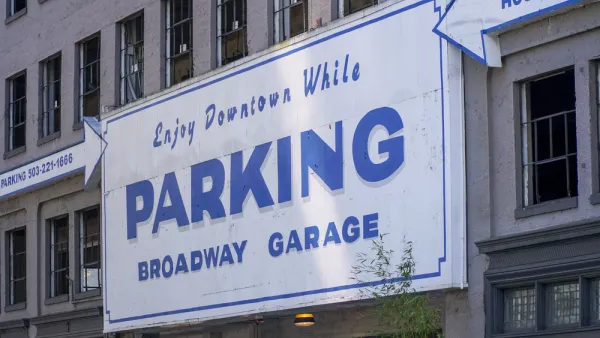
Oregon Makes Historic Parking Reforms. What’s Next?
The state made sweeping reforms that eliminate parking requirements in some jurisdictions, which supporters hope will lead to faster, less expensive construction and the revitalization of vacant properties and underused lots.

Planetizen Federal Action Tracker
A weekly monitor of how Trump’s orders and actions are impacting planners and planning in America.

The state-sanctioned urbicide of Austin
People don’t kill cities. Freeways do.

US to reduce Colorado River water deliveries to Mexico
A new Colorado Treaty amendment reduces Mexico’s Colorado River water allocation by 250,000 acre feet.

Guerilla urbanists are building DIY bus stop benches in Chicago
A before-and-after of one of the bus stops with a new bench. The new benches are not officially sanctioned or permitted, but the residents who placed them hope they will be the start of a network of DIY benches across the city.

Mamdani overhauls NYC's Vision Zero plan with 100 new policy goals
The overhaul aims to reduce traffic deaths and make streets safer for pedestrians, cyclists and drivers through lower speed limits, new safety infrastructure and more.

Amtrak not solely to blame for New Jersey commuter rail's unreliability, report finds
A new study from the Garden State Initiative found that NJ Transit’s budget grew 20% across a 4 year period, but reliability declined significantly over the same period.

FREE Course: Walkable City 1: Why Walkability?
After describing his path towards focusing on walkability as the essence of good planning, Jeff Speck marches through his five principal reasons for making more walkable places.
Reinventing Malls: Planning Alchemy—Turning Gray Fields Into Gold
The course focuses on the opportunities and imperatives that shape reinvention of mall sites.

Eagle County Government
Harvard University Graduate School of Design
Nashville Planning Department
The Architects Foundation
University of Cincinnati Online
The Pocatello Development Authority
The Urban Renewal Agency of the City of Pocatello
Journal of the American Planning Association