St. Louis is not the only city to decide that the Federal Highway Administration’s policies against brightly painted crosswalks. The evidence is on the side of the resistance.


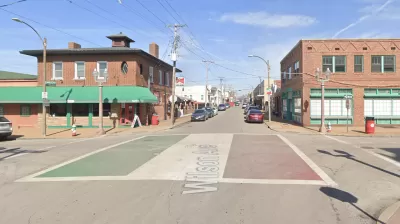
St. Louis recently unveiled a sidewalk painted in the colors of the Italia flag to celebrate the heritage of residents in the neighborhood known as the Hill. The catch: they city bucked federal regulators to do it.
“The Federal Highway Administration takes a different view of such projects. Officials there have warned that they can be dangerous distractions for drivers and pedestrians,” writes Austin Huguelet in an article for the St. Louis Post Dispatch.
Huguelet cites a 2013 memo for evidence of the FHWA’s anti-color stance on crosswalks, and the issue has come up in the years since, such as a 2017 episode in Lexington, Kentucky and 2016 episode in St. Louis, as well as separate 2019 episodes in St. Louis (again) and Ames, Iowa.
According to Huguelet, resistance to the FHWA’s crosswalk policies is building across the country. “Officials in Seattle, San Antonio, Toledo, Ohio, and Ames, Iowa have been painting away. And earlier this year, Bloomberg Philanthropies released a study indicating that such artwork could lead to a drop in crashes involving pedestrians or cyclists in half.”
FULL STORY: St. Louis ignores feds, paints crosswalks on the Hill

Resistance to Federal Highway Administration's Anti-Painted Crosswalk Position
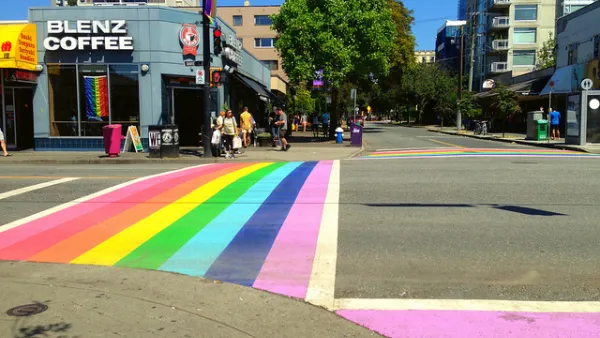
As the Federal Highway Administration continues its anti-painted crosswalk crusade, attracting new attention at the national level, cities are resisting the notion that rainbow crosswalks are a safety liability.
FHWA removes bike lanes and speed cameras from list of traffic safety measures
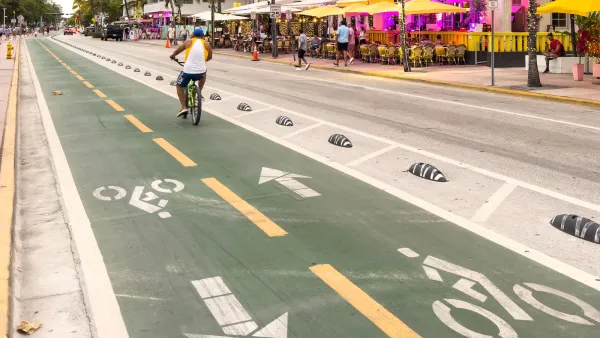
The agency did not announce its intention to eliminate five proven safety measures from its list of suggested interventions.
Pittsburgh Excels at Low-Cost, Quick-Build Traffic Calming
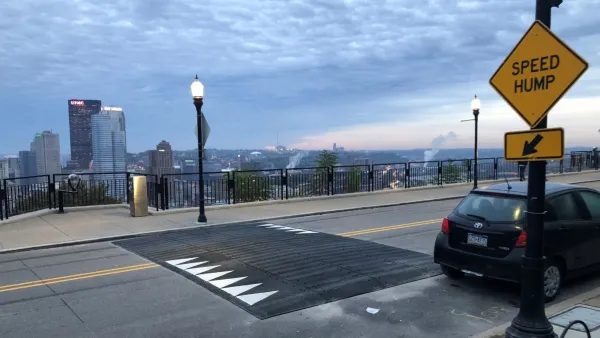
The city’s traffic calming initiative has led to a 6 percent average reduction in speeds on corridors with recent interventions.

The state-sanctioned urbicide of Austin
People don’t kill cities. Freeways do.

US to reduce Colorado River water deliveries to Mexico
A new Colorado Treaty amendment reduces Mexico’s Colorado River water allocation by 250,000 acre feet.

New Jersey’s second-largest city bans standalone data centers
Jersey City will continue to allow co-location facilities, such as those meant for research institutions that store their own data.

Amtrak not solely to blame for New Jersey commuter rail's unreliability, report finds
A new study from the Garden State Initiative found that NJ Transit’s budget grew 20% across a 4 year period, but reliability declined significantly over the same period.

EPA erases limits on planet-warming pollution from power plants
Under Monday’s plan, power plants would still have some limits on how much mercury, arsenic and other contaminants they can emit.

Phoenix announces new on-demand transit service, more frequent RAPID buses
Both new services will launch in October, and are part of Phoenix's Project Effective Access Solutions for Easing Congestion.

FREE Course: Walkable City 1: Why Walkability?
After describing his path towards focusing on walkability as the essence of good planning, Jeff Speck marches through his five principal reasons for making more walkable places.
Reinventing Malls: Planning Alchemy—Turning Gray Fields Into Gold
The course focuses on the opportunities and imperatives that shape reinvention of mall sites.

Eagle County Government
Harvard University Graduate School of Design
Nashville Planning Department
The Architects Foundation
University of Cincinnati Online
The Pocatello Development Authority
The Urban Renewal Agency of the City of Pocatello
Journal of the American Planning Association