The effects of the megadrought in the American Southwest are reaching into Texas.


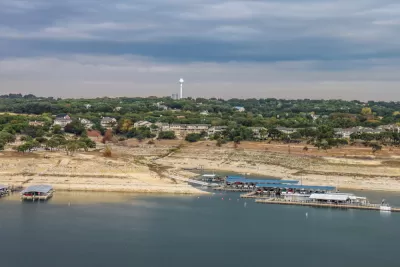
Audrey McGlinchy reports for KUT that water levels have fallen enough to trigger water restrictions for the first time in three years.
“Austin gets its water from Lake Travis and Lake Buchanan,” reports McGlinchy. “Officials said Friday they expect water levels in these lakes to drop below 1.4 million acre-feet in the next several days. When that happens, the city enters what it calls ‘Stage 1’ of its Drought Contingency Plan.”
Restrictions include limiting the use of automatic irrigation systems to once a week, using hose-end sprinklers twice a week, and restaurant workers only serving water upon request.
Although Texas is neither one of the Colorado River Compact (1922) states, nor the Colorado River Drought Contingency Plan (2019), drought conditions on the Upper Colorado River watershed are impacting the city’s reservoirs, according to the article.
FULL STORY: As lake levels drop, Austin tightens water restrictions for first time in years

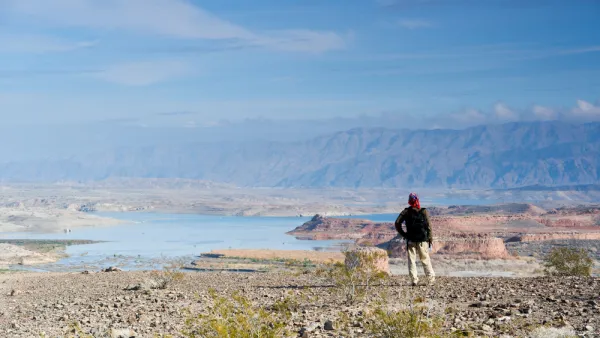
More Need Than Ever for Drought Resilience on the Colorado River
The effects of climate change are already cutting deeply into the lifeblood of the U.S. West—the Colorado River.
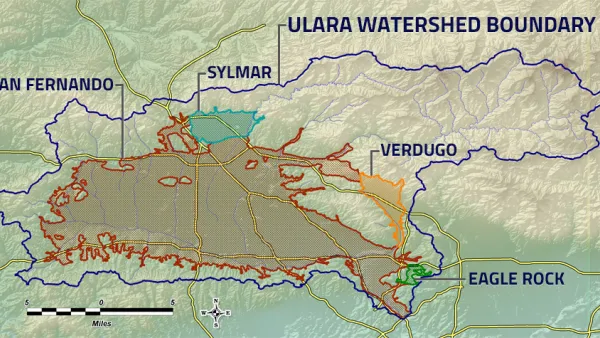
Superfund Project to Deliver Massive Water Supply Boon to Los Angeles
The semi-arid region of Los Angeles is often mistaken for a desert, but the local water supply is also constrained by the environmental sins of the 20th century. The water supply equation of Los Angeles will soon change, however.

Ramping Up Recycled Wastewater
States like Colorado and water suppliers in parts of Southern California are expanding the use of recycled wastewater to protect dwindling drinking water supplies.

Planetizen Federal Action Tracker
A weekly monitor of how Trump’s orders and actions are impacting planners and planning in America.

The state-sanctioned urbicide of Austin
People don’t kill cities. Freeways do.

US to reduce Colorado River water deliveries to Mexico
A new Colorado Treaty amendment reduces Mexico’s Colorado River water allocation by 250,000 acre feet.

5 New England states march closer to 800 megawatt wind energy project
Securing federal approval for the project may be complicated under the Trump administration, which has historically been hostile towards domestic wind power.

Baltimore to break ground on $50 million Transit Priority Project
The project will bring faster bus trips, safer streets and better bike connections to Baltimore.

Airbnb launches $250 million 'last-dollar financing' housing accelerator, makes first investment in Austin
The company will put $6.4 million towards affordable housing development in Texas’ capital.

FREE Course: Walkable City 1: Why Walkability?
After describing his path towards focusing on walkability as the essence of good planning, Jeff Speck marches through his five principal reasons for making more walkable places.
Reinventing Malls: Planning Alchemy—Turning Gray Fields Into Gold
The course focuses on the opportunities and imperatives that shape reinvention of mall sites.

Eagle County Government
Harvard University Graduate School of Design
Nashville Planning Department
The Architects Foundation
University of Cincinnati Online
The Pocatello Development Authority
The Urban Renewal Agency of the City of Pocatello
Journal of the American Planning Association