Nominal gas prices have never been higher. But are they too high? The question was posed by the ranking member of the Senate Committee on Energy & Natural Resources to the Secretary of the Interior during a committee hearing on May 19.


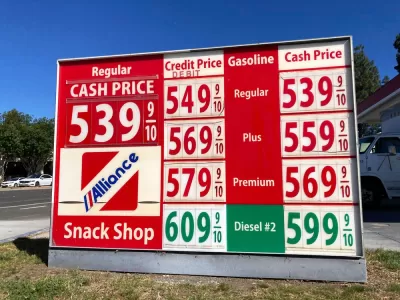
A very frustrated Senator John Barrasso, R-Wyoming, took to Twitter to air his frustration with Secretary of the Interior Deb Haaland who chose not to directly answer his question which he asked repeatedly, “Do you believe that gas prices are too high?”
President Biden’s Interior Secretary refused to admit gas prices are too high. This administration is in denial. It’s been ten straight days of record-high gas prices for Americans.
— Sen. John Barrasso (@SenJohnBarrasso) May 19, 2022
“Barrasso noted that Haaland didn't directly answer the question, and asked what the department is doing to address ‘this terrible pain that Americans are suffering under these high gas prices?’” reported Adam Sabes for Fox Business who captured the tense moment.
“We’re doing all we can, senator,” answered Haaland. “As we’ve mentioned several times today, production on Federal lands is up... It’s at an all-time high, more than a billion barrels.”
[A webcast of the full Energy & Natural Resources committee hearing on May 19 on the “President's FY 2023 Budget Request for the Department of the Interior,” along with links to opening remarks by Chairman Joe Manchin (D-W.Va.), Barrasso and Haaland's testimony can be found here.].
Prices are high, but 'too high?'
“The price of fuel keeps passing earlier milestones, now averaging more than $4.59 per gallon nationwide,” wrote Evan Halper, a business reporter for The Washington Post who covers energy, in the source article on May 20.
That is 50 percent higher than gas was at this time last year, according to AAA, as factors converge to create supply shortages not seen since the run-up to the Great Recession in 2008.
However, what appears to be different today than during previous price spikes is that consumer behavior, as measured by driving, hasn't changed in response to the high fuel prices, observes Halper.
As climbing gas prices force Americans to change their spending habits, one thing Americans aren’t doing is driving significantly less. All that driving in this moment of low fuel supply is pushing prices up further.
“As we reopen, there is a lot of pent-up demand,” said Michael Tran, managing director for global energy strategy at RBC Capital Markets. “People are willing to pay higher prices to make up for lost travel over the last few years.”
Vehicle miles traveled sets record in March
A review of the March 2022 Traffic Volume Trends published by the Federal Highway Administration confirms what Halper reported.
Travel data for March set all-time records (since 1997) for the three vehicle miles traveled (VMT) metrics (measured in millions of 'vehicle miles traveled' for all roads and streets): March, year-to-date (through March), and moving 12-month data.
The previous high for all three metrics was set three years earlier in 2019.
Gas prices going higher
Fox Business reports that one analyst predicts gas prices will reach $6 per gallon, nationwide, by August. That would surpass the record set on July 17, 2008, of $4.11 per gallon or $5.25 per gallon when adjusted for inflation, according to USA Today.
“The bottom line is, it is going to be an expensive summer,” Tran of RBC Capital Markets told Halper of the Post.
Additional reading in the Post:
-
Millions to travel for Memorial Day weekend amid record-high gas prices: Travel experts say two years of pent-up demand from the pandemic will spur an increase in summer trips even as gas prices and hotel rates rise, May 26, 2022
Additional related posts:
- Planopedia: What is VMT?
- Pumping More Oil to Lower Gas Prices, March 14, 2022
- Biden Diversifies Cabinet With EPA Administrator, Interior Secretary Picks, December 21, 2020
- Gas Prices and Vehicle Miles Traveled Analyzed Since 2000, March 4, 2019
-
2016 Sets New U.S. Driving Record as Gas Prices Remain Low, February 22, 2017
FULL STORY: Even as gas prices rattle economy, Americans can’t stay off the road

Waging War on High Gas Prices
America is not at war, but that didn't stop President Joe Biden from calling the largest release of oil from the nation's Strategic Petroleum Reserve that he authorized on March 31 to lower oil prices, a 'wartime bridge.'
The Surprising Oil Tax in the Inflation Reduction Act
President Biden has made reducing gas prices paramount in his administration, so it was likely a surprise to hear a Republican senator last Sunday warn TV viewers that a revived and increased oil fee in the climate bill will increase their gas costs.
$6 Billion to Keep Uncompetitive Nuclear Plants Alive
The Infrastructure Investment and Jobs Act includes $6 billion to create a credit program to extend the life of existing nuclear power plants, the largest source of carbon-free energy in the nation. The first deadline to bid for credits is May 19.

The state-sanctioned urbicide of Austin
People don’t kill cities. Freeways do.

US to reduce Colorado River water deliveries to Mexico
A new Colorado Treaty amendment reduces Mexico’s Colorado River water allocation by 250,000 acre feet.

New Jersey’s second-largest city bans standalone data centers
Jersey City will continue to allow co-location facilities, such as those meant for research institutions that store their own data.

Amtrak not solely to blame for New Jersey commuter rail's unreliability, report finds
A new study from the Garden State Initiative found that NJ Transit’s budget grew 20% across a 4 year period, but reliability declined significantly over the same period.

EPA erases limits on planet-warming pollution from power plants
Under Monday’s plan, power plants would still have some limits on how much mercury, arsenic and other contaminants they can emit.

Phoenix announces new on-demand transit service, more frequent RAPID buses
Both new services will launch in October, and are part of Phoenix's Project Effective Access Solutions for Easing Congestion.

FREE Course: Walkable City 1: Why Walkability?
After describing his path towards focusing on walkability as the essence of good planning, Jeff Speck marches through his five principal reasons for making more walkable places.
Reinventing Malls: Planning Alchemy—Turning Gray Fields Into Gold
The course focuses on the opportunities and imperatives that shape reinvention of mall sites.

Eagle County Government
Harvard University Graduate School of Design
Nashville Planning Department
The Architects Foundation
University of Cincinnati Online
The Pocatello Development Authority
The Urban Renewal Agency of the City of Pocatello
Journal of the American Planning Association