Proposed regulations would limit the popular micromobility devices to two operators, impose new fees, and require more accountability for safe scooter use and parking.


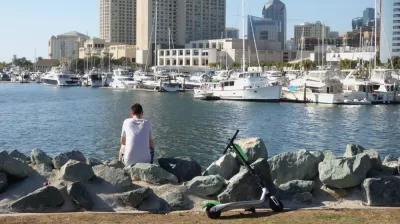
After a surge in their popularity during the pandemic, San Diego’s rental e-scooters may see a dramatic decrease in their fleet. “In August 2021, NBC 7 reported a post-pandemic surge of 49% in the number of permitted motorized scooters.” Now, as reported by Artie Ojeda, “Under the rules proposed last week by the council’s Active Transportation and Infrastructure Committee, the number of operators could be significantly reduced to as few as two.” Additionally, “Chosen companies would be required to pay an annual $20,000 fee in addition to $0.75 a day per device. The number of devices would be capped at 8,000.”
To address concerns about sidewalk riding and use of public space, “Other rules would allow no more than four devices to be parked in a city striped corral. Scooters would not be allowed on sidewalks.” According to the article, “the proposed regulations are designed to make operators more accountable by requiring more data on self-enforcement.”
Operators of the micromobility devices have expressed support for the proposed regulations. The article quotes Sara Dodrill of Spin saying, “More regulation on operators allows us to continue investing in the infrastructure, technological, and operational innovations needed to make high quality and affordable shared micromobility services for San Diego residents and visitors.”
FULL STORY: New Rules Could Drastically Impact Use of Motorized Scooters in San Diego

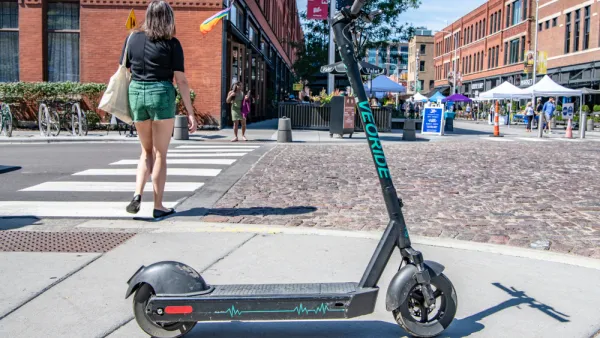
Lessons From Five Years of E-Scooters
As cities continue to adapt micromobility regulations to address new devices and technologies, what can we learn from Chicago's five years of e-scooter pilots?

Miami Reinstates E-Scooter Program
After abruptly ending its shared e-scooter program last month, Miami is letting the devices return to its streets–with some new rules.
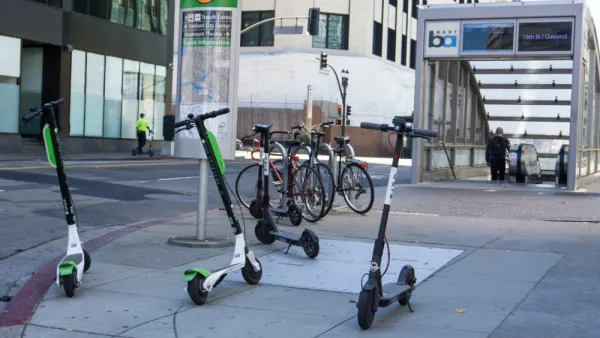
How E-Scooters Can Complement Public Transit
With some strategic planning on the part of transit agencies and operators, shared e-scooters can be an important ally in the fight against car dependence.

Planetizen Federal Action Tracker
A weekly monitor of how Trump’s orders and actions are impacting planners and planning in America.

The state-sanctioned urbicide of Austin
People don’t kill cities. Freeways do.

US to reduce Colorado River water deliveries to Mexico
A new Colorado Treaty amendment reduces Mexico’s Colorado River water allocation by 250,000 acre feet.

5 New England states march closer to 800 megawatt wind energy project
Securing federal approval for the project may be complicated under the Trump administration, which has historically been hostile towards domestic wind power.

Baltimore to break ground on $50 million Transit Priority Project
The project will bring faster bus trips, safer streets and better bike connections to Baltimore.

Airbnb launches $250 million 'last-dollar financing' housing accelerator, makes first investment in Austin
The company will put $6.4 million towards affordable housing development in Texas’ capital.

FREE Course: Walkable City 1: Why Walkability?
After describing his path towards focusing on walkability as the essence of good planning, Jeff Speck marches through his five principal reasons for making more walkable places.
Reinventing Malls: Planning Alchemy—Turning Gray Fields Into Gold
The course focuses on the opportunities and imperatives that shape reinvention of mall sites.

Eagle County Government
Harvard University Graduate School of Design
Nashville Planning Department
The Architects Foundation
University of Cincinnati Online
The Pocatello Development Authority
The Urban Renewal Agency of the City of Pocatello
Journal of the American Planning Association