Sound Transit service designers were hoping that March would be the month to restore service to the transit system in and around Seattle. A shortage of bus drivers is sending the system in the opposite direction.


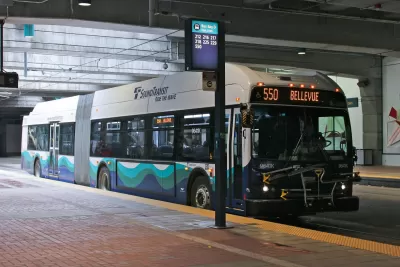
"A host of Sound Transit bus lines will see reduced service starting in March because of ongoing driver shortages plaguing the entire industry," reports David Kroman.
The decision to cut service reverses course from the Sound Transit board's intentions to increase service, as planned as recently as last fall. But like in so many other U.S. cities, including Washington, D.C. and Los Angeles to cite two recent examples, there simply aren't enough drivers to operate the city's transit system at full, planned capacity.
Ridership on Sound Transit buses and trains is also still far below pre-pandemic levels, reports Kroman. "Across Sound Transit’s trains and buses, ridership in December was just over 2 million people. It was about 4 million in February 2020."
FULL STORY: Staffing shortages lead Sound Transit to reduce bus service

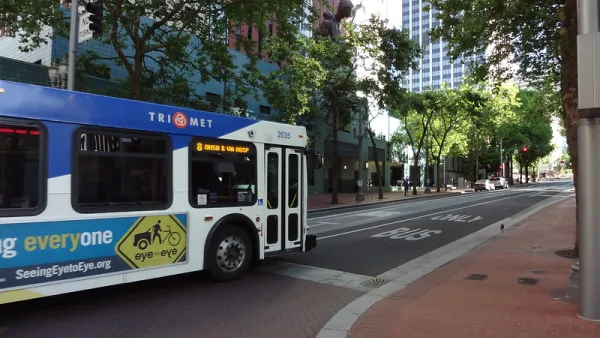
‘Forward Together’ Bus System Redesign Rolling Out in Portland
Portland is redesigning its bus system to respond to the changing patterns of the post-pandemic world—with twin goals of increasing ridership and improving equity.
Stimulus Funds Not Enough to Guarantee Transit's Future in D.C. and L.A.
In statements that echo the alarm of March 2020, transit officials in Los Angeles and Washington, D.C. recently announced plans to reduce transit service.
Driver Shortages and Service Reductions: The Crisis in Public Transit Continues
While transit systems around the country had reason to celebrate the new funding made available in the federal infrastructure bill, long-term concerns about operational capacity have not been resolved.

The state-sanctioned urbicide of Austin
People don’t kill cities. Freeways do.

US to reduce Colorado River water deliveries to Mexico
A new Colorado Treaty amendment reduces Mexico’s Colorado River water allocation by 250,000 acre feet.

New Jersey’s second-largest city bans standalone data centers
Jersey City will continue to allow co-location facilities, such as those meant for research institutions that store their own data.

Amtrak not solely to blame for New Jersey commuter rail's unreliability, report finds
A new study from the Garden State Initiative found that NJ Transit’s budget grew 20% across a 4 year period, but reliability declined significantly over the same period.

EPA erases limits on planet-warming pollution from power plants
Under Monday’s plan, power plants would still have some limits on how much mercury, arsenic and other contaminants they can emit.

Phoenix announces new on-demand transit service, more frequent RAPID buses
Both new services will launch in October, and are part of Phoenix's Project Effective Access Solutions for Easing Congestion.

FREE Course: Walkable City 1: Why Walkability?
After describing his path towards focusing on walkability as the essence of good planning, Jeff Speck marches through his five principal reasons for making more walkable places.
Reinventing Malls: Planning Alchemy—Turning Gray Fields Into Gold
The course focuses on the opportunities and imperatives that shape reinvention of mall sites.


Eagle County Government
Harvard University Graduate School of Design
Nashville Planning Department
The Architects Foundation
University of Cincinnati Online
The Pocatello Development Authority
The Urban Renewal Agency of the City of Pocatello
Journal of the American Planning Association