Vision Zero safety improvements at High Injury Roadways and implementation and Leading Pedestrian Intervals are reducing crashes in Austin. The city has a long way to go to achieve Vision Zero.


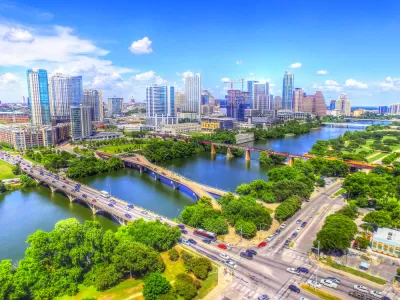
The City of Austin Transportation Department (ATD) has been seeing promising results from its Vision Zero initiative," according to an article published by Fox 7 Austin.
According to ADT, early results of Vision Zero projects "show significant effects on reducing severe crashes," in the city, even while traffic safety statistics worsen in other parts of the city and around the nation.
The ADT's Vision Zero team has so far implemented safety improvements at six of 13 "High Injury Roadways" identified in the city. "Crashes resulting in deaths and serious injuries were down 17% on the six HIRs that are considered substantially complete this year through August compared to the 2017-19 average in the same eight-month period," according to the article's summary of the ADT's preliminary data on the changes.
Still, the rest of the city is seeing the same trends toward increasing traffic fatalities as the rest of the country. "There have been more than 100 fatalities on the roads this year citywide, up 30% from 2020," according to the article.
FULL STORY: Vision Zero showing positive results in reducing crashes, fatalities

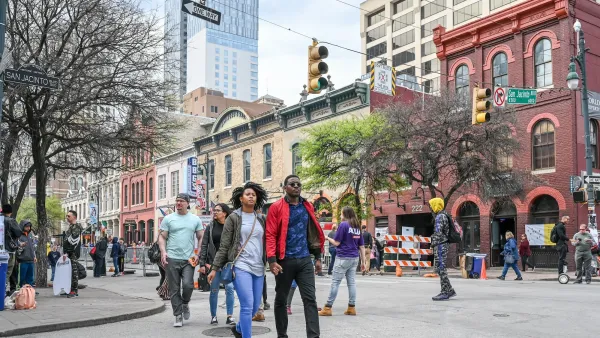
Austin Businesses Call for Sixth Street Bike Lanes
Local business owners say bike lanes would improve safety and boost local business.
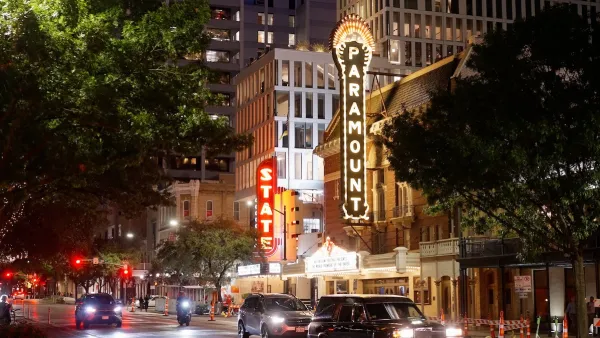
Austin Left Turn Improvements Cut Serious Crashes by Half
Changes to left turn infrastructure and signal timing led to a 47 to 72 percent drop in fatal and serious injury crashes.
Report: Vision Zero Saving Lives in Austin
Safety improvements at major intersections led to a 22 percent reduction in deaths and severe injuries and saved the city over $28 million.

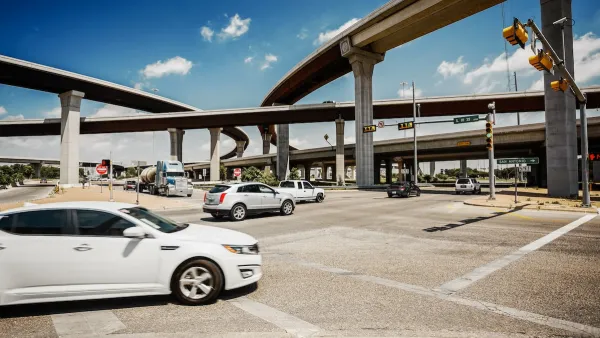
The state-sanctioned urbicide of Austin
People don’t kill cities. Freeways do.

US to reduce Colorado River water deliveries to Mexico
A new Colorado Treaty amendment reduces Mexico’s Colorado River water allocation by 250,000 acre feet.

New Jersey’s second-largest city bans standalone data centers
Jersey City will continue to allow co-location facilities, such as those meant for research institutions that store their own data.

Amtrak not solely to blame for New Jersey commuter rail's unreliability, report finds
A new study from the Garden State Initiative found that NJ Transit’s budget grew 20% across a 4 year period, but reliability declined significantly over the same period.

EPA erases limits on planet-warming pollution from power plants
Under Monday’s plan, power plants would still have some limits on how much mercury, arsenic and other contaminants they can emit.

Phoenix announces new on-demand transit service, more frequent RAPID buses
Both new services will launch in October, and are part of Phoenix's Project Effective Access Solutions for Easing Congestion.

FREE Course: Walkable City 1: Why Walkability?
After describing his path towards focusing on walkability as the essence of good planning, Jeff Speck marches through his five principal reasons for making more walkable places.
Reinventing Malls: Planning Alchemy—Turning Gray Fields Into Gold
The course focuses on the opportunities and imperatives that shape reinvention of mall sites.

Eagle County Government
Harvard University Graduate School of Design
Nashville Planning Department
The Architects Foundation
University of Cincinnati Online
The Pocatello Development Authority
The Urban Renewal Agency of the City of Pocatello
Journal of the American Planning Association