Between two rounds of funding, the city of New York has only awarded $7 million of a total $60 million intended for tenant relief.



"Nearly eight weeks after the February 1st deadline, New York has paid out just $7 million out of $60 million available for struggling tenants," writes Katherine Fung in Gothamist. This is according to figures from State Assemblymember Zohran Kwame Mamdani. The state estimates that "between 800,000 to 1.2 million households in New York collectively owe more than $2 billion in rent," yet between its two rounds, the state's rent relief program "awarded $47 million in subsidies to 16,000 households, or roughly 16% of the total applications received since September."
Many applicants were disqualified because they received federal and state unemployment benefits during part of 2020—payments which expired last July. "At the point at which people really needed help with rent, the program closed its doors," Legal Aid Society attorney Ellen Davidson told Fung.
State Senator Brian Kavanagh, chair of the chamber’s Housing Committee, and other lawmakers "have since proposed a new program that would help tenants pay up to 12 months of rental arrears and utility bills." Kavanagh says the proposal is "ambitious enough and is generous enough that we really think we can pay virtually all of the rent arrears that have built up in the entire state."
Community organizers like Cea Weaver with Housing Justice for All caution that "while funding for the new program appears sufficient, its effectiveness will also depend on whether the state simplifies the application process and conducts adequate outreach to tenants, especially in non-English speaking communities."
FULL STORY: NY's Second Round Of Rent Relief Only Distributes $7 Million Of $60 Million Available

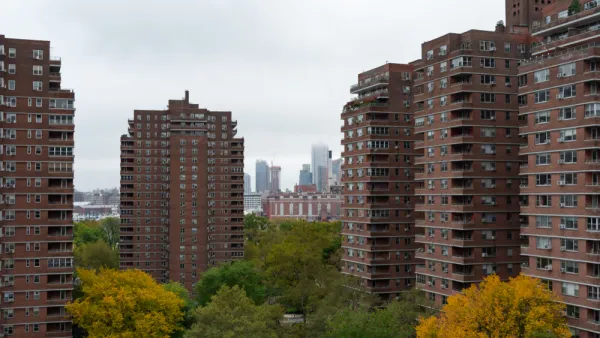
New York Residents Support Affordable Housing, Survey Says
Contrary to the dominant narrative about the negative perceptions of affordable housing projects among the public, a recent survey reveals widespread support for affordable housing in the New York-New Jersey-Connecticut metropolitan region.
Los Angeles Passes New Rent Relief Package
The city will offer a new round of rental assistance to eligible families who owe back rent.
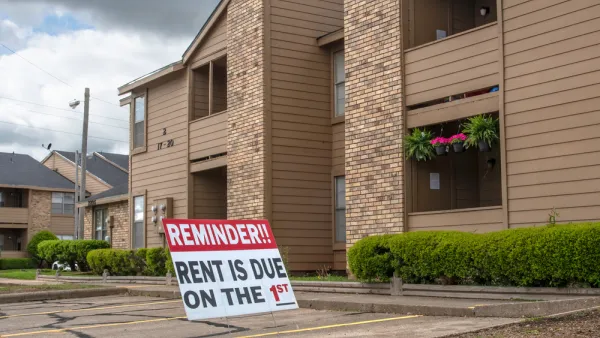
750,000 Evictions Predicted as Moratoria End
Analysts from Goldman Sachs predict a wave of evictions as eviction moratoriums end with millions of households still behind on rent.

Planetizen Federal Action Tracker
A weekly monitor of how Trump’s orders and actions are impacting planners and planning in America.

The state-sanctioned urbicide of Austin
People don’t kill cities. Freeways do.

US to reduce Colorado River water deliveries to Mexico
A new Colorado Treaty amendment reduces Mexico’s Colorado River water allocation by 250,000 acre feet.

5 New England states march closer to 800 megawatt wind energy project
Securing federal approval for the project may be complicated under the Trump administration, which has historically been hostile towards domestic wind power.

Baltimore to break ground on $50 million Transit Priority Project
The project will bring faster bus trips, safer streets and better bike connections to Baltimore.

Airbnb launches $250 million 'last-dollar financing' housing accelerator, makes first investment in Austin
The company will put $6.4 million towards affordable housing development in Texas’ capital.

FREE Course: Walkable City 1: Why Walkability?
After describing his path towards focusing on walkability as the essence of good planning, Jeff Speck marches through his five principal reasons for making more walkable places.
Reinventing Malls: Planning Alchemy—Turning Gray Fields Into Gold
The course focuses on the opportunities and imperatives that shape reinvention of mall sites.

Eagle County Government
Harvard University Graduate School of Design
Nashville Planning Department
The Architects Foundation
University of Cincinnati Online
The Pocatello Development Authority
The Urban Renewal Agency of the City of Pocatello
Journal of the American Planning Association