The BeltLine Special Services District, first proposed in January 2021, already has a green light from the Atlanta City Council.


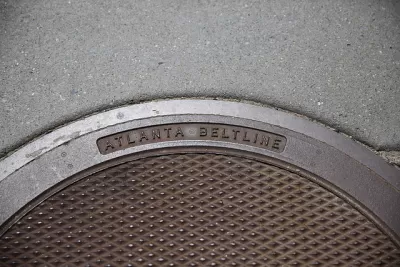
Josh Green reports: "Despite opposition from an alliance of metro Atlanta apartment complex owners, purveyors of dive bars, government leaders, and various other groups, an additional tax for commercial property owners near the BeltLine is coming this year."
The Atlanta City Council on Monday moved forward with the BeltLine Special Services District (SSD): "a half-mile zone around the 22-mile loop where a tax bump will be implemented to raise an expected $100 million for finishing BeltLine construction."
The SSD is a relatively new idea for generating the funding necessary to get the BeltLine across the finish line. Planetizen covered the idea shortly after its first announcement in January 2021.
The SSD is expected to generate $100 million to complete BeltLine trail corridors, but it only go part way to funding the remainder of the work. "Finishing everything from design work and utility relocation to the installation of security cameras is expected to cost roughly $350 million," according to Green.
The BeltLine Tax Allocation District (TAD) is still in place, with a December 2030 expiration date. "Beyond the SSD’s $100-million boost, the BeltLine says $100 million will come from the existing TAD, with local, state, federal, and especially philanthropic sources—who haven’t been publicly identified yet—footing the remaining $150 million," reports Green.
More on the politics of the City Council's decision, and the potential benefit of the new revenue, are included in the source article.
FULL STORY: The Atlanta BeltLine's new tax is official. Now what?

New Property Tax Proposed to Fund Final Atlanta Beltline Construction
A financial plan to get the Atlanta Beltline across the finish line.
New Study Commissioned for Atlanta BeltLine Transit
The study will assess alignment options for a 13-mile segment of the greenway.

Atlanta Streetcar Expansion Still Moving Forward
MARTA has drastically reduced its plans to construct new rail transit, but one project still has political support from the top at City Hall.

Planetizen Federal Action Tracker
A weekly monitor of how Trump’s orders and actions are impacting planners and planning in America.

The state-sanctioned urbicide of Austin
People don’t kill cities. Freeways do.

US to reduce Colorado River water deliveries to Mexico
A new Colorado Treaty amendment reduces Mexico’s Colorado River water allocation by 250,000 acre feet.

5 New England states march closer to 800 megawatt wind energy project
Securing federal approval for the project may be complicated under the Trump administration, which has historically been hostile towards domestic wind power.

Baltimore to break ground on $50 million Transit Priority Project
The project will bring faster bus trips, safer streets and better bike connections to Baltimore.

Airbnb launches $250 million 'last-dollar financing' housing accelerator, makes first investment in Austin
The company will put $6.4 million towards affordable housing development in Texas’ capital.

FREE Course: Walkable City 1: Why Walkability?
After describing his path towards focusing on walkability as the essence of good planning, Jeff Speck marches through his five principal reasons for making more walkable places.
Reinventing Malls: Planning Alchemy—Turning Gray Fields Into Gold
The course focuses on the opportunities and imperatives that shape reinvention of mall sites.

Eagle County Government
Harvard University Graduate School of Design
Nashville Planning Department
The Architects Foundation
University of Cincinnati Online
The Pocatello Development Authority
The Urban Renewal Agency of the City of Pocatello
Journal of the American Planning Association