More biking, less transit, and less driving alone are the headlining trends from the most recent Regional Travel Survey for the D.C. metropolitan area.


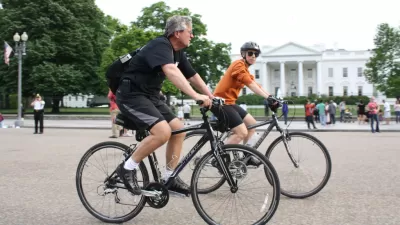
"Since 2007, the share of people in the Washington region who ride bikes has gone up, while driving and riding transit have dropped, according to a gigantic once-per-decade report," reports George Kevin Jordan.
The National Capital Regional Transportation Planning Board (TPB), the metropolitan planning organization (MPO) for metropolitan Washington, D.C., released its latest Regional Travel Survey—a kind of Census of transportation trends conducted every ten years.
"Planners use [the Regional Travel Survey] to create traffic models, ridership estimates, and other data that goes into plans and forecasts all over the region," according to Jordan.
The latest survey was conducted in 2017 but has only just become public. The article includes a lot more specific detail on the findings of the survey. One interesting finding to note from this era before the pandemic: residents of the metropolitan area were taking fewer trips, generally staying home more, long before the stay-at-home orders of the pandemic.
FULL STORY: The bike boom is real, says new mode share data

Report: D.C. Area Commuters Driving Alone Less
With all the bad news about plummeting ridership as the D.C. Metro transit system has struggled to deal with maintenance issues, a new report indicates that regional commuters are still driving alone less.
Planning Year in Review 2022: Downtowns, Transportation, Climate Change
Part two of a review of the major themes, debates, and events of the year in planning that was 2022.
D.C. Revamps its Vision Zero Plan to Eliminate Traffic Fatalities
Washington, D.C. was an early adopter of Vision Zero in the United States, but eventually it became emblematic of the country's lack of progress in reducing traffic collisions.

Planetizen Federal Action Tracker
A weekly monitor of how Trump’s orders and actions are impacting planners and planning in America.

The state-sanctioned urbicide of Austin
People don’t kill cities. Freeways do.

US to reduce Colorado River water deliveries to Mexico
A new Colorado Treaty amendment reduces Mexico’s Colorado River water allocation by 250,000 acre feet.

5 New England states march closer to 800 megawatt wind energy project
Securing federal approval for the project may be complicated under the Trump administration, which has historically been hostile towards domestic wind power.

Baltimore to break ground on $50 million Transit Priority Project
The project will bring faster bus trips, safer streets and better bike connections to Baltimore.

Airbnb launches $250 million 'last-dollar financing' housing accelerator, makes first investment in Austin
The company will put $6.4 million towards affordable housing development in Texas’ capital.

FREE Course: Walkable City 1: Why Walkability?
After describing his path towards focusing on walkability as the essence of good planning, Jeff Speck marches through his five principal reasons for making more walkable places.
Reinventing Malls: Planning Alchemy—Turning Gray Fields Into Gold
The course focuses on the opportunities and imperatives that shape reinvention of mall sites.

Eagle County Government
Harvard University Graduate School of Design
Nashville Planning Department
The Architects Foundation
University of Cincinnati Online
The Pocatello Development Authority
The Urban Renewal Agency of the City of Pocatello
Journal of the American Planning Association