Shortly after Transportation secretary-nominee Pete Buttigieg told a Senate committee that all options were on the table to pay for federal transportation investment, a spokesperson ruled out a gas tax hike.


"Buttigieg, testifying before the Senate Commerce, Science and Transportation Committee at his confirmation hearing to be secretary of Transportation, was pressed on a gas tax increase by Sen. Rick Scott, R-Fla., one of several Republicans eager to put him on the record supporting a tax hike," reports Jessica Wehrman for Roll Call on January 21.
“Would you support gas tax increases, and if so, how much?” asked Scott.
“I think all options need to be on the table,” Buttigieg replied. “As you know, the gas tax has not been increased since 1993 and it’s never been pegged to inflation, and that is one of the reasons why the current state of the Highway Trust Fund is that there’s more going out than coming in.”
In response to a question from Sen. Mike Lee, R-Utah, "Buttigieg said it was 'possible' the federal government could raise the gas tax," adds Wehrman.
“Certainly many states have taken that step, including my own, but it’s not the only approach,” he said.
Apparently, that was the statement, merely mentioning the possibility of a gas tax increase, that prompted the walk-back.
A Buttigieg spokesman later walked that statement back, telling reporters that a "variety of options need to be on the table to ensure we can invest in our highways and create jobs, but increasing the gas tax is not among them."
Buttigieg could have noted that the Indiana 10-cent per gallon gas tax hike was approved on the last day of the 1997 legislative session by a Republican-controlled legislature and signed by Republican Gov. Eric Holcomb. Unlike the federal gas tax, the legislation indexed fuel tax rates until July 1, 2024, capping the increase at one-cent-per-gallon, according to Planetizen.
Buttigieg could also have reminded the Utah senator about that his state legislature and governor agreed to a gas tax hike six years ago.
The editorial board of The Baltimore Sun expressed their disappointment with the new administration's position on the gas tax, particularly how it relates to Biden's much-touted plans to combat climate change.
It’s particularly unfortunate that President Biden has no appetite for the gas tax increase, because it’s also an effective tool in the battle against climate change. The plan he released Wednesday to achieve net zero carbon emissions by 2050 would surely be improved if Americans faced higher gasoline prices, given that the transportation sector accounts for more than one-quarter of emissions.
A look back
Biden earlier declared his presidency would not be “a third Obama term,” but in terms of transportation funding, there seems to be no change. Almost 12 years ago, just months after his confirmation, Transportation Secretary Ray LaHood ruled out hiking the gas tax. The Biden administration acted even faster to calm gas tax critics that they wouldn't tamper with fuel prices.
As The Baltimore Sun editorial concluded, "A gas tax not only deserves to be on the table, it merits a prominent seat."
Related in Planetizen:
- Indiana Legislature Passes 10-Cents Fuel Tax Hike on Final Day of Session, April 28, 2017
-
LaHood Repeats Vow: No New Fuel Taxes & No VMT Fee, Aug 3, 2010
-
Obama Rejects Gas Tax, VMT Fee, Mar 11, 2009
FULL STORY: Buttigieg cites gas tax hike at hearing, but aide walks it back

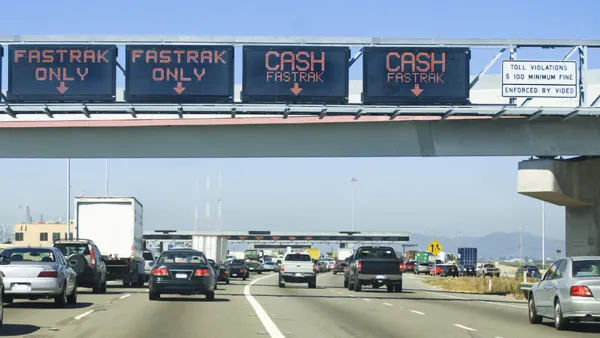
Funding Biden's Infrastructure Plan: Should Users or Corporations Pay?
After determining the size and scope of President Biden's infrastructure package, the next biggest challenge is determining how to pay for it. The partisan divide is steep, but Roll Call exposes division within the Democrats' ranks.
Road Usage Charge at Least 10 Years Away
Pilot programs are not the real thing, warned Michael Lewis, executive director of the Colorado Department of Transportation, testifying at a House transportation subcommittee on March 7. Colorado completed a successful four-month pilot last April.
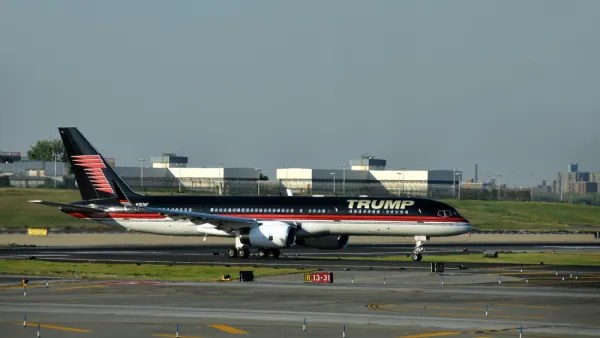
Trump's 25-Cent Infrastructure Tax?
During a closed-door meeting Wednesday with Democratic and Republican lawmakers, President Trump endorsed hiking the gas tax by 25-cents per gallon to help pay for the $200 billion investment and restore solvency to the Highway Trust Fund.

The state-sanctioned urbicide of Austin
People don’t kill cities. Freeways do.

US to reduce Colorado River water deliveries to Mexico
A new Colorado Treaty amendment reduces Mexico’s Colorado River water allocation by 250,000 acre feet.

New Jersey’s second-largest city bans standalone data centers
Jersey City will continue to allow co-location facilities, such as those meant for research institutions that store their own data.

Amtrak not solely to blame for New Jersey commuter rail's unreliability, report finds
A new study from the Garden State Initiative found that NJ Transit’s budget grew 20% across a 4 year period, but reliability declined significantly over the same period.

EPA erases limits on planet-warming pollution from power plants
Under Monday’s plan, power plants would still have some limits on how much mercury, arsenic and other contaminants they can emit.

Phoenix announces new on-demand transit service, more frequent RAPID buses
Both new services will launch in October, and are part of Phoenix's Project Effective Access Solutions for Easing Congestion.

FREE Course: Walkable City 1: Why Walkability?
After describing his path towards focusing on walkability as the essence of good planning, Jeff Speck marches through his five principal reasons for making more walkable places.
Reinventing Malls: Planning Alchemy—Turning Gray Fields Into Gold
The course focuses on the opportunities and imperatives that shape reinvention of mall sites.

Eagle County Government
Harvard University Graduate School of Design
Nashville Planning Department
The Architects Foundation
University of Cincinnati Online
The Pocatello Development Authority
The Urban Renewal Agency of the City of Pocatello
Journal of the American Planning Association