Hispanics are the only racial group projected to increase their rate of homeownership over the next two decades, according to a new analysis.


R.A. Schuetz shares news of a new study from the Urban Institute that anticipates the growth of homeownership rates among Hispanic Americans. The report presents the trend as a reflection of the lingering impacts of the Great Recession.
"Between 2020 and 2040, there will be 6.9 million net new homeowner households, a 9 percent increase," writes Laurie Goodman to share the report's findings on the Urban Institute website. "Hispanic homeowners will grow by 4.8 million, homeowners of other races (mostly Asian homeowners) will grow by 2.7 million, and Black homeowners will grow by 1.2 million. The total number of white homeowners will decline by 1.8 million."
New homeownership among Black Americans will not keep pace with the increasing number of Black renters, however. "If current policies stay the same, the Black homeownership rate will fall well below the rate of previous generations at the same age and result in an unprecedented number of Black renters over 65; we project elderly Black renters will more than double from 1.3 million in 2020 to 2.6 million in 2040," writes Goodman.
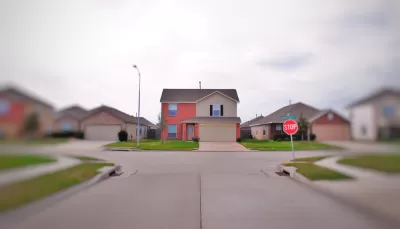
Schuetz cites the experience of a real estate in Houston as evidence that more Hispanic residents are buying houses.
The report suggests that the shifting geography and demographics of homeownership will require new approaches to mortgage qualification. Two challenges in potential hinder BIPOC homeowners, according to Schuetz: "Workers who are self-employed or participate in the gig economy have a difficult time proving their income to the satisfaction of lenders, and it is difficult to count multigenerational households or roommates if they are not all on the mortgage…"
FULL STORY: Hispanic homeownership rates poise to rise as other homeownership rates stall [paywall]

The Beginning of Housing Reparations
In a growing trend, both local and state governments are addressing the nation's huge racial wealth gap by working to reverse the legacy of discriminatory housing and lending policies.
The Numerous Obstacles—Past and Present—Facing Black Homeowners
Black Americans pay a higher price to be homeowners—and the number of those who can afford to pay that price is dropping quickly.

Houston Habitat for Humanity builds modular homes in one-third the construction time of traditional houses
The nonprofit known for facilitating affordable homeownership is working to cut costs as traditional construction becomes more expensive.

Planetizen Federal Action Tracker
A weekly monitor of how Trump’s orders and actions are impacting planners and planning in America.

The state-sanctioned urbicide of Austin
People don’t kill cities. Freeways do.

US to reduce Colorado River water deliveries to Mexico
A new Colorado Treaty amendment reduces Mexico’s Colorado River water allocation by 250,000 acre feet.

Airbnb launches $250 million 'last-dollar financing' housing accelerator, makes first investment in Austin
The company will put $6.4 million towards affordable housing development in Texas’ capital.

Guerilla urbanists are building DIY bus stop benches in Chicago
A before-and-after of one of the bus stops with a new bench. The new benches are not officially sanctioned or permitted, but the residents who placed them hope they will be the start of a network of DIY benches across the city.

Mamdani overhauls NYC's Vision Zero plan with 100 new policy goals
The overhaul aims to reduce traffic deaths and make streets safer for pedestrians, cyclists and drivers through lower speed limits, new safety infrastructure and more.

FREE Course: Walkable City 1: Why Walkability?
After describing his path towards focusing on walkability as the essence of good planning, Jeff Speck marches through his five principal reasons for making more walkable places.
Reinventing Malls: Planning Alchemy—Turning Gray Fields Into Gold
The course focuses on the opportunities and imperatives that shape reinvention of mall sites.

Eagle County Government
Harvard University Graduate School of Design
Nashville Planning Department
The Architects Foundation
University of Cincinnati Online
The Pocatello Development Authority
The Urban Renewal Agency of the City of Pocatello
Journal of the American Planning Association