The material, now being tested on California roads, is made using recycled PET plastic and promises longer-lasting road treatments.


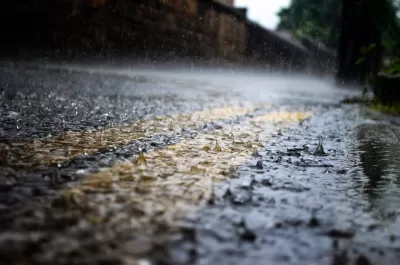
As part of its commitment to the sustainability goals laid out in L.A.'s Green New Deal, Los Angeles became the first city to install recycled plastic asphalt on a city street, writes Haley Rischar.
The concept of recycled pavement panels first took hold close to two decades ago when city leaders in L.A.'s coastal neighbor, Santa Monica, sought a solution to broken sidewalks caused by tree roots. To accommodate the roots and provide a smoother right-of-way for residents, Santa Monica has used rubber panels made from recycled car tires to repair sidewalks constantly under threat from unruly tree roots since 2001.
Now, a segment of First Street near near City Hall is receiving the treatment. The innovative product is infused with recycled PET plastic that "has the potential to reduce the use of petroleum in asphalt." Although not yet tested on roads, the material promises to have five or more times the strength of normal asphalt and last more than twice as long, saving money and time spent on road repairs.
The California Department of Transportation (CalTrans) is also testing recycled plastic pavement in a three-lane installation on Highway 162 near Oroville.
FULL STORY: Los Angeles applies recycled plastic asphalt on first major city street

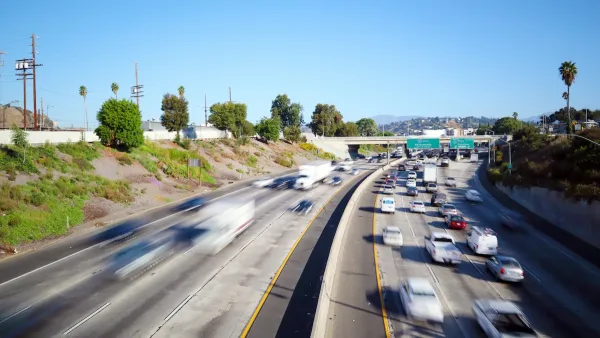
Opinion: LA Should Reject ‘Misguided’ Car-Centric Policies
Even as the city highlights clean energy and transportation for the 2028 Olympics, Metro and Caltrans move forward with plans to expand highways.
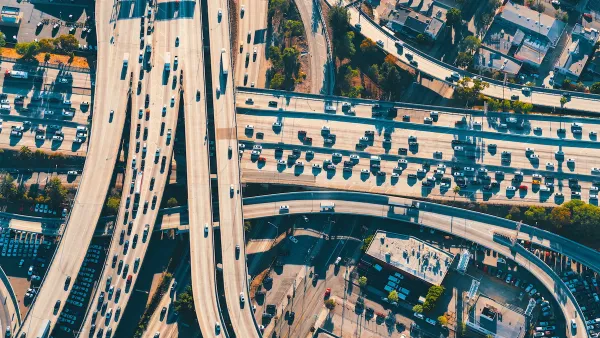
Audit: Caltrans Ignored Red Flags Before Freeway Fire
A lax inspection schedule contributed to the hazardous conditions that led to the massive blaze that shut down Interstate 10 in Los Angeles last year.
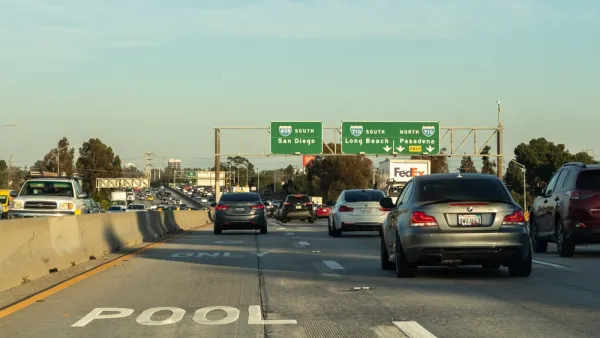
Southern California Freeway Expansion Plans Scrapped
After more than a decade of planning, Caltrans has officially dropped the I-710 Corridor Project, a plan to widen Interstate 710 for a long stretch of the freeway near the ports of Los Angeles and Long Beach.

Planetizen Federal Action Tracker
A weekly monitor of how Trump’s orders and actions are impacting planners and planning in America.

The state-sanctioned urbicide of Austin
People don’t kill cities. Freeways do.

US to reduce Colorado River water deliveries to Mexico
A new Colorado Treaty amendment reduces Mexico’s Colorado River water allocation by 250,000 acre feet.

5 New England states march closer to 800 megawatt wind energy project
Securing federal approval for the project may be complicated under the Trump administration, which has historically been hostile towards domestic wind power.

Baltimore to break ground on $50 million Transit Priority Project
The project will bring faster bus trips, safer streets and better bike connections to Baltimore.

Airbnb launches $250 million 'last-dollar financing' housing accelerator, makes first investment in Austin
The company will put $6.4 million towards affordable housing development in Texas’ capital.

FREE Course: Walkable City 1: Why Walkability?
After describing his path towards focusing on walkability as the essence of good planning, Jeff Speck marches through his five principal reasons for making more walkable places.
Reinventing Malls: Planning Alchemy—Turning Gray Fields Into Gold
The course focuses on the opportunities and imperatives that shape reinvention of mall sites.

Eagle County Government
Harvard University Graduate School of Design
Nashville Planning Department
The Architects Foundation
University of Cincinnati Online
The Pocatello Development Authority
The Urban Renewal Agency of the City of Pocatello
Journal of the American Planning Association